
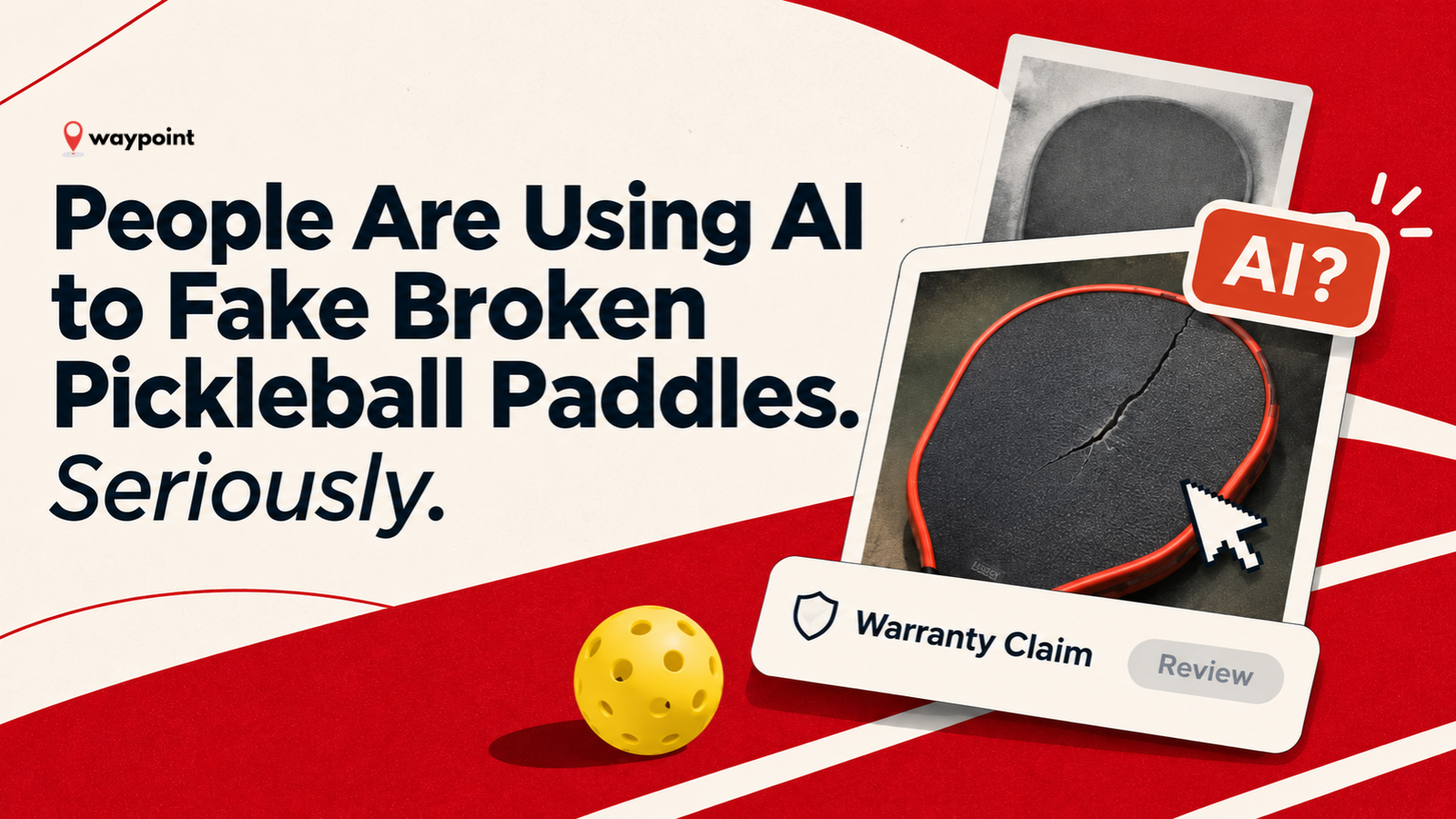

Pickleball brand 11SIX24 says customers have been submitting AI-generated photos of damaged paddles to claim warranty replacements. What started as a customer service problem is now raising bigger questions about fraud, artificial intelligence and trust in the pickleball industry.
Imagine receiving a photo of a broken pickleball paddle, only to discover that the damage doesn’t actually exist. The paddle hasn’t cracked, snapped or broken. Someone simply used artificial intelligence to make it look that way.
It sounds unbelievable, but it’s a problem that pickleball manufacturer 11SIX24 says it has been dealing with.
According to The Dink’s November 13 report, 11SIX24 founder David Groechel revealed that customers have submitted AI-generated images of supposedly damaged paddles to request warranty replacements.
While AI has made it easier to create realistic images, it has also introduced a new challenge for businesses. How can manufacturers tell whether a product is genuinely damaged or whether the evidence has been manipulated?
How AI-Generated Paddle Damage Became a Problem
Most pickleball paddle manufacturers offer warranties that cover certain defects. When a paddle develops a problem under normal use, customers can submit a claim with photographs showing the damage.
This process is designed to make replacements convenient, especially when customers cannot visit a physical store. However, it also relies on the assumption that the photographs accurately represent the product.
According to Groechel, some customers have been using AI to generate images of broken paddles in an attempt to obtain replacements. He told The Dink that the company had received numerous suspicious submissions, with altered logos and unusual visual details helping reveal some of the fakes.
The company has not publicly confirmed exactly how many fraudulent claims it has received or how many resulted in successful replacements. However, the issue has become serious enough for 11SIX24 to address manipulated evidence in its warranty terms.
11SIX24 Is Taking Action Against Fake Warranty Claims
According to 11SIX24’s warranty policy, customers must provide documentation that accurately represents the condition of their paddle.
The policy specifically prohibits AI-generated or digitally manipulated images that misrepresent product damage. Ordinary edits, such as cropping or adjusting brightness, are permitted as long as they don’t distort the actual condition.
Customers found submitting fraudulent evidence risk losing warranty coverage. The company also reserves the right to request original images, additional documentation or a physical inspection when necessary.
These measures help protect the company from false claims, but they also introduce another challenge. More verification could mean longer waiting times for customers with genuinely defective equipment.
Groechel told The Dink that he prefers replacing damaged paddles quickly rather than making customers wait weeks for inspections. However, identifying fraudulent claims while maintaining fast customer service is becoming increasingly difficult.
The Irony? 11SIX24 Is Also Using AI for Customer Service
Interestingly, 11SIX24 is using artificial intelligence to improve the very customer service process that fraudulent claims are affecting.
The company developed a custom AI assistant called Max, which helps answer questions about warranties, returns, equipment and general customer enquiries.
According to The Dink’s report, 11SIX24 received 3,490 customer service tickets in September 2026. Of those, approximately 1,100 received their initial response from Max.
The assistant recorded a median first response time of just 64 seconds, helping the company handle routine enquiries while its human support team focused on more complicated cases.
This creates an unusual situation. On one side, 11SIX24 is using AI to make customer service faster and more efficient. On the other, it is dealing with people allegedly using AI to submit misleading warranty claims.
It’s an example of how the same technology can create opportunities and challenges for businesses, depending on how people choose to use it.
Fake Damage Photos Aren’t Just a Pickleball Problem
Although the 11SIX24 case involves pickleball equipment, AI-generated refund fraud has also been reported in other industries.
In December 2025, WIRED reported that online sellers in China had received suspicious images showing supposedly damaged products. These included household goods, groceries and other everyday items.
Some images contained obvious inconsistencies, while others appeared convincing enough to make verification difficult.
A separate Practical Ecommerce report published in July 2026 also examined how generative AI can be used to fabricate damage photographs and other evidence for refund requests.
The problem is particularly challenging for online businesses because they often review claims remotely. Instead of physically inspecting a product, employees may rely on photographs and descriptions submitted by customers.
As AI-generated images become more convincing, distinguishing genuine claims from manipulated evidence may require additional checks.
Could This Make Paddle Warranties More Complicated?
For pickleball players, one concern is how fraudulent claims could affect the warranty experience for everyone else.
Manufacturers may respond by requiring more photographs, requesting videos or asking customers to return damaged paddles for inspection. While these measures could help prevent fraud, they may also create additional steps for legitimate customers.
This is especially relevant for players who use their paddles regularly and need replacements when equipment develops genuine defects.
However, stricter verification doesn’t necessarily mean manufacturers will stop offering convenient warranty services. The challenge is finding a process that protects businesses without making honest customers feel distrusted.
For 11SIX24, that balance is particularly important because the company has made customer service a central part of its business.
When AI Makes It Harder to Trust What We See
The 11SIX24 situation highlights a problem that extends beyond pickleball. As AI-generated images become more realistic and accessible, photographs may no longer provide the same level of confidence they once did.
For manufacturers, this creates a new responsibility to verify suspicious claims without unnecessarily delaying genuine replacements. For customers, it raises questions about how businesses will handle warranties in the future.
Artificial intelligence can make customer service faster, but it can also make dishonest claims more difficult to detect.
And for a pickleball brand trying to take care of its customers, that’s an unexpected challenge.
After all, when a paddle looks broken in a photograph, how do you know whether the damage is real?
Continue Your Journey
From new paddle technology to the stories shaping the pickleball industry, there’s always something happening beyond the court.
At Waypoint, we explore the players, equipment, communities and developments influencing pickleball around the world.
Our Official Links
Find our website and official social media channels here:
https://linktr.ee/waypoint.fan
Every Journey Starts With a Waypoint.
Sources & References
- The Dink – 11SIX24’s Secret Weapon Isn’t Just Its Paddles, It’s Customer Service (November 13, 2026)
https://www.thedinkpickleball.com/how-11six24-is-raising-the-bar-for-pickleball-customer-service/ - 11SIX24 Pickleball – Official Warranty & Returns Policy
https://11six24.com/pages/warranty-returns - Practical Ecommerce – AI Makes Refund Evidence Easier to Fake (July 16, 2026)
https://www.practicalecommerce.com/ai-makes-refund-evidence-easier-to-fake - WIRED – Scammers in China Are Using AI-Generated Images to Get Refunds (December 19, 2025)
https://www.wired.com/story/scammers-in-china-are-using-ai-generated-images-to-get-refunds/