
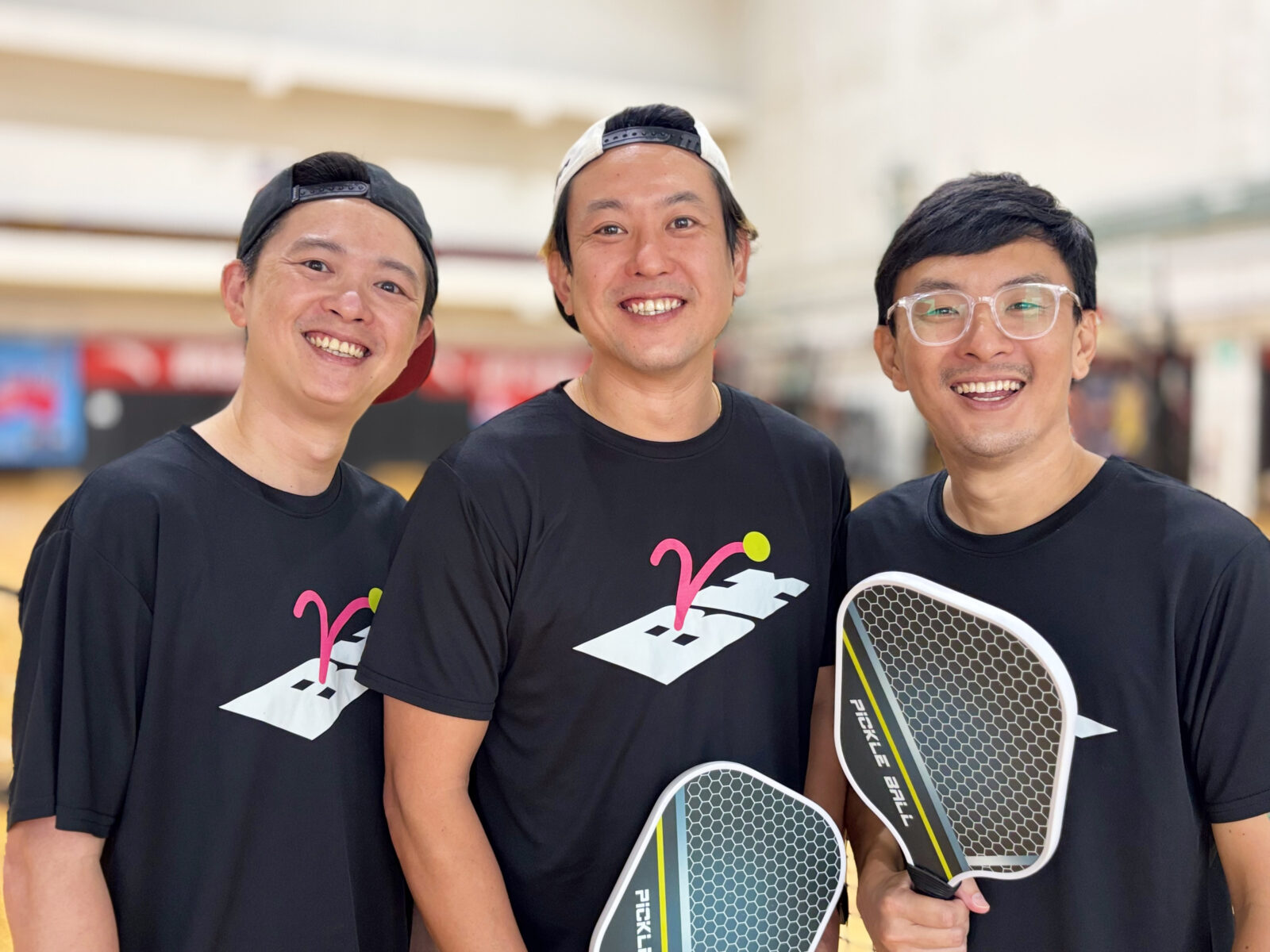

How Kelvin, Ben, and Bryan Turned Sibling Rivalry into a Structured Vision for Pickleball in Singapore
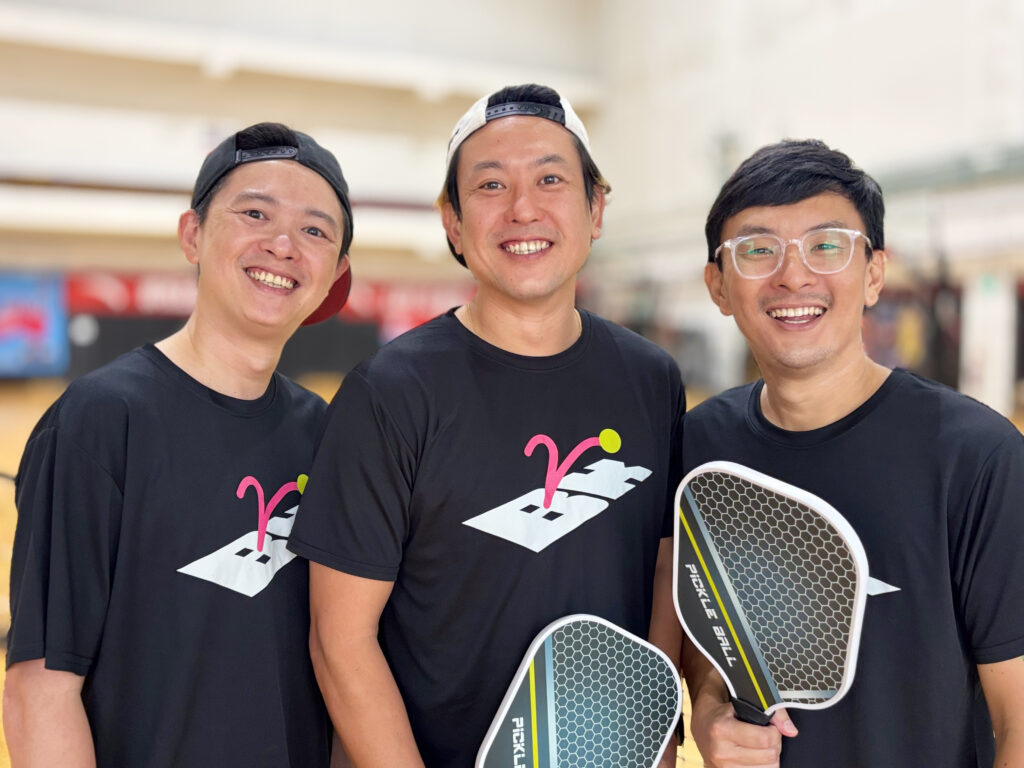
Quick Profile Snapshot
Names: Kelvin, Ben, and Bryan
City / Country: Singapore
Sporting Background: Tennis, Rugby, Multi-Sport
Entered Pickleball: Late 2022
Current Milestone: Certified Pickleball Coaches
Collective Initiative: B2K – Coaching, Community, and Competitive Development
It Began with Curiosity — and a Net
The origin story is almost understated.
In late 2022, Kelvin noticed that Tom Brady had invested in a professional pickleball team. That detail alone was enough to spark interest. Brady had built a career on calculated foresight; if he saw long-term potential in the sport, perhaps it warranted serious consideration.
Kelvin purchased a net and a set of paddles and began playing on a badminton court opposite his workplace. At the time, it felt like experimentation — a side pursuit that complemented his tennis background.
Ben joined him early. Bryan followed closely.
What began as casual exploration soon shifted into something more familiar: competition layered with banter, and banter layered with pride.
Because they were not merely teammates.
They were brothers.
A Household Built on Competition and Inclusion
Growing up, sport was not optional. It was formative.
Kelvin and Ben had spent countless hours playing tennis under the guidance of a coach whose influence extended beyond stroke mechanics. He offered perspective, discipline, and generosity of spirit — lessons that Kelvin still carries and hopes his daughters might one day inherit.
Bryan, the youngest, forged his identity as a national rugby player. He describes his brothers as relentless challengers who never gave him a free pass. Their competitive standard elevated him.
The dynamic was intense, but it was never isolating. Bryan recalls always being included, even when he felt younger or less polished. That inclusion shaped his resilience and athletic growth.
The result was a culture of “healthy aggression,” curbed by strong parental guidance and anchored in mutual respect.
That culture transferred naturally into pickleball.
The Shock of Technical Reality
Initially, they assumed that their racket-sport experience would provide an immediate advantage.
Instead, pickleball exposed their blind spots.
Ben struggled with the kitchen. The discipline of allowing the return to bounce before responding felt unnatural. The instinct to serve and volley — ingrained from tennis — required recalibration.
Bryan realised quickly that effort alone would not suffice. “It is easy to pick up,” he observed, “but it is not easy to be good.” The subtlety of the game required tactical patience.
Kelvin experienced the most dramatic awakening during his first singles competition. He entered with confidence; he left humbled. He describes the event as “hard and traumatising,” acknowledging that he was neither physically nor technically prepared. At forty-three, improvisation was no longer enough.
Bryan remembers watching from the sidelines, frustrated that he could not help Kelvin break through the mental barrier.
That experience marked a turning point.
They could no longer treat pickleball as an extension of tennis.
It demanded its own discipline.
Choosing Certification Over Ego
Many players respond to early success or curiosity by entering more tournaments.
The brothers chose certification.
For Ben, certification aligned with his evolving priorities. He describes himself now as more communicative than competitive. Pickleball’s accessibility inspired him to enrich his immediate community through structured learning rather than informal play.
Bryan viewed coaching as an extension of his multi-sport philosophy. Each sport refines different dimensions of athleticism and mindset. Pickleball sharpened patience and court awareness in ways rugby never required.
Kelvin’s reasoning was equally deliberate. Certification signalled seriousness. It demonstrated that this was not a passing “side quest.” He recognised pickleball’s ability to bring together athletes from tennis, badminton, and other racket sports under a common denominator. Accreditation provided legitimacy to that commitment.
Pickleball soon extended beyond the court. It became outreach — within church communities, workplaces, and social groups. It became a bridge rather than a silo.
The Discipline of Unlearning
Perhaps the most significant growth came from what they had to abandon.
Ben realised that driving winners is not the sole pathway to points. Precision often outperforms power.
Bryan acknowledged that constant aggression can be counterproductive. There is no need to strike every ball with maximal force.
Kelvin confronted his comfort zone at the baseline. Pickleball required him to transition forward more quickly, to respect the non-volley zone, and to embrace controlled dinking rather than extended groundstroke exchanges.
Their definition of “playing better” matured.
It now includes understanding strengths and weaknesses, mastering crosscourt dinks, executing low dipping drives, and transitioning with intention.
In short, pickleball slowed their impulses before elevating their intelligence.
Brotherhood Under Pressure
Disagreements occur, but rarely escalate.
Ben describes their conversations as open yet restrained. Years of shared history have taught them to temper emotion.
Bryan emphasises trust and familial love as stabilising forces. Disagreement is not inherently negative; it can catalyse growth.
Kelvin reflects that they have never relied on mind games or petty tactics. They adopt an “iron sharpens iron” mentality, critiquing themselves before criticising one another.
Losing, for them, is not an accusation. It is an instruction.
A Cultural Inflection Point
All three observe a recurring misconception within Singapore’s pickleball community.
Many underestimate the sport.
The paddle appears lightweight. The plastic ball feels informal. Some view it as a temporary trend rather than a discipline requiring long-term refinement.
They argue that humility is indispensable.
Prior racket experience may provide a foundation, but adaptation is essential. Pickleball’s uniqueness lies in its balance of patience, positioning, and controlled aggression.
Without respect for those nuances, development stalls.
Distinct Identities, Shared DNA
If an observer watched them without context, certain similarities would still surface: competent groundstrokes, confident drives, and unmistakable joy.
Yet their personalities remain distinct.
Ben competes with composed determination, promising opponents a rigorous contest.
Bryan approaches matches analytically, intent on deciphering patterns and exploiting weaknesses.
Kelvin embraces the counterpuncher’s ethos — chasing every ball, celebrating points with youthful energy reminiscent of his tennis inspirations.
Their mother, they joke, would agree that they look both serious and joyful at once.
Building B2K
Their initiative, B2K, represents more than sibling collaboration. It embodies a philosophy.
Ben aims to elevate his coaching capacity toward higher-level competitors. Bryan envisions expanding community programming and competitive events that blend social engagement with structured leagues. Kelvin acknowledges the challenge of coaching beginners but remains committed to perseverance, investing in tools and training systems to refine his own game.
They seek to cultivate a culture where “paddle sharpens paddle” — where players release one another toward excellence rather than guard ego behind ratings.
Lessons That Endure
Through setbacks and certification, several principles have crystallised:
Patience at the kitchen triumphs over impatience at the baseline.
Flow matters more than force.
It is acceptable to be passed at the kitchen if positioning is correct.
Fear is a habit that can be addressed.
Loss is not terminal.
“Next point, we go again.”
If they could advise their earlier selves, the message would be unambiguous: begin with humility — even if you have played tennis.
Expectations require recalibration before progress becomes visible.
Pickleplus Insight
Kelvin, Ben, and Bryan embody a necessary archetype in Singapore’s pickleball evolution.
They are not driven by novelty or superficial hype. They are committed to structure, discipline, and community.
In a rapidly expanding sporting landscape, ecosystems endure only when builders prioritise substance over spectacle.
The brothers have chosen to build.
Continue Your Journey
Growth in pickleball begins with humility and structure.
Create Your Pickleplus Player Passport
Track your development, matches, and competitive milestones.
Discover the Right Paddle for Your Game
Find equipment aligned with your playing style and long-term goals.