
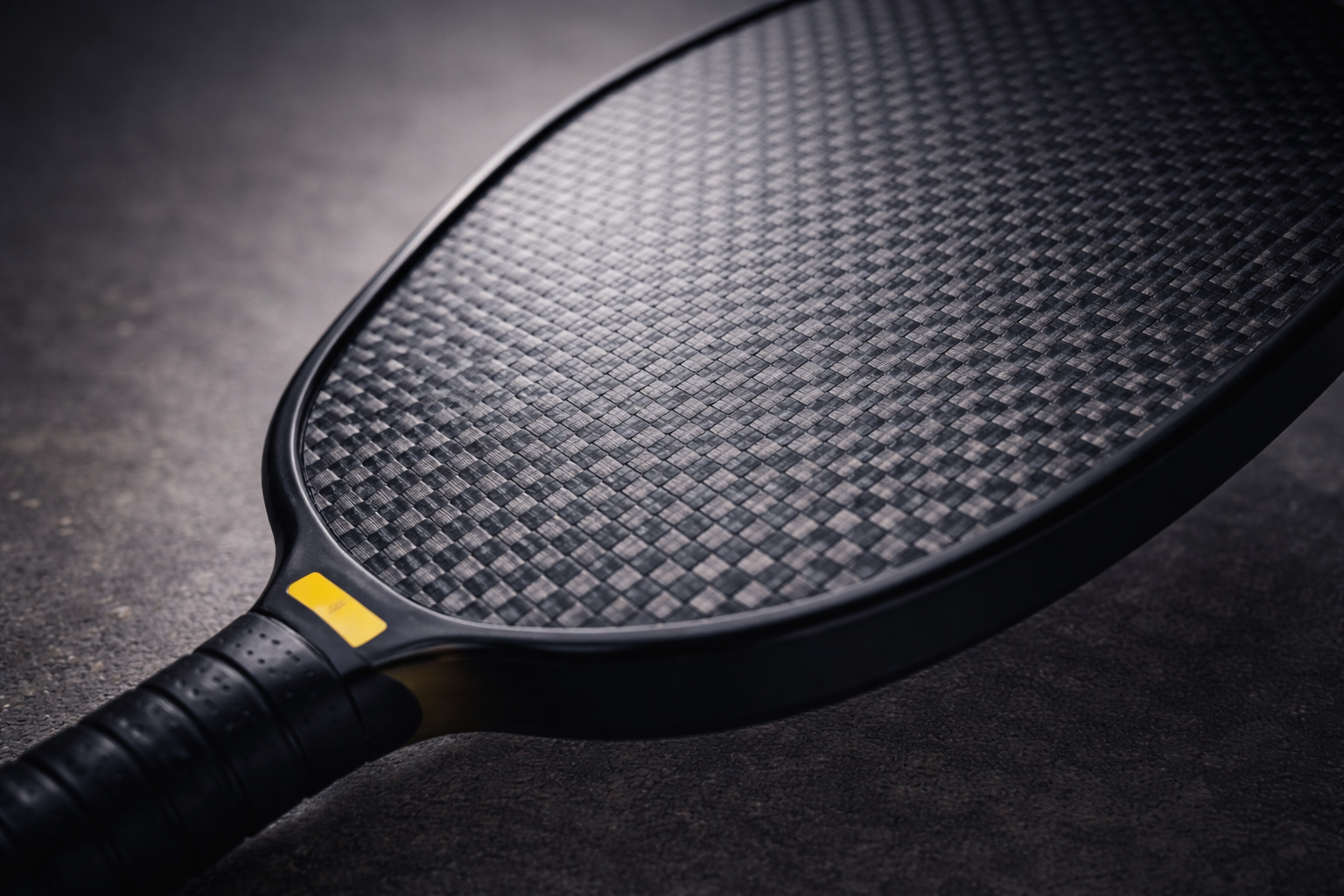

Pickleball paddle technology has evolved rapidly over the past two years, and 2026 marks a clear acceleration. New materials, construction methods, and surface treatments are changing how paddles perform — and how players choose them.
For players, the challenge is no longer finding better paddles, but understanding which innovations actually matter and which are marketing noise.
Why Pickleball Paddle Technology Is Advancing So Quickly
Several forces are converging at once:
- Rapid growth in player numbers
- Increased competitive intensity
- Higher expectations around feel, control, and durability
- Brands investing heavily in R&D to differentiate
As the market matures, incremental improvements are no longer enough. Paddle manufacturers are now competing on material science, not just design.
Materials Are the Real Battleground
Modern paddles are no longer defined by shape alone.
Key developments include:
- Higher-grade carbon fiber faces
- Raw and textured carbon surfaces for spin
- Hybrid core constructions for better energy transfer
- Tighter manufacturing tolerances for consistency
These changes directly affect dwell time, launch angle, spin generation, and vibration control — all critical factors in modern play.
Spin, Control, and Feel Are Being Rebalanced
Earlier paddle generations often forced players to choose between power and control. Newer designs aim to reduce that trade-off.
What players are noticing:
- Easier access to spin without exaggerated swings
- More predictable ball response on soft shots
- Improved stability during fast exchanges
- Less vibration on off-centre contact
This is especially relevant as rallies become faster and kitchen exchanges more technical.
Why Not All “New Tech” Is Meaningful
As innovation accelerates, so does confusion.
Not every new surface texture or core claim delivers real on-court benefits. Some changes are marginal, others are situational, and a few genuinely reshape play.
Players should be cautious of:
- Overly aggressive textures that wear quickly
- Paddles tuned for power but unstable at the net
- Designs optimised for short-term performance rather than durability
Understanding how you play matters more than chasing specifications.
What This Means for Players Right Now
Players do not need the latest paddle to improve — but they do need the right type of paddle.
Practical guidance:
- Control-oriented players should prioritise consistency and touch
- Aggressive players should balance power with stability
- Recreational players should avoid extreme designs
- Competitive players should test paddles over time, not just once
Technology should support your game, not force you to change it.
The Bigger Picture: A More Educated Paddle Market
As paddle technology advances, the market is becoming more discerning.
Players are:
- Asking better questions
- Comparing performance, not just price
- Expecting transparency from brands
This shift favours companies that invest in real testing and honest communication — and it raises the overall standard of equipment across the sport.
Pickleball paddles are no longer accessories.
They are performance tools.