
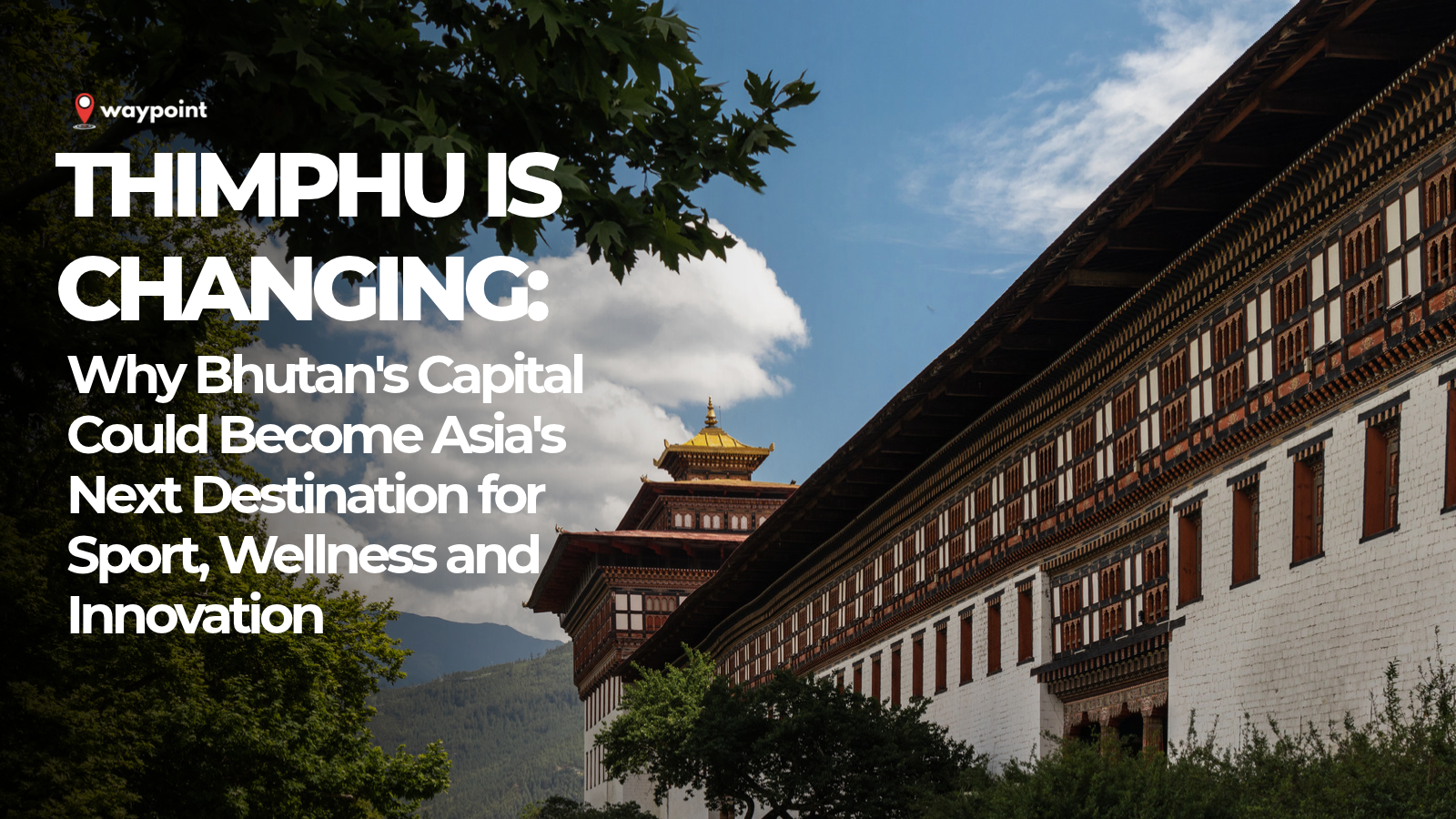

Beyond monasteries and mountain landscapes, a new generation is shaping Bhutan’s future. And the world may be overlooking one of Asia’s most interesting emerging destinations.
THIMPHU, BHUTAN — When people imagine Bhutan, they often picture ancient monasteries perched on cliffs, prayer flags dancing in the Himalayan wind, and a kingdom that measures its progress through Gross National Happiness.
They are not wrong.
But they are only seeing part of the story.
Walk through Thimphu today and another Bhutan begins to emerge. Contemporary cafés sit alongside traditional architecture. Young entrepreneurs experiment with new ideas. Creative communities are exploring design, technology, hospitality and modern lifestyles while remaining connected to their cultural heritage.
This is not a country abandoning its traditions in pursuit of modernity.
It is a country exploring how to modernise without losing itself.
And that distinction may become one of Bhutan’s greatest competitive advantages.
A Different Kind of Modern Asian Capital
Across Asia, cities have spent decades competing to become bigger, faster and more technologically advanced.
More skyscrapers. More shopping centres. More infrastructure. More visitors.
Thimphu offers a different proposition.
Its appeal is not that it can compete with Singapore, Bangkok or Shanghai on their terms. It is that it doesn’t necessarily have to.
Bhutan’s capital has retained a distinctive sense of identity, where Buddhist traditions, architecture, community relationships and the surrounding natural environment remain visible in everyday life.
At the same time, the aspirations of its younger generation are evolving.
There is growing interest in entrepreneurship, creative industries, technology, contemporary hospitality and international collaboration.
The interesting question is no longer whether Bhutan should embrace modernisation.
It is how Bhutan can define modernisation on its own terms.
The Next Opportunity: From Tourism to Participation
For decades, Bhutan’s international appeal has largely been built around what visitors can see.
The mountains. The monasteries. The festivals. The architecture. The landscapes.
These remain extraordinary reasons to visit.
But the next stage of Bhutan’s tourism evolution could be about something more meaningful.
What if visitors came not simply to see Bhutan, but to participate in Bhutan?
Imagine a traveller spending a week in Thimphu, combining cultural experiences with a community sporting event, wellness activities, local food, creative workshops and meaningful interactions with Bhutanese residents.
Or an international athlete visiting to train, explore the Himalayas and exchange knowledge with young local players.
Or a content creator documenting a journey that connects sport, cultural discovery and personal development.
These experiences could create opportunities for local businesses, educators, coaches, artists and communities.
Rather than simply attracting more visitors, Bhutan could focus on creating deeper relationships with the people who choose to visit.
That approach would fit naturally with the country’s broader philosophy of balancing development with cultural and environmental responsibility.
Why Sport Belongs in This Conversation
Sport is often overlooked in discussions about tourism and economic development.
Yet it offers something that traditional sightseeing cannot always provide: immediate human connection.
Two people who speak different languages can still share a game.
A visitor who knows little about Bhutanese culture can learn about community, patience and friendship through a local sporting experience.
And a young Bhutanese athlete can build international relationships without needing to leave the country.
Bhutan already has a distinctive sporting identity, with archery holding a special place in its national culture.
Newer recreational sports, including pickleball, could complement rather than replace those traditions.
Pickleball is particularly interesting because it is relatively accessible, encourages mixed-age participation and can bring beginners and experienced players together in the same community.
It is not necessary for Bhutan to become a major international sporting powerhouse to benefit.
The more meaningful opportunity may be to use sport as a bridge between tourism, education, health, community development and international friendship.
The future of sport tourism does not have to revolve around stadiums and major championships. Sometimes, it can begin with a few courts and a welcoming community.
Where Waypoint Fits In
At Waypoint, we believe sport should be more than an isolated activity.
It can be a starting point for discovery, relationships, education and personal growth.
That is why we are building Waypoint as a connected ecosystem for players, coaches, clubs, facilities, events and sporting communities.
Our vision extends beyond helping people find somewhere to play.
We want to help people discover where sport can take them.
Bhutan provides a compelling setting for exploring that philosophy.
Imagine a future in which a visitor could discover a community pickleball session in Thimphu, connect with local players, participate in a friendly event, explore Bhutanese culture and carry those sporting experiences into their personal player journey.
For local organisers, the same ecosystem could support programmes, participation records, coaching pathways, events and international visibility.
For emerging destinations, digital connectivity could help smaller sporting communities become part of something much larger.
These are opportunities Waypoint hopes to help develop through collaboration with local stakeholders.
Explore the Waypoint ecosystem at waypoint.fan and discover how sport can connect people, places and possibilities.
Building Opportunity Without Losing Identity
There is an important caution in all of this.
Not every destination needs to become a global sporting hub.
Not every local community needs an international event.
And not every tourism opportunity should be pursued simply because it might generate revenue.
Bhutan’s distinctiveness is precisely what makes it valuable.
Any meaningful development in sport tourism should therefore begin with the needs and aspirations of Bhutanese communities themselves.
That means creating opportunities for local coaches, young people, entrepreneurs and organisations rather than building experiences that exist only for international visitors.
It means respecting traditional sports while introducing new activities.
It means measuring success not only through tourist arrivals or spending, but also through participation, skills development, community benefits and long-term sustainability.
Technology can help coordinate these activities, but it should remain a tool rather than the objective.
The real objective is human connection.
Could Thimphu Become a New Model for Sports Tourism?
Perhaps the most exciting opportunity for Bhutan is not to imitate established sporting destinations.
It is to develop a different model.
One where a sporting visit can also be a cultural journey.
Where competition and personal well-being coexist.
Where international exposure strengthens local communities rather than displacing them.
And where technology makes participation easier without overwhelming the human experience.
Thimphu may never become a city defined by enormous stadiums or mass-participation sporting spectacles.
It doesn’t need to.
Its potential lies in offering something increasingly rare: a destination where sport, culture, nature and community can remain closely connected.
For travellers looking for experiences that go beyond conventional tourism, that is an increasingly compelling proposition.
For Bhutanese entrepreneurs and sporting organisations, it represents an opportunity worth exploring carefully.
And for platforms like Waypoint, it reinforces a simple belief.
The most meaningful journeys are not always measured by how far we travel, but by the people we meet and the experiences we share along the way.
Your Next Journey Could Begin in Bhutan
Whether you are a player looking for new experiences, a coach interested in international exchange, a creator searching for meaningful stories, or a local organisation hoping to grow your sporting community, Waypoint is building connections between sport and discovery.
For players and travellers: Discover the wider Waypoint community and explore opportunities to connect through sport.
For Bhutanese clubs, coaches and organisers: Connect with Waypoint to explore how digital tools, coaching pathways and community events could support local sporting development.
For tourism, hospitality and destination partners: Let’s explore how sport can become part of meaningful, community-led travel experiences.
Visit waypoint.fan to learn more.
Waypoint — Every Journey Begins Somewhere.
Sources and References
- Bhutan Travel – About Bhutan
https://bhutan.travel/about - Bhutan Travel – Eco Tourism
https://bhutan.travel/experiences-eco-tourism - Bhutan Travel – Adventure Experiences
https://bhutan.travel/adventure-experiences - Bhutan Ministry of Industry, Commerce and Employment – National Entrepreneurship Strategy 2026
https://ecrulproject.gov.bt/national-entrepreneurship-strategy-nes-2026-launched-to-advance-enterprise-led-growth-in-bhutan/ - Bhutan Ministry of Industry, Commerce and Employment – Bhutan Startup Launchpad 2026
https://www.moice.gov.bt/?p=987476771