
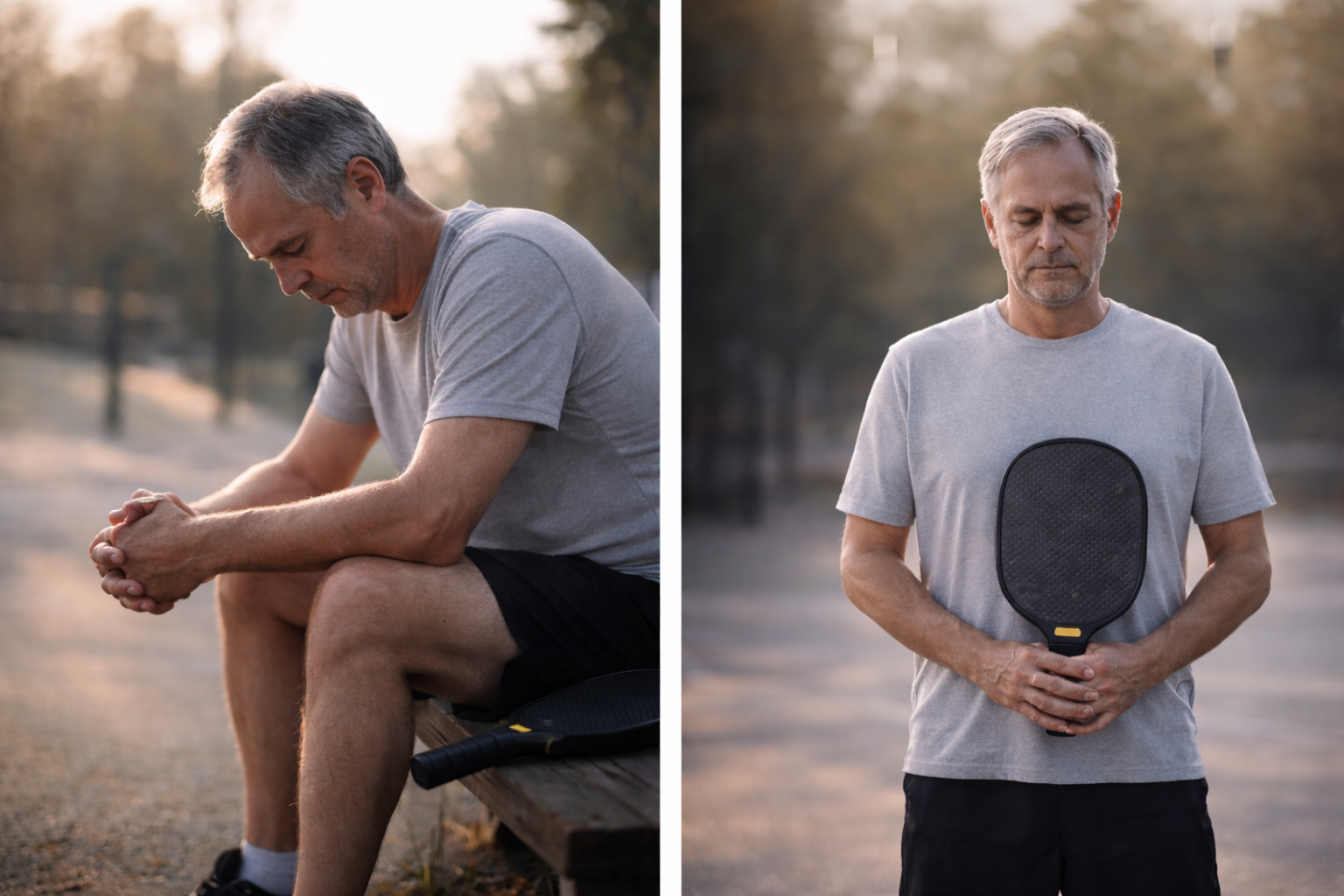

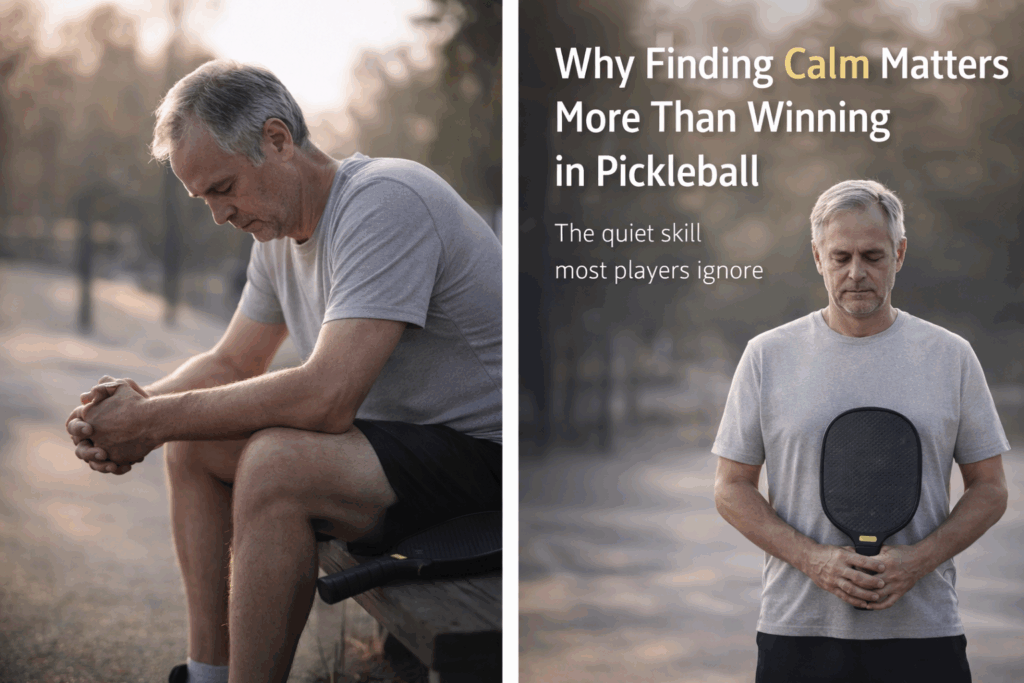
As pickleball becomes more competitive, many players focus almost exclusively on outcomes — wins, rankings, results. Yet the players who improve most consistently often share a quieter trait: they remain calm, regardless of score.
This isn’t about motivation or positivity. It’s about emotional regulation — and its impact on performance.
Why Calm Is a Competitive Advantage
Pickleball is fast, reactive, and mentally demanding. Small emotional spikes can cascade into rushed decisions, poor shot selection, and unforced errors.
Calm players tend to:
- Read situations more clearly
- Reset faster after mistakes
- Make better decisions under pressure
- Conserve mental energy over long sessions
Calm doesn’t mean passive. It means available.
How Emotional Reactivity Affects Performance
Many players underestimate how often emotions dictate outcomes.
Common patterns include:
- Forcing shots after losing a point
- Speeding up rallies unnecessarily
- Fixating on opponents instead of patterns
- Letting one mistake define an entire game
These behaviours are rarely technical problems — they’re regulation problems.
Calm Is a Skill, Not a Personality Trait
Some players believe calmness is innate. It isn’t.
Calm can be trained through:
- Awareness of breath and posture
- Consistent between-point routines
- Reducing emotional attachment to individual points
- Learning to observe rather than react
The goal is not to suppress emotion, but to prevent emotion from hijacking decisions.
What This Means for Players Right Now
Players seeking improvement should treat calm as part of their training, not a by-product of winning.
Practical steps include:
- Slowing down between points
- Developing a reset ritual
- Measuring success by decision quality, not outcome
- Practising under controlled stress
These habits compound quickly.
🔹 Continue This Inside Pickleplus
Understanding calm conceptually is one thing.
Building consistency under pressure requires awareness over time.
Players can track patterns, reflect on sessions, and build personalised routines inside Pickleplus, their central player passport.
The Bigger Picture: Longevity Through Presence
Pickleball is uniquely positioned as a sport people play for decades. That longevity depends less on physical dominance and more on mental sustainability.
Players who learn to stay calm:
- Enjoy the game longer
- Improve more steadily
- Compete without burning out
In the long run, calm isn’t the opposite of competitiveness — it’s what makes competitiveness sustainable.