
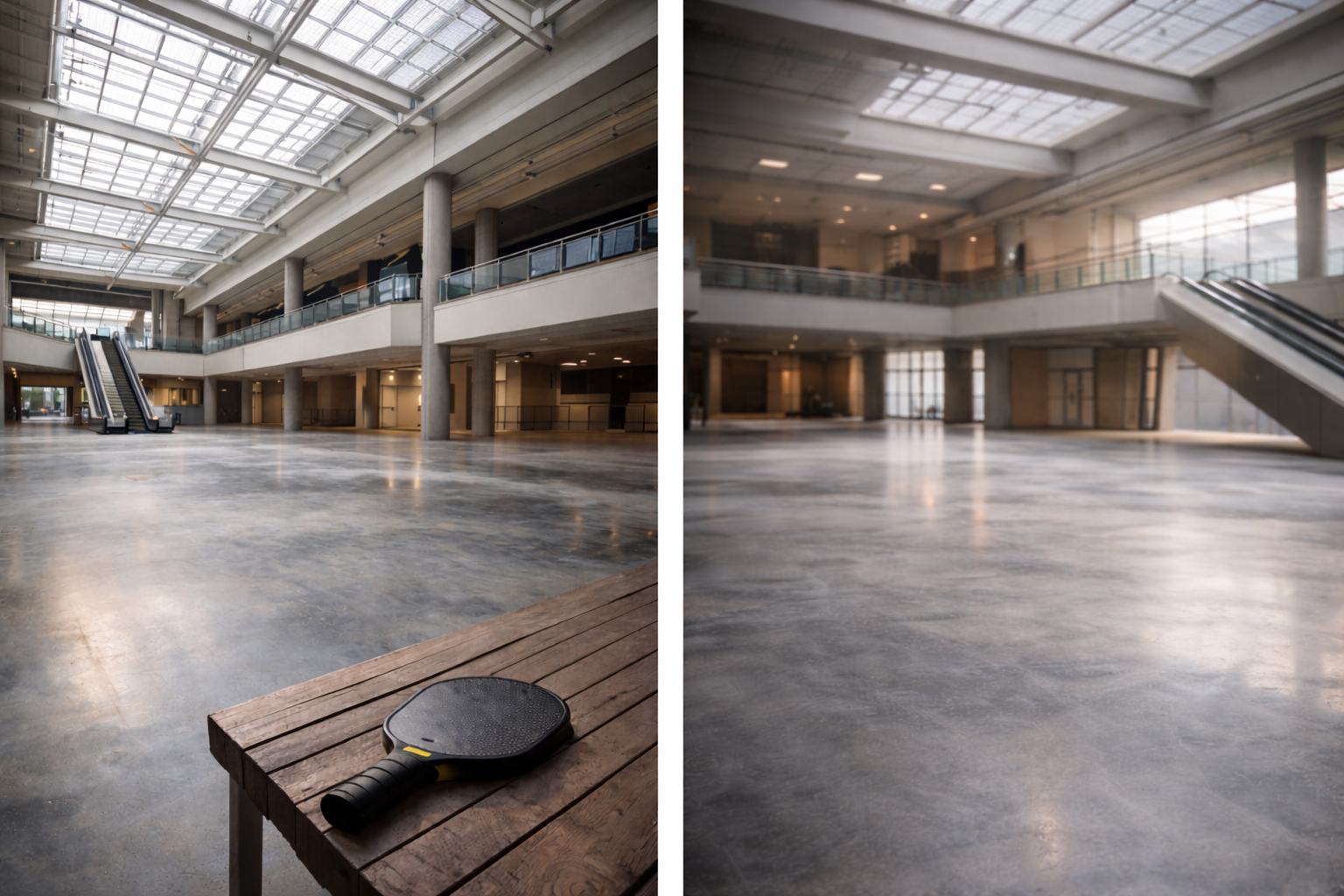

Pickleball’s rapid growth has attracted players, brands, and media attention — but a quieter shift is happening behind the scenes. Increasingly, pickleball is being viewed not just as a sport, but as a commercial asset capable of activating underutilised space and generating recurring revenue.
For developers, operators, and investors, this shift matters.
Why Pickleball Works as a Space Activation Tool
Unlike many traditional sports, pickleball adapts well to non-purpose-built environments.
Key advantages include:
- Smaller space requirements
- Flexible court layouts
- Lower construction costs
- Broad demographic appeal
These factors make pickleball ideal for:
- Malls and mixed-use developments
- Warehouses and industrial conversions
- Lifestyle hubs and private clubs
- Temporary and modular installations
Few sports offer this level of spatial flexibility.
Recurring Revenue Beats One-Time Events
From a business perspective, pickleball’s strength lies in repeat engagement, not ticketed spectacles.
Revenue streams typically include:
- Memberships and charge cards
- Coaching and programming
- Leagues and internal competitions
- Equipment sales and rentals
- Corporate and private bookings
This creates predictable utilisation patterns that appeal to landlords and partners alike.
Asia’s Commercial Pickleball Model Is Different
In Asia, pickleball is rarely positioned as a standalone sport.
Instead, it is integrated into:
- Wellness ecosystems
- Corporate engagement programs
- Hospitality and lifestyle concepts
- Education and youth development
This integration increases dwell time, cross-spend, and long-term retention — metrics that matter far more than raw foot traffic.
What This Means for Operators Right Now
Operators entering the pickleball space should think beyond courts.
Key considerations include:
- Programming before construction
- Community before marketing
- Utilisation before aesthetics
- Retention before scale
Facilities that treat pickleball as a system outperform those treating it as an amenity.
🔹 Continue This Inside Pickleplus
Understanding pickleball’s commercial potential is one thing.
Tracking utilisation, member behaviour, and program performance is another.
Operators and partners can follow engagement patterns and build structured participation ecosystems inside Pickleplus, the central platform connecting players, programs, and activity.
The Bigger Picture: Sport as Infrastructure
Pickleball’s future is not defined by professional tours alone. It is shaped by how effectively it integrates into everyday urban life.
As cities search for flexible, community-driven uses of space, pickleball offers something rare:
- Low friction
- High engagement
- Repeat value
That combination is why pickleball is increasingly viewed not just as a sport — but as infrastructure.