

Pickleball does not grow in a straight line. It compounds through a retention flywheel driven by access, frequency, comfort, and belonging. Markets that activate this flywheel grow quietly but sustainably. Markets that don’t experience churn despite strong headline participation numbers.
Why Linear Growth Thinking Is Failing Pickleball
Most discussions around pickleball still assume a linear path: awareness leads to participation, which leads to growth. That assumption held during the sport’s early expansion phase, when discovery was the main constraint.
Today, discovery is no longer the bottleneck. Retention is.
Linear thinking explains how people enter pickleball, but it fails to explain why they stay. That gap is where most participation models break down and where the retention flywheel becomes essential.
The Retention Flywheel (Overview)
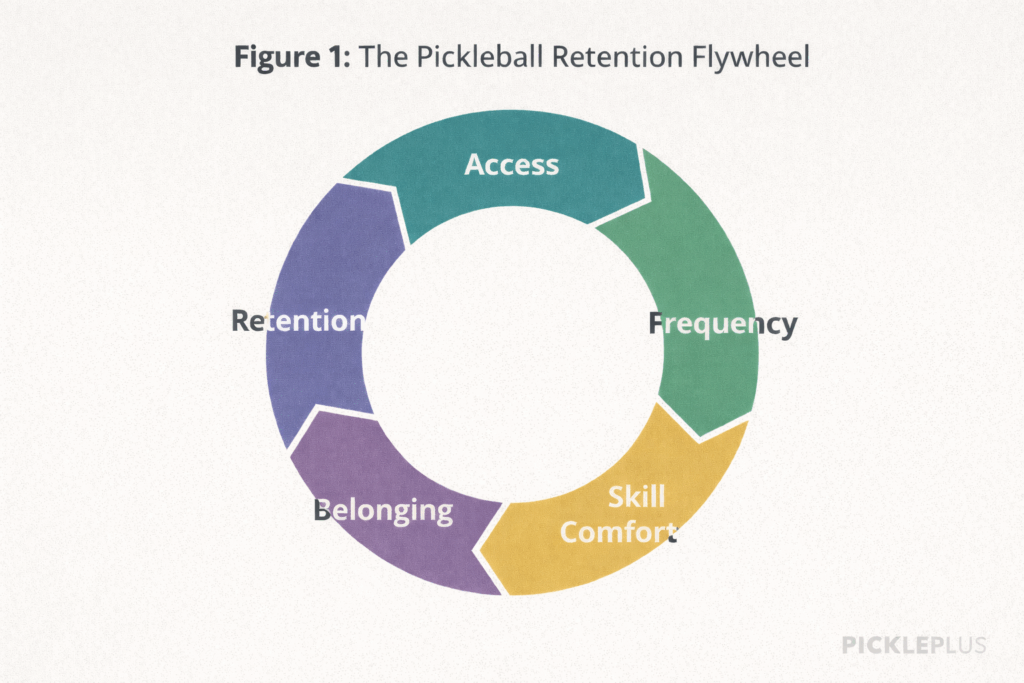
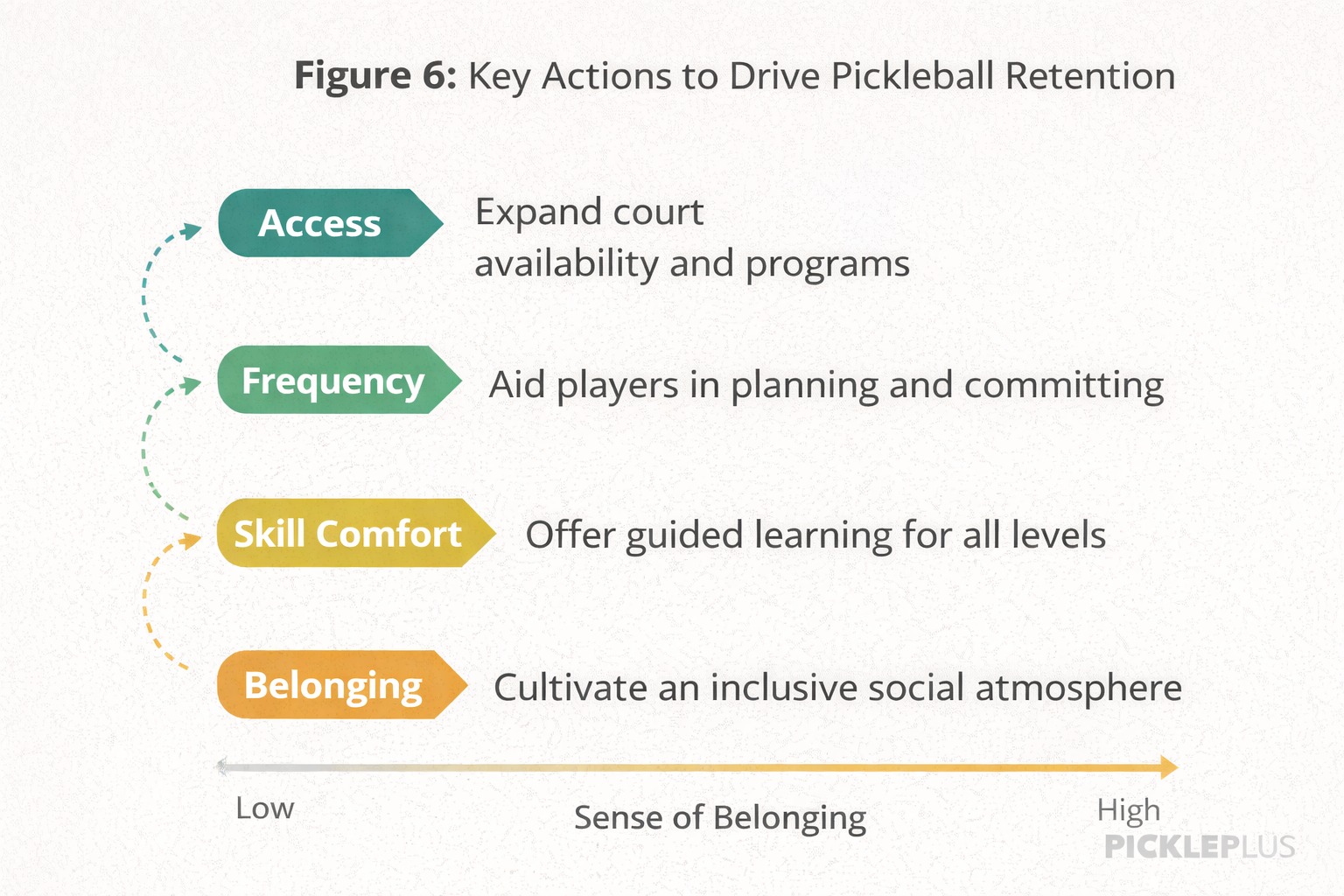
Pickleball retention operates as a reinforcing system rather than a funnel. The flywheel consists of five connected forces:
- Access
- Frequency
- Skill Comfort
- Belonging
- Retention feeding back into Access
Once spinning, this system compounds without relying on hype, marketing spikes, or constant new player acquisition.
1) Access Creates Frequency
Claim:
Without reliable access, retention never starts.
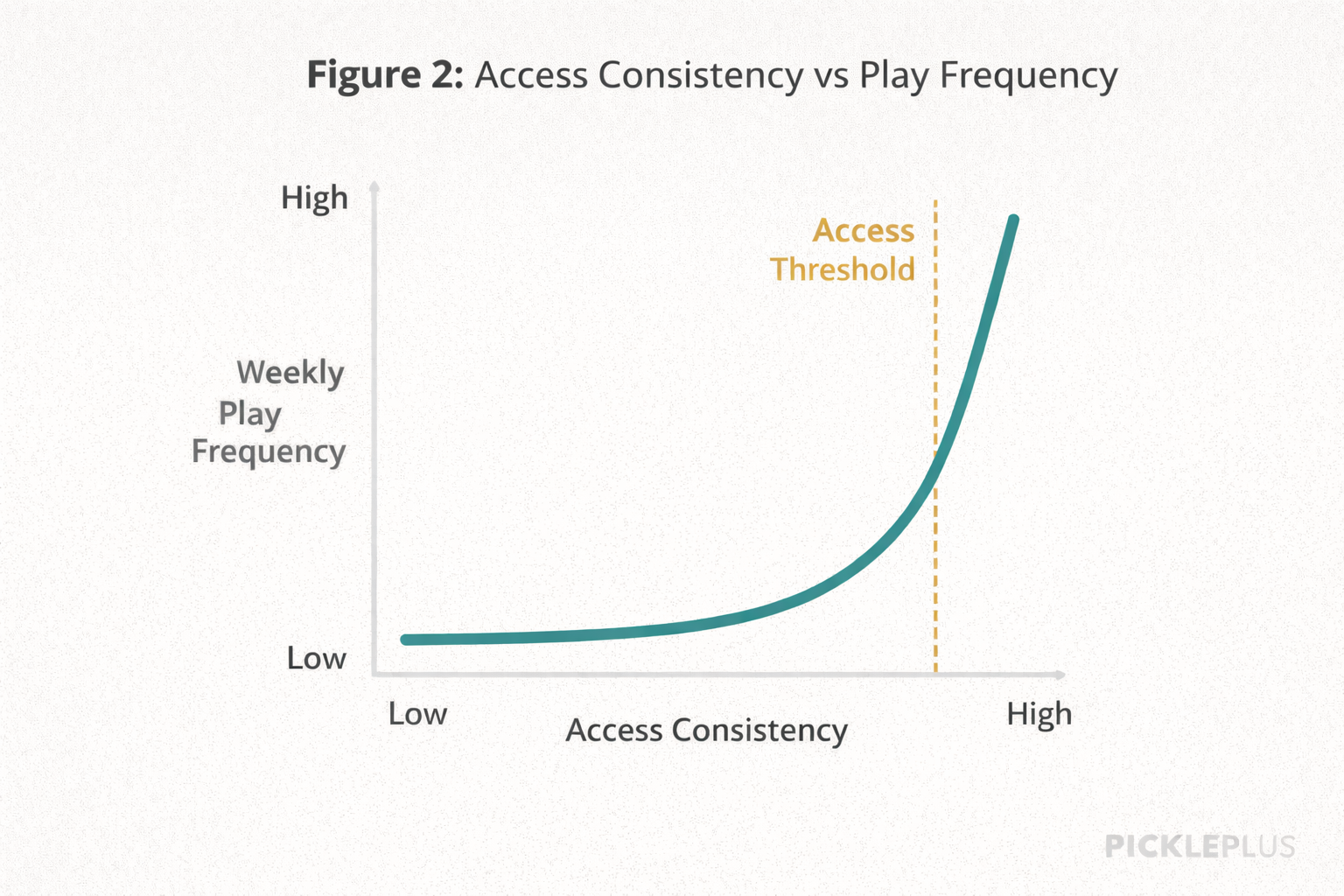
Access means predictable court availability, manageable booking friction, weather-stable play, and fair time allocation. When access is inconsistent, players cannot form habits. Sessions become sporadic, progress resets, and motivation fades.
Access alone does not guarantee retention, but the absence of access guarantees churn. Habit formation requires predictability, not just availability.
2) Frequency Builds Skill Comfort
Claim:
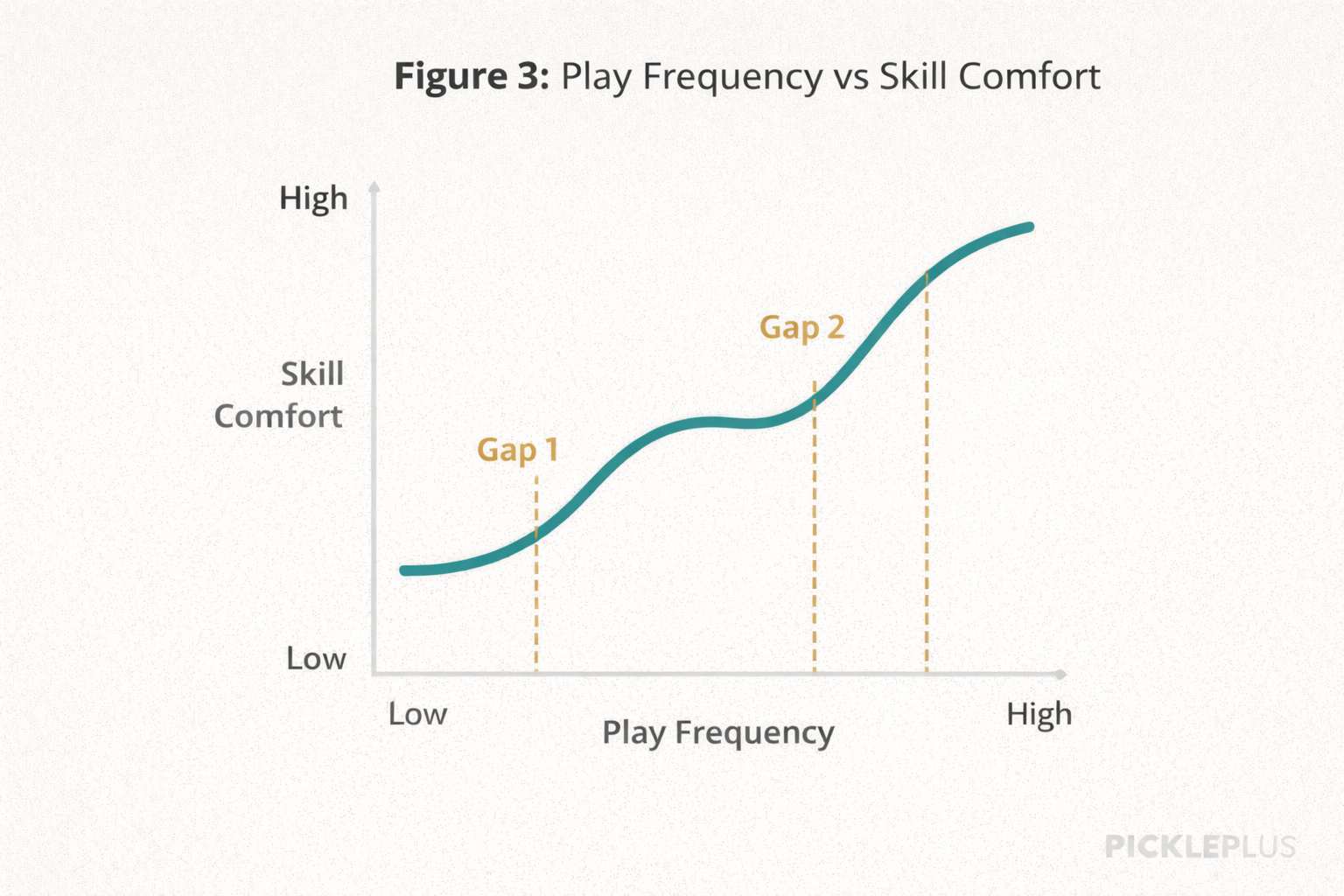
Players don’t quit because they’re bad — they quit because they feel uncomfortable.
Frequent play reduces anxiety, normalises mistakes, and builds familiarity with pace and decision-making. Infrequent play does the opposite: it resets learning, amplifies self-consciousness, and makes sessions mentally taxing.
Skill comfort is psychological before it is technical. Players stay when the game feels manageable.
3) Skill Comfort Enables Belonging
Claim:
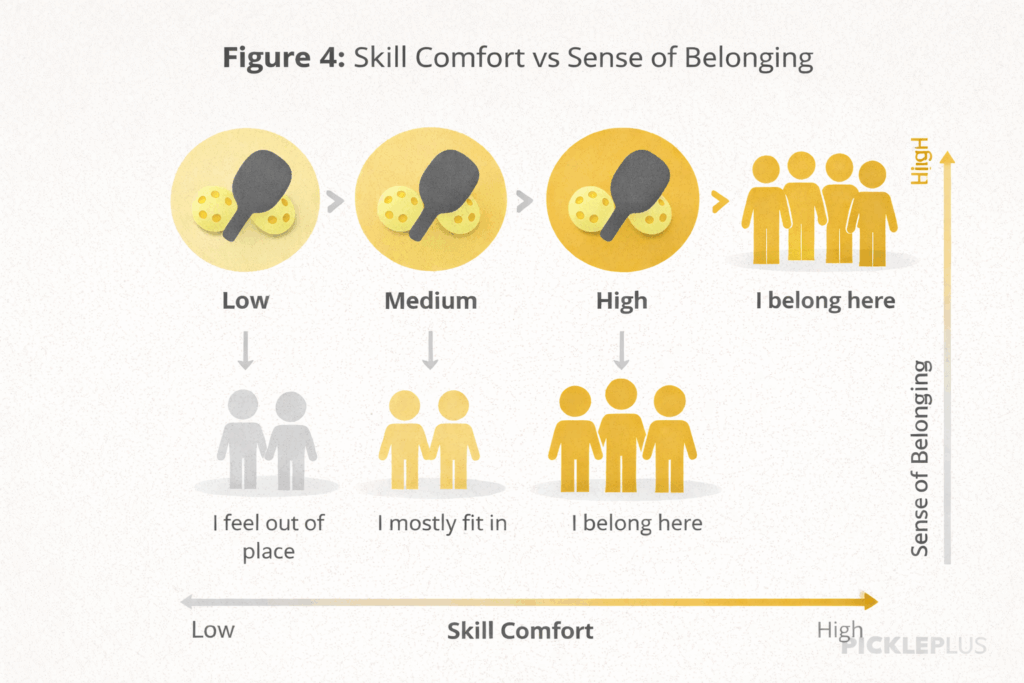
Belonging only emerges once players feel they “fit.”
Players begin to feel part of a community when they can sustain rallies, understand flow, and participate without constant pressure. Unstructured environments reward confidence and punish beginners, accelerating early drop-off.
Structured groupings and facilitated sessions dramatically increase the likelihood that players feel they belong.
4) Belonging Drives Retention
Claim:
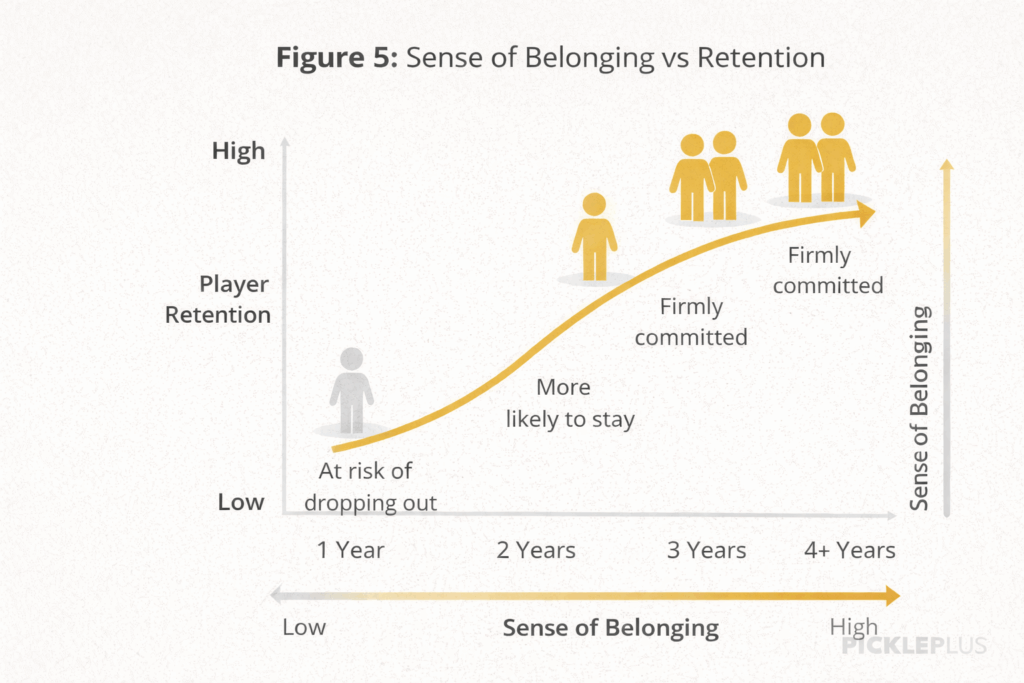
People return for people, not for sports.
Retention increases when players recognise familiar faces, feel socially safe, and perceive progress. Without belonging, even capable players drift away as play becomes optional rather than habitual.
Retention is an emotional outcome built on structural inputs.
5) Retention Increases Demand for Better Access
Claim:
Retention feeds back into the system.
Retained players play more often, demand better facilities, accept structured access, and support sustainable pricing. This justifies permanent venues, indoor courts, and long-term investment — accelerating the flywheel further.
At this stage, growth no longer requires marketing pressure.
Why Asia Spins the Flywheel Faster
Many Asian markets solve access early through indoor venues, paid sessions, and facilitated play. This slows headline growth but strengthens habit formation and repeat participation.
Asia’s model prioritises compounding over virality — and compounding is what sustains sports long term.
Synthesis: Why the Flywheel Matters More Than Growth
Growth answers how many people tried pickleball.
The flywheel explains how many are still playing — and why.
Markets that understand this distinction build durable ecosystems. Those that don’t will see participation stall once novelty fades.
What to Watch Next
- Access reliability metrics
- Repeat play frequency
- Programme and league growth
- Retention beyond 90 days
- Facility investment following retention
Remember:
“Pickleball doesn’t grow by adding players. It grows by keeping them.”
Continue your pickleball journey with us
Pickleplus Passport
https://pickleplus.io
Pointflow (Learning & Progression)
https://pointflow.pickleplus.io
Frenship Cup — Singapore (Temporary CTA)
Sign up for the Frenship Cup, taking place on 28 February 2026:
https://docs.google.com/forms/d/e/1FAIpQLSeC3UWkUPVJ0i9IbP0uHwLs1yZsMrnT-obEhw9q3iqJbwdaZQ/viewform