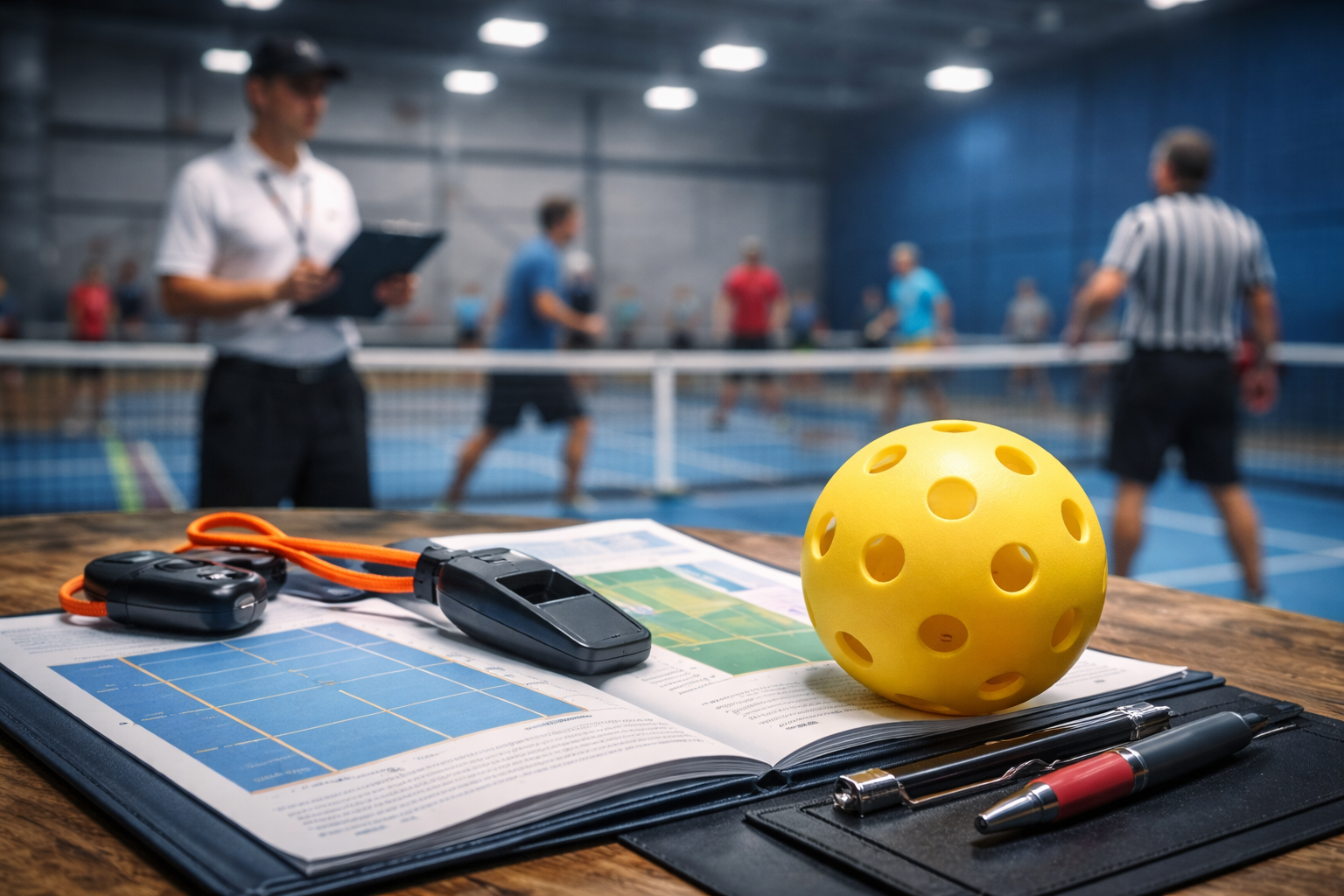

Pickleball rule updates in 2026 reflect the sport’s transition from rapid growth to long-term stability. Rather than introducing radical changes, the latest updates focus on clarifying enforcement, improving consistency across tournaments, and reducing grey areas that create disputes among players and officials.
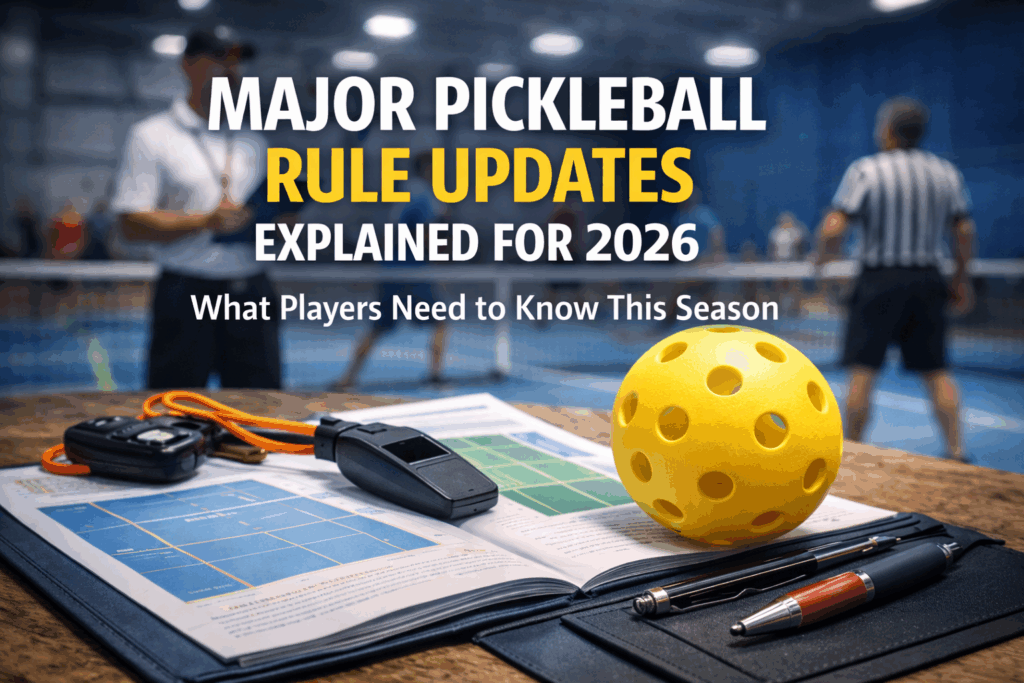
For recreational players, the impact may feel minimal. For competitive players, coaches, and clubs, these updates matter.
This article breaks down what changed, what didn’t, and what players should do differently this season.
Why Pickleball Rules Are Being Updated in 2026
As pickleball participation grows globally, rule enforcement challenges become more visible. Increased tournament play, live streaming, and cross-regional competition have exposed inconsistencies that previously went unnoticed.
The 2026 updates aim to:
- Standardise rule interpretation across regions
- Reduce match disruptions and disputes
- Improve fairness near the non-volley zone
- Support higher officiating standards
This is a sign of sport maturity, not overregulation.
Non-Volley Zone (Kitchen) Rule Clarifications
The non-volley zone (NVZ) remains the most frequently misunderstood area of pickleball rules.
Recent clarifications focus on:
- Momentum after a volley
- Loss of balance vs continuous motion
- Foot faults caused after ball contact
Players are now expected to regain full control before stepping into the kitchen after a volley. Borderline interpretations are being phased out.
SEO relevance:
non-volley zone rules, kitchen foot fault pickleball, pickleball momentum rule
Serve Rule Enforcement Emphasised
The fundamentals of the pickleball serve remain unchanged, but enforcement guidance has become stricter.
Officials are emphasising:
- A clear upward swing motion
- Paddle contact below the navel
- Reduced tolerance for questionable spin generation
Players relying on marginal serving techniques may see more faults called in competitive environments.
SEO relevance:
pickleball serve rules 2026, legal pickleball serve, pickleball spin serve rules
Return of Serve and Positioning Guidance
While no formal rule changes were introduced, guidance around return of serve positioning and readiness has been clarified to minimise pre-point disputes.
This is particularly relevant in:
- Organised leagues
- Tournament play
- Matches with officials or video review
Clean positioning helps matches start smoothly and consistently.
Replay and Let Calls Clarified
As streamed matches become more common, rules regarding replays and let calls have been refined.
Updated guidance addresses:
- External interference (noise, balls, spectators)
- Equipment-related disruptions
- When a replay is justified versus playing on
The goal is to preserve match flow and fairness without excessive stoppages.
SEO relevance:
pickleball let rules, pickleball replay rules, pickleball officiating guidelines
What Has NOT Changed in Pickleball Rules
To prevent unnecessary disruption, several core elements remain unchanged:
- Two-bounce rule
- Pickleball scoring system
- Court dimensions
- Paddle size regulations
Stability here ensures player development pathways remain intact.
What Players Should Do Differently This Season
Players do not need to relearn pickleball — but small adjustments matter.
Recommended focus areas:
- Cleaner footwork near the kitchen
- Controlled recovery after volleys
- Conservative, repeatable serves
- Reduced reliance on loose interpretations
Competitive environments in 2026 will reward discipline over improvisation.
What These Rule Updates Mean for the Future of Pickleball
These changes reflect pickleball’s shift from a purely social sport to a structured global competition ecosystem, while still maintaining accessibility.
The key takeaway:
Pickleball is not becoming stricter — it’s becoming clearer.
Players who adapt early will experience fewer disputes, better match flow, and more consistent performance.