

You can have great hands, a powerful drive and the highest DUPR on court, yet still be the person nobody wants beside them. In doubles, being good at pickleball is not always the same as being good to play with.
Doubles has a way of exposing habits we rarely notice in our own game. You might take more balls because you think you are helping, correct your partner after every mistake or blame them when a middle ball drops untouched.
The problem is that doubles is not just two singles players sharing a court. Your movement, positioning and decisions all affect the person beside you. That is why pickleball strategy places so much emphasis on communication and coordination.
So before deciding your partner is the reason a game went badly, it may be worth checking whether any of these red flags sound familiar.
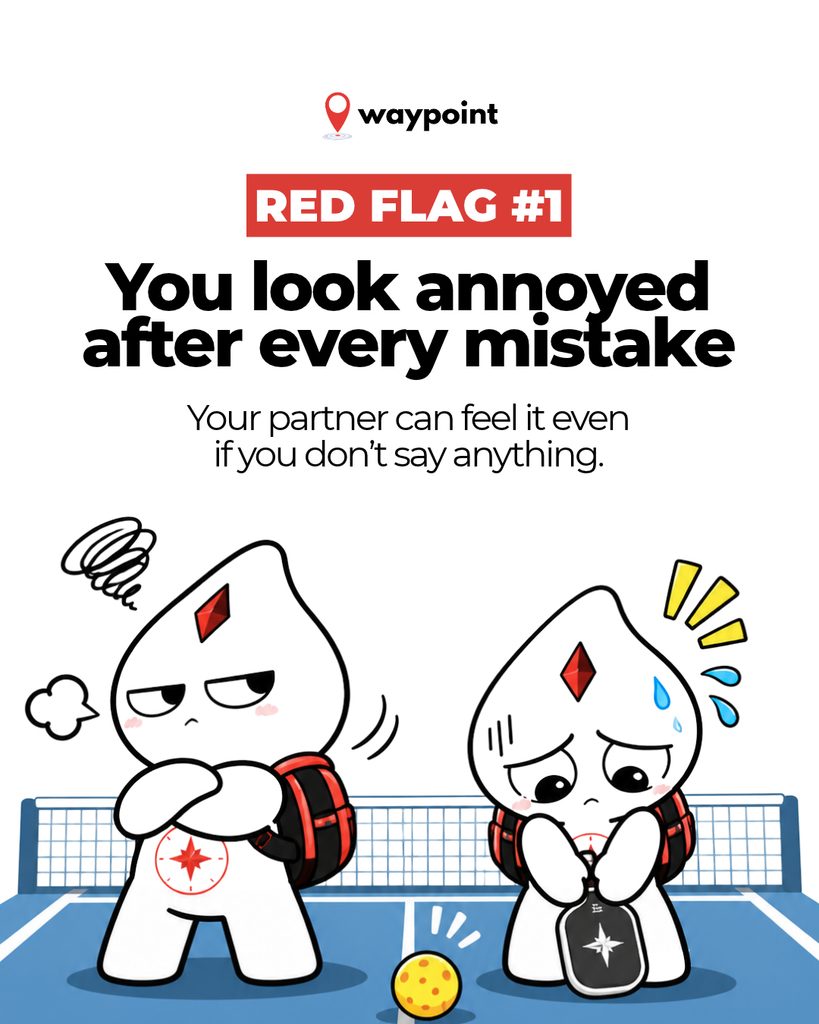
1. Your Partner Can Tell You’re Annoyed Without You Saying Anything
You do not have to yell at someone to make them feel blamed. A sigh, an eye roll or simply turning away after they miss can communicate the same thing. USA Pickleball specifically advises players to avoid criticism and negative non-verbal communication, because your reaction can affect more than the point that was already lost.
Everyone misses. Your partner will send returns into the net, pop up dinks and mishit volleys, and you will do the same. If every mistake changes the mood on your side of the court, your partner may start worrying about your reaction instead of focusing on the next ball. Being supportive does not mean pretending every shot was good.
Sometimes a quick paddle tap, a simple “all good” or just resetting for the next rally is enough.
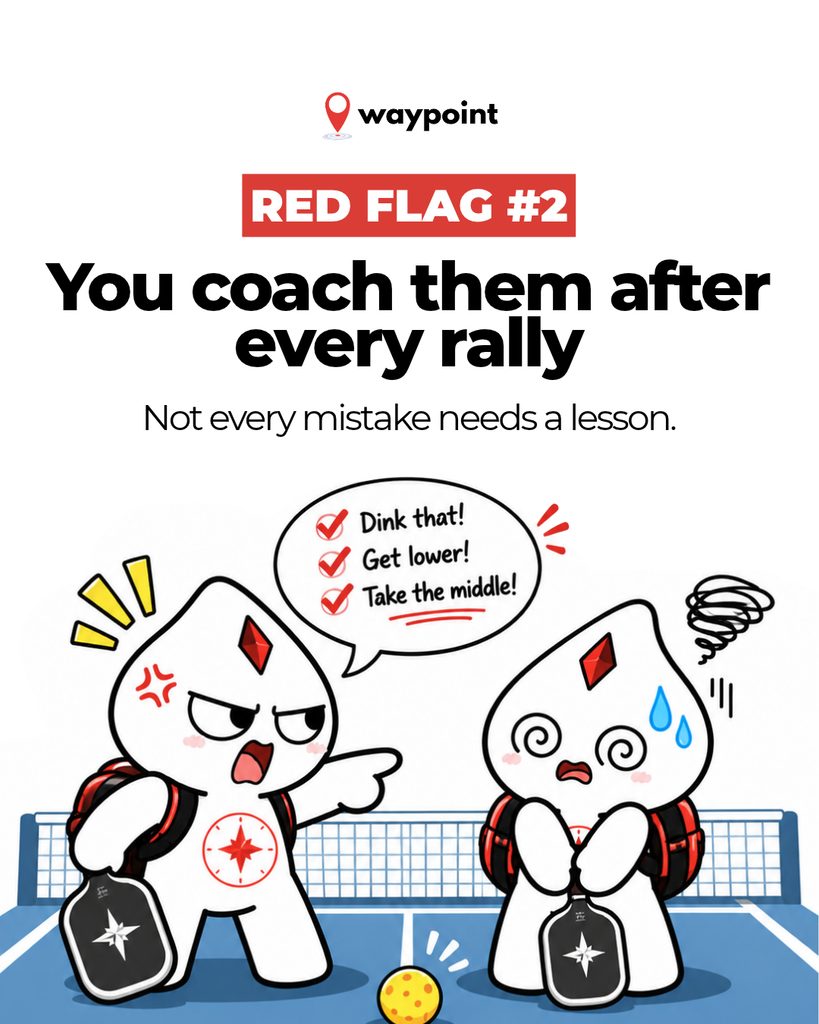
2. You Turn Every Mistake Into a Coaching Opportunity
There is a difference between discussing strategy and giving someone a lesson after every rally. Advice such as “you should have dinked that” or “you need to get lower” may be technically correct. Constant correction, however, can quickly feel more like criticism than teamwork.
In fact, USA Pickleball recommends giving coaching and advice only when someone asks for it.
That does not mean partners should avoid talking about what is going wrong. If your opponents keep attacking the middle, work out who should cover it. If one pattern keeps hurting you, adjust together.
The important part is making the conversation feel shared rather than making your partner feel like every problem is theirs to fix.
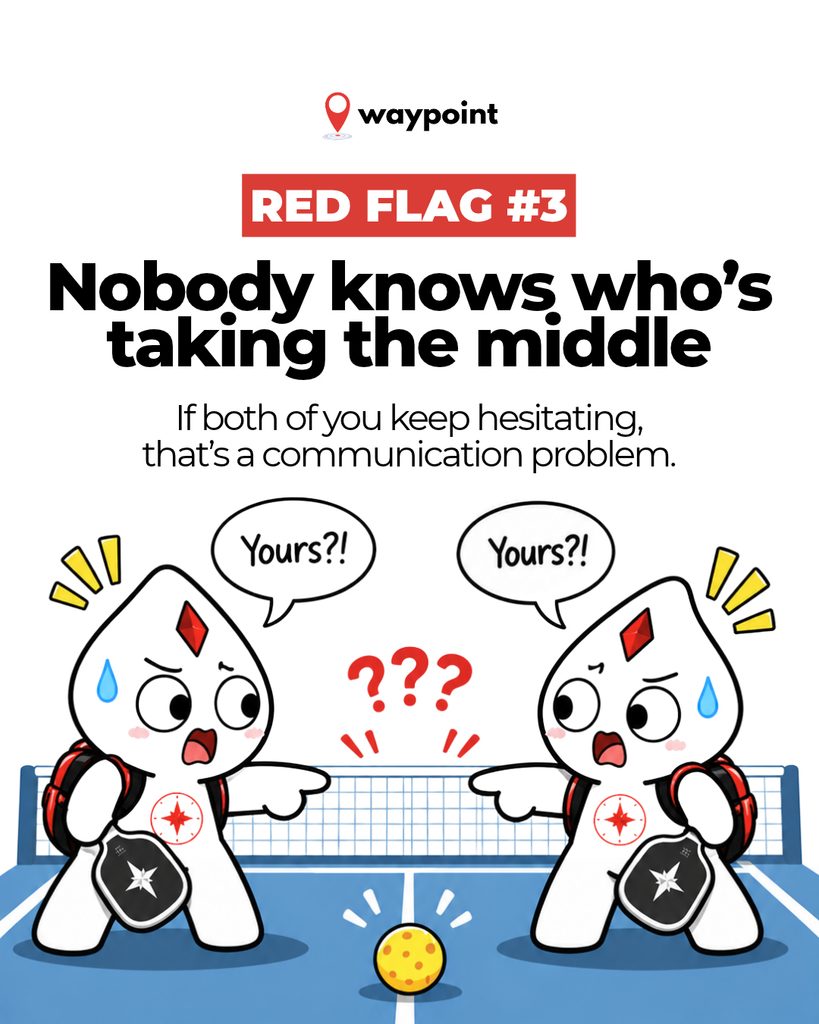
3. Nobody Knows Who Is Taking the Middle
We have all seen a perfectly playable ball float between two partners while both hesitate. Then it lands untouched and both players immediately say some version of, “I thought you had it.”
The middle is such an effective target because hesitation creates easy points. Pickleball strategy guides regularly highlight the centre as an area that can expose communication problems.
You do not need to talk through every second of a rally. Simple calls such as “mine,” “yours,” “switch” and “out” can prevent plenty of confusion. This becomes even more important with a new partner because you may have completely different ideas about who should cover certain balls.
Some teams favour the forehand, while others adjust based on reach, positioning or stacking. Any of those systems can work if both players understand them.
If the same ball keeps landing between you, communication may be the real problem.
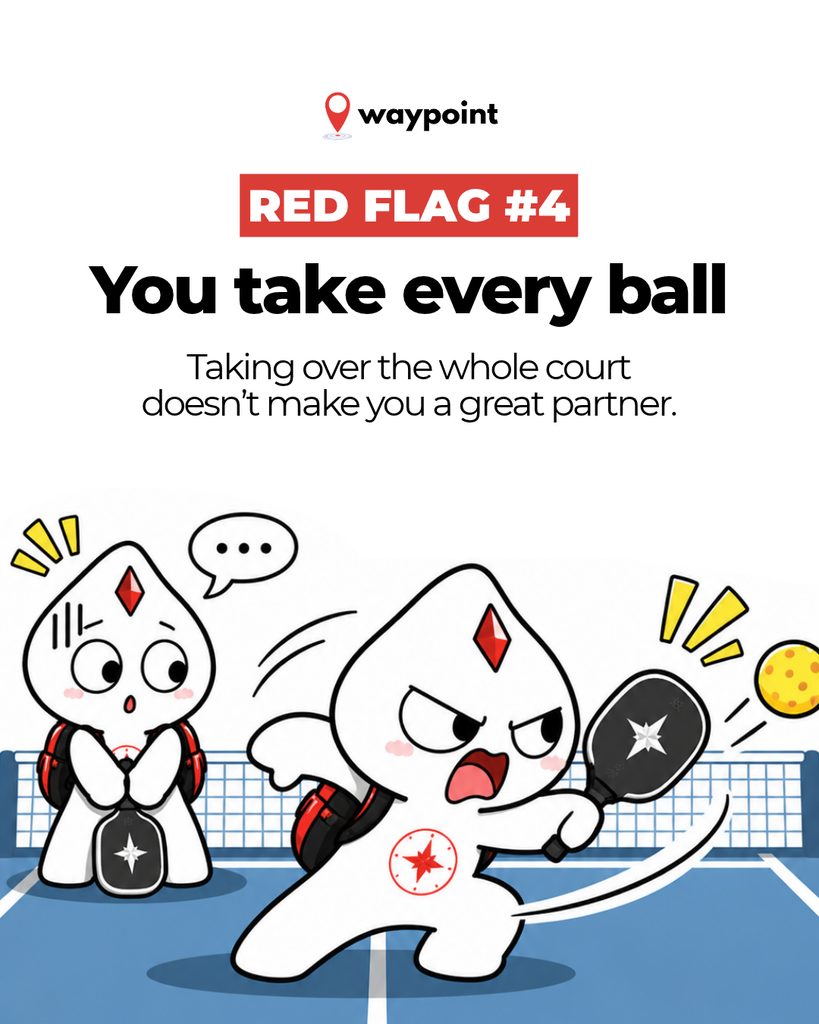
4. You Take Every Ball Because You Think You’re Better
Taking more court is not automatically bad doubles. Stronger players often poach, shade toward the middle or use one player’s better weapon more often. Those can all be smart choices when both partners know what is happening.
The problem starts when one person quietly decides that almost every ball should be theirs.
If you constantly cross in front of your partner, they may stop knowing which shots they are expected to take. You can also create open space elsewhere because good doubles positioning requires both players to respond to each other’s movement.
This matters even more during recreational play. If you are the stronger player, taking a little more responsibility may make sense. But turning the game into “stand there while I take everything” is not much fun for the person beside you.
USA Pickleball also encourages stronger players to be considerate during social play. Being the best player on court does not automatically make every ball yours.
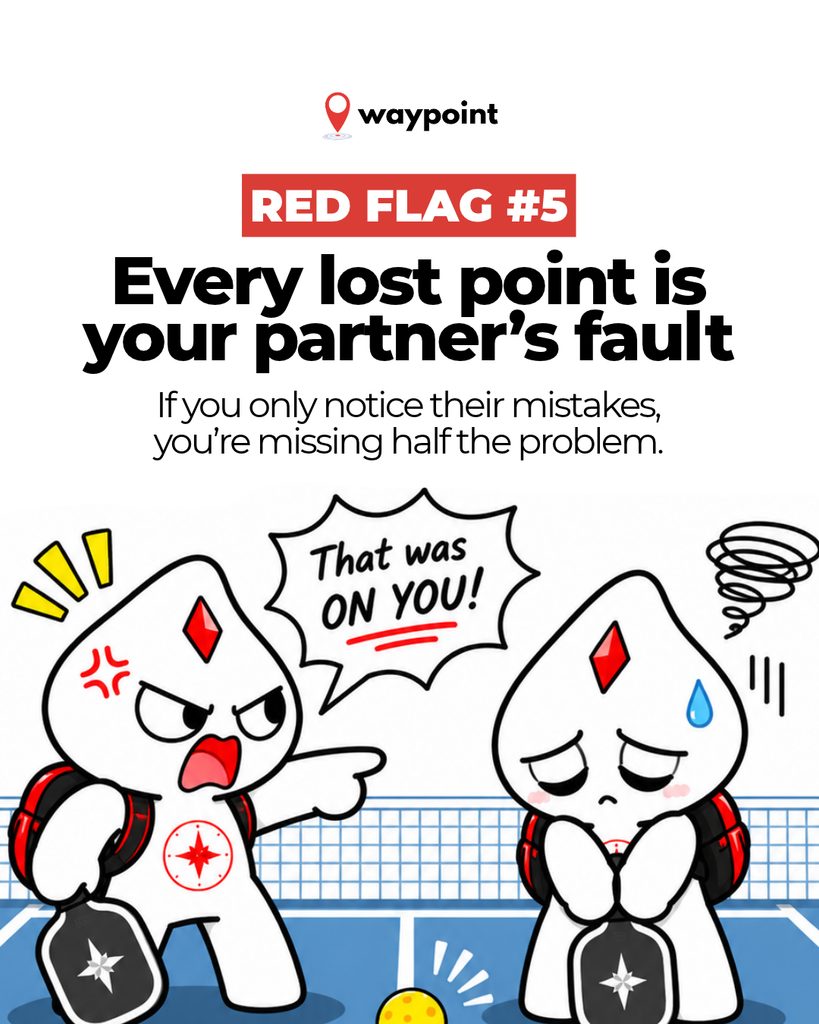
5. Every Lost Point Somehow Becomes Your Partner’s Fault
The final mistake is usually the easiest one to remember, but that does not mean it was the only thing that went wrong.
Your partner might get passed down the line after you shifted too far toward the middle. They may pop up a ball after being left to defend alone. Doubles points are connected, which is why good doubles strategy teaches partners to move and recover together.
Sometimes your partner simply misses, and that is all there is to it. Everyone does.
But if every loss leaves you remembering only their errors, it may be worth looking at what happened before the final shot. A good partner notices how their own positioning and decisions may have contributed too.
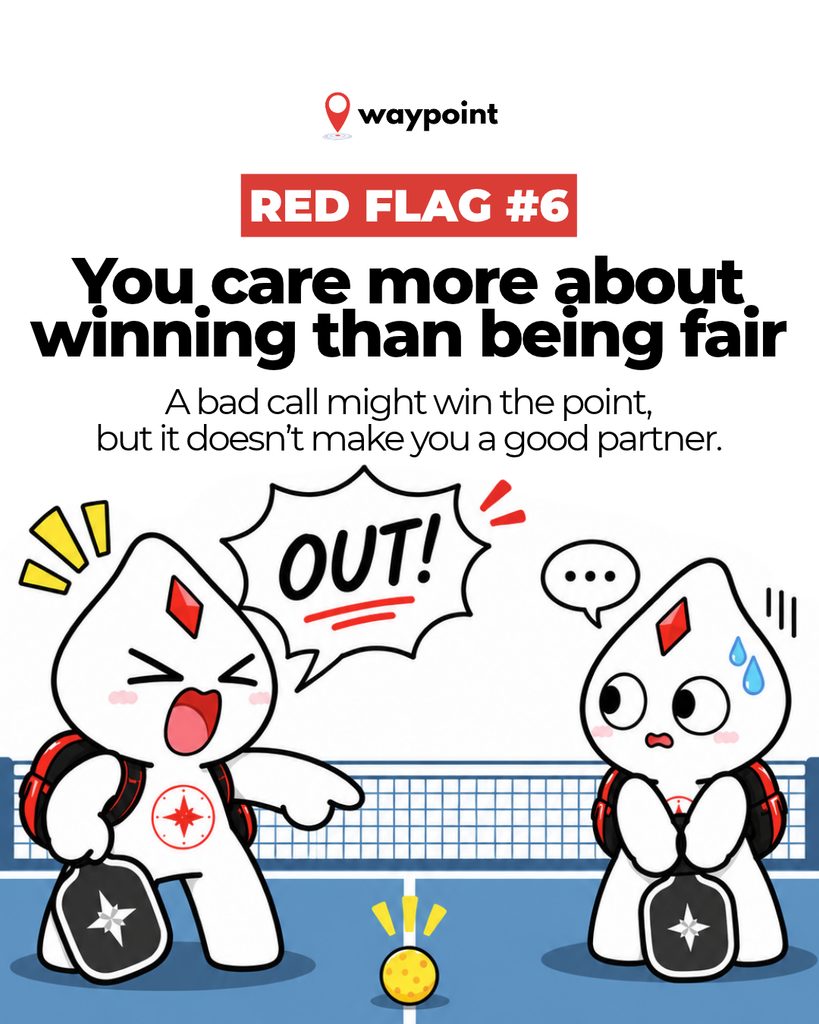
6. Winning Matters More Than Playing Fair
Being competitive is not a red flag. Plenty of players want to win, and that is part of what makes the game fun.
The problem starts when winning becomes more important than honesty.
Pickleball often relies on players making their own calls. Under the USA Pickleball rulebook, doubles partners can disagree about a line call. When that happens, the benefit goes to the opponents. USA Pickleball’s Sportsmanship Guide also says players should correct an incorrect call made by their partner.
That can feel uncomfortable when your partner calls a ball out and you clearly saw it touch the line. Staying quiet may help you win the point, but being a good partner does not always mean agreeing with your teammate.
Sometimes it means saying, “I saw that in,” and moving on.
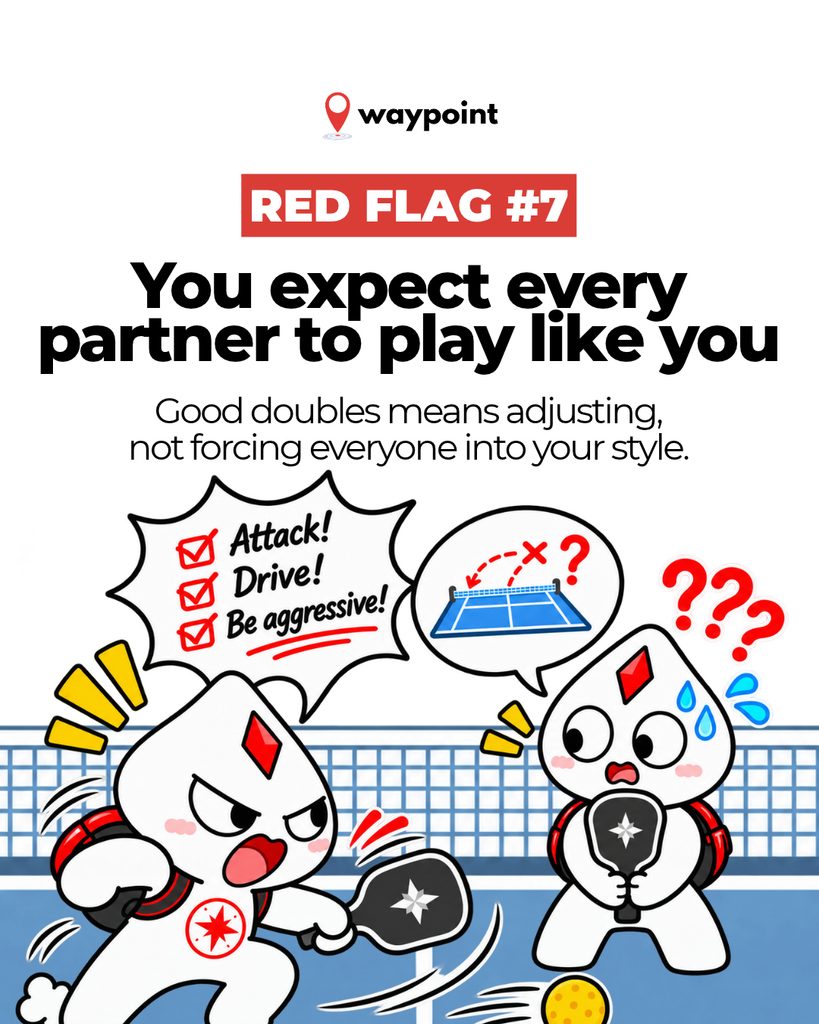
7. You Expect Every Partner to Play Exactly Like You
Not every doubles partner will move, attack or defend the same way. One player may love speeding the ball up, while another prefers to stay patient in the dink. Someone might have a huge forehand but struggle on the backhand.
Those differences are not automatically a problem. In fact, good court chemistry can come from players whose strengths complement each other.
The red flag is expecting everyone else to adjust completely to your style. A new partner may need more communication. Someone with less mobility may need more help covering space. Another player may have a better angle on a ball you would normally take.
Adapting does not mean abandoning your own game. It simply means understanding that doubles changes depending on who is standing beside you.
So, What Actually Makes a Good Doubles Partner?
Being a good partner does not mean never getting frustrated. You will take the wrong ball sometimes, forget to call the middle or say something that was less helpful than you intended.
The bigger problem is never noticing how those habits affect the person beside you.
Good partners communicate before confusion becomes a problem. They own their mistakes and adjust when something is not working. Most importantly, they remember that both players are trying to win the same point.
Sometimes the best response after your partner misses is simply to reset and play again.
The best doubles partner is not always the person with the highest DUPR, the hardest drive or the quickest hands. Sometimes it is simply the person who makes you feel like you are playing with them, instead of spending the entire match trying not to disappoint them.
Continue Your Journey
Getting better at pickleball is not only about learning new shots. Communication, positioning and understanding your partner matter too.
Waypoint explores the skills, strategy and experiences that make the game better on and off the court.
Our Official Links
Find our website and official social media channels here:
https://linktr.ee/waypoint.fan
Every Journey Starts With a Waypoint.
Sources & References
- USA Pickleball – Sportsmanship Guide
https://usapickleball.org/sportsmanship-guide/ - USA Pickleball – Official Rulebook
https://usapickleball.org/docs/rules/USAP-Official-Rulebook.pdf - Pickleball.com – Pickleball Strategy Guide
https://pickleball.com/docs/en/article/pickleball-strategy-guide-how-to-win-more-points-games-and-matches - Pickleball.com – 20 Things Pros Wish They Knew Earlier
https://pickleball.com/learn/20-things-pros-wish-they-knew-earlier-in-pickleball - Pickleball.com – Do You Have Court Chemistry With Your Doubles Partner?
https://pickleball.com/culture/do-you-have-court-chemistry-with-your-doubles-partner-know-the-signs - Selkirk Sport – Understanding Basic Pickleball Court Positioning
https://www.selkirk.com/blogs/pickleball-education/where-should-i-stand-understanding-basic-pickleball-court