
From chasing lobs to dealing with stray balls, a few simple court habits can help lower your risk of getting hurt while playing pickleball.
Being bad at parts of pickleball is not always a problem. The right amount of challenge, useful mistakes and structured practice can help you improve faster and actually see your progress.
Winning feels good, but it does not always mean you are improving. Sports science shows why challenge, focused practice and learning from your weaknesses can matter just as much as the final score.
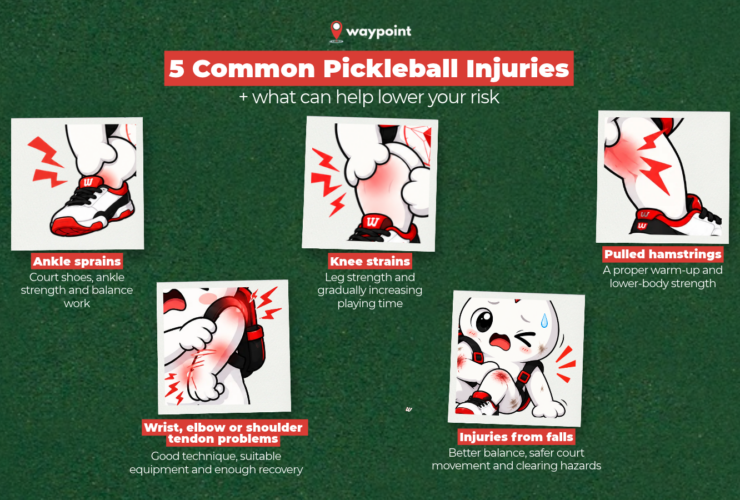
Ankle sprains, pulled hamstrings and overuse injuries can all happen on the pickleball court. Here are five common pickleball injuries and simple ways to help lower your risk.
Making pickleball harder than it needs to be? Learn three common beginner mistakes involving paddle position, power, and footwork, plus simple ways to fix them.
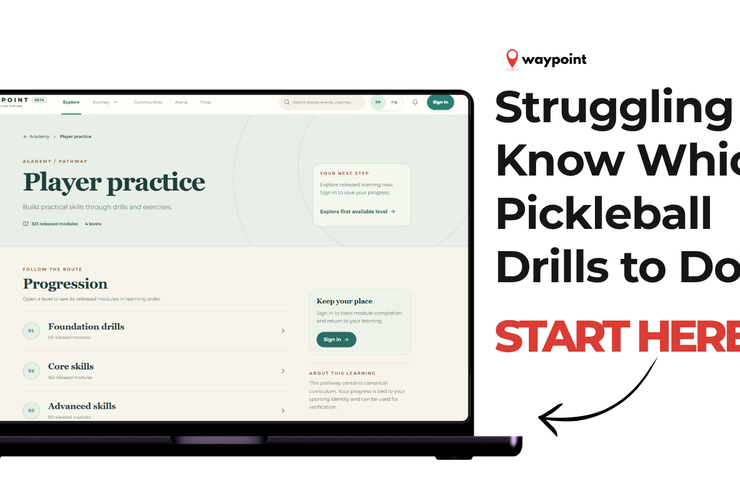
Not sure which pickleball drills to practice next? Waypoint’s Player Practice Pathway organizes 323 guided modules into four levels, with clear instructions, goals, and progress tracking.
Doing more pickleball drills does not always mean better practice. Learn how the CLEAR method helps you understand, practice, assess, and refine each drill with more purpose.
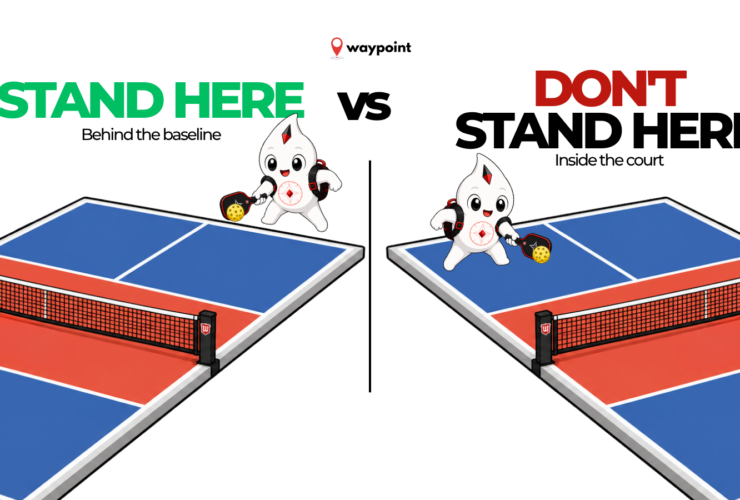
Not sure where to stand when serving in pickleball? Learn where your feet should go, which side to serve from, and where your serve needs to land.
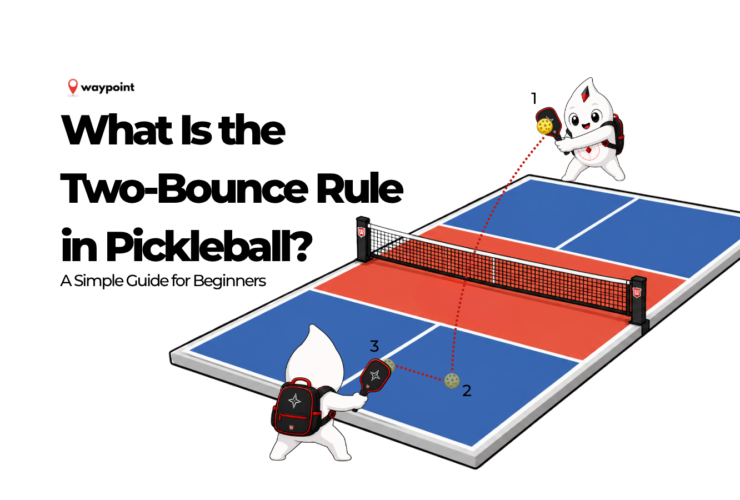
What is the two-bounce rule in pickleball? Learn why the serve and return must each bounce once before either team can start volleying.
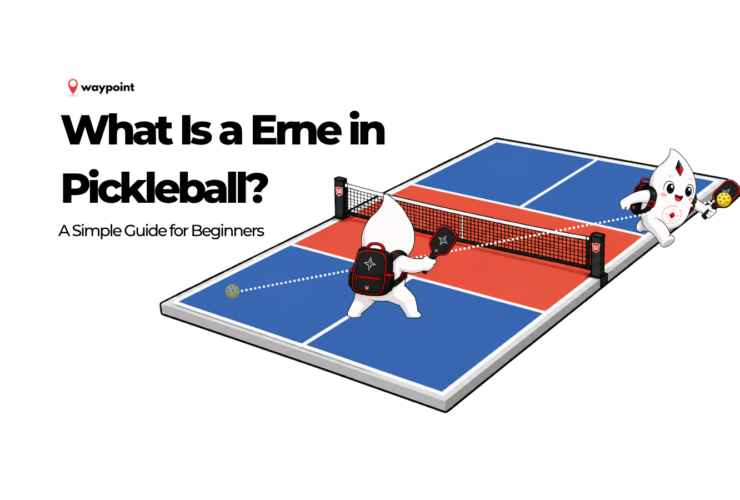
What is an Erne in pickleball? Learn how this unusual volley works, why it is legal, when players use it, and how it differs from an ATP.