

Once a pickleball rally starts, it is easy to focus only on getting the ball back. You chase a lob, stretch for something just out of reach, or keep playing even when your legs are getting tired. But a lot of on-court safety comes down to a few simple choices about how you move, when you stop, and when it is better not to force a play.
These five do’s and don’ts are not about playing scared. They are about staying balanced, moving with more control, and avoiding some of the situations that can make falls or strains more likely.
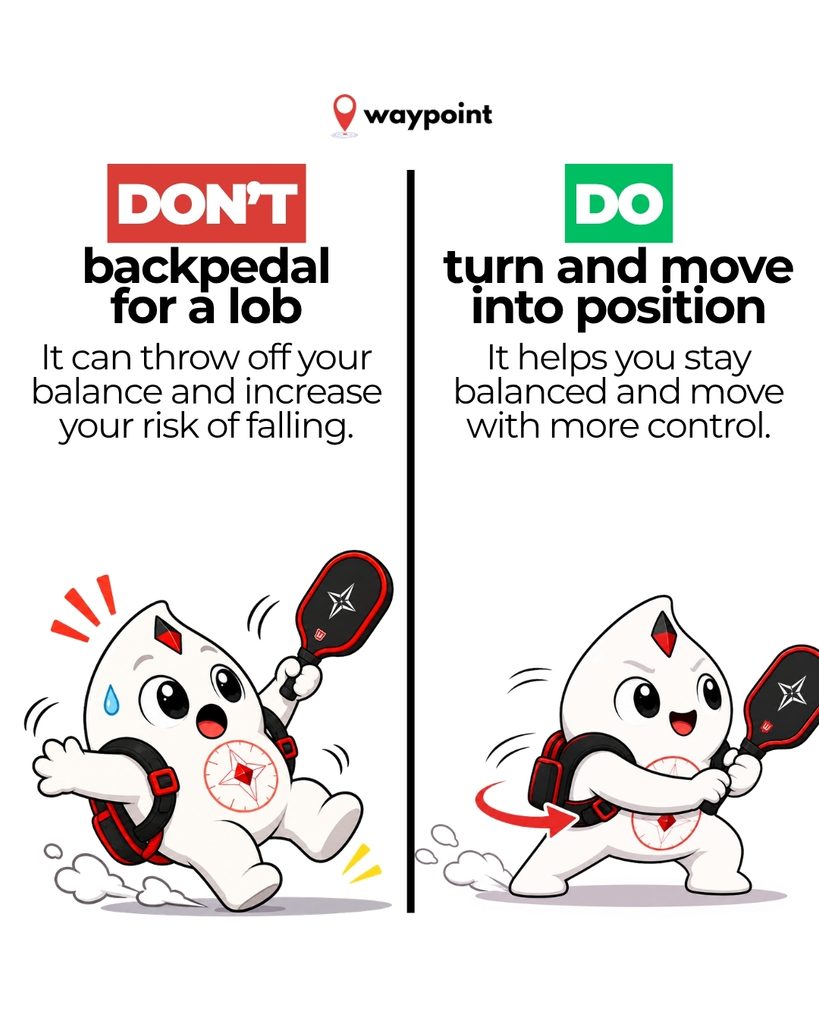
1. Don’t Backpedal for a Lob. Do Turn and Move Into Position
When someone sends a lob over your head, your first instinct might be to keep facing the net and start running backwards while watching the ball. That is exactly what you want to avoid. USA Pickleball’s guidance on lob shots specifically tells players not to backpedal to play a lob and recommends turning and running if necessary instead.
Turning gives you a more natural way to cover ground while staying balanced. You can still track the ball as you move, but you are not trying to retreat with your weight already falling backwards. If you have enough time, get behind the ball and set yourself before hitting. If you cannot reach it safely, letting it bounce or even letting the point go is better than turning one desperate chase into a fall.
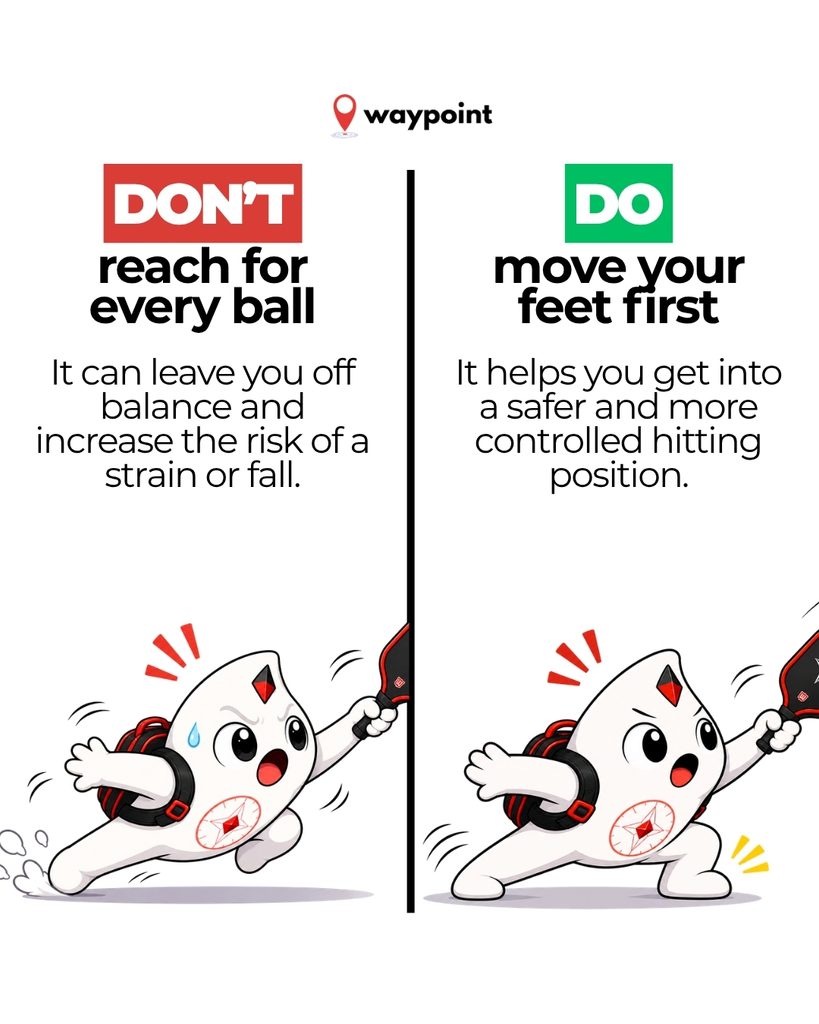
2. Don’t Reach for Every Ball. Do Move Your Feet First
A ball that is just slightly out of reach can tempt you to keep your feet planted and stretch as far as possible. Sometimes that is unavoidable, but if you have time to move, use it. USA Pickleball’s basic technique guidance advises players to move into the correct court position first and avoid reaching when they can move their feet instead.
A couple of small adjustment steps can give you better spacing between your body and the ball, which usually makes the shot easier to control too. The goal is not to make every movement look perfect. It is simply to avoid making a long, off-balance reach your default whenever the ball is not exactly where you want it.
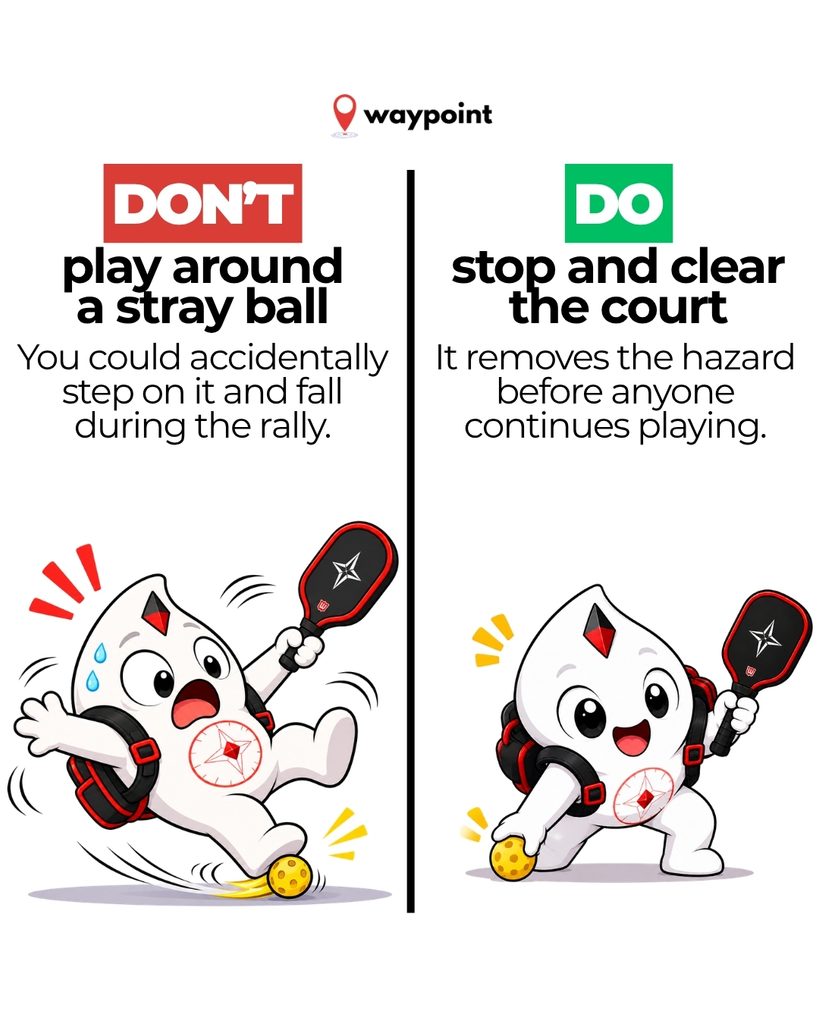
3. Don’t Play Around a Stray Ball. Do Stop and Clear the Court
If another pickleball rolls onto your court during a rally, stop playing. It can be tempting to think you know where the loose ball is and can just avoid it, but your attention moves quickly once the rally continues. Two shots later, you may no longer know exactly where it is.
USA Pickleball’s Sportsmanship Guide tells players to make safety a priority and to warn another court if a stray ball creates a danger by loudly calling “ball” or another warning. The same applies in reverse. If your ball rolls onto another active court, do not run into their rally to retrieve it. Warn them if it is dangerous, then wait until play has stopped before collecting it.
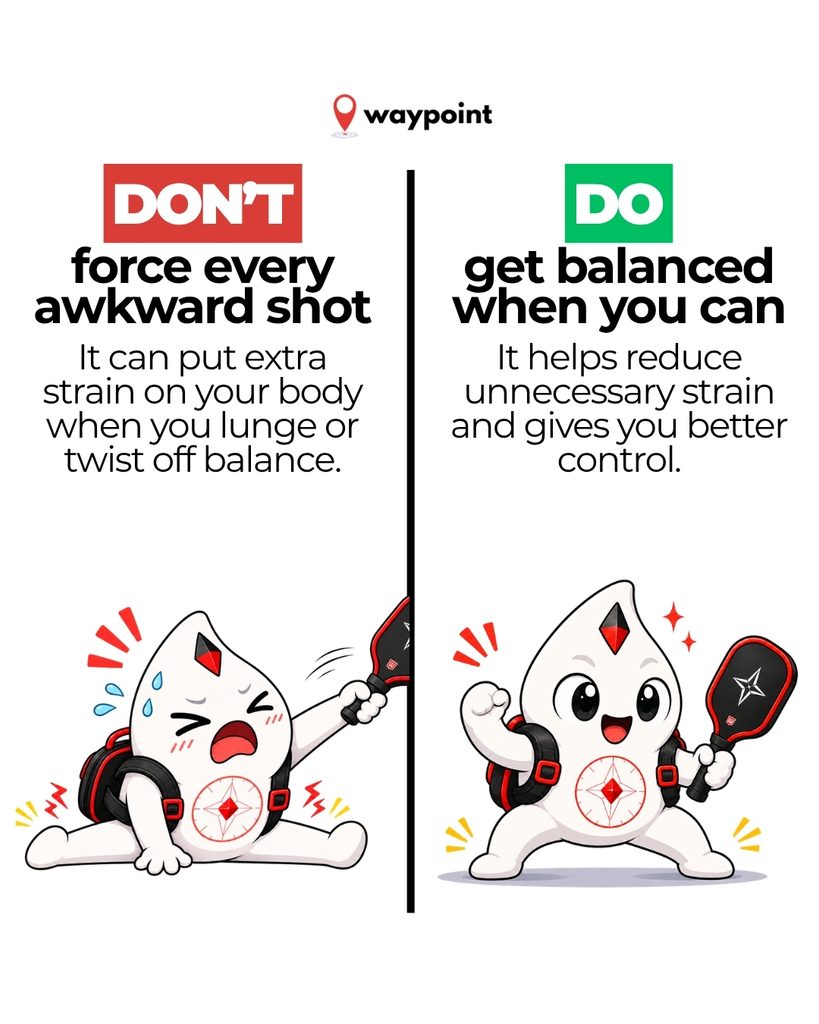
4. Don’t Force Every Awkward Shot. Do Get Balanced When You Can
Some rallies get messy. You might be lunging for a low ball, reaching across your body or trying to hit while your weight is moving in the opposite direction. You will not always have time to reset perfectly, but if you do have time to move into a better position, take it.
The American Academy of Orthopaedic Surgeons’ pickleball injury-prevention guidance notes that poor technique can contribute to injuries and recommends learning how to swing and move around the court properly. Better footwork and positioning can reduce how often you have to rescue balls from awkward positions in the first place. You can still compete for difficult shots, but there is a difference between a hard play and repeatedly forcing movements that feel uncontrolled.
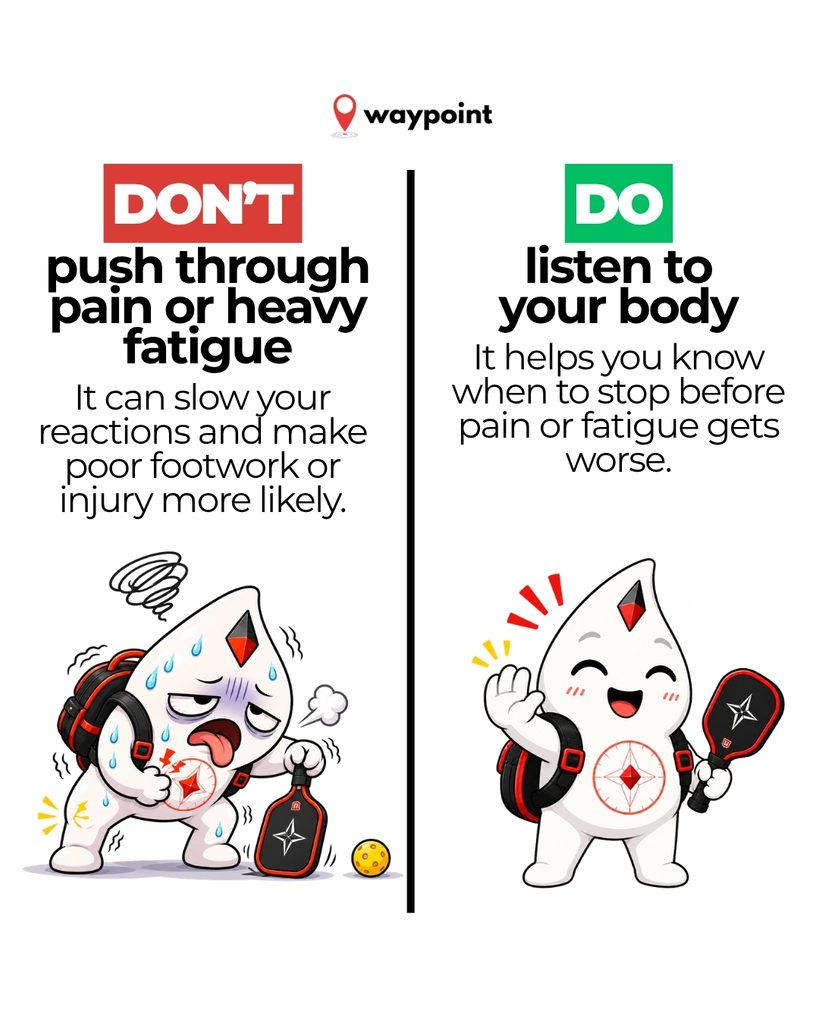
5. Don’t Push Through Pain or Heavy Fatigue. Do Pay Attention to How You’re Moving
Pickleball makes it very easy to say, “one more game,” especially when you are having fun. The problem is that fatigue can change how you move. Your reactions may slow, your footwork can get less precise, and you may start reaching or lunging for balls you would normally get into position for.
Hospital for Special Surgery’s pickleball injury guidance notes that muscle cramps and an overall sense of fatigue can be warning signs to back off and rest. HSS specialists also advise against pushing through pain that could become a bigger problem. Normal tiredness after exercise is one thing, but sharp, sudden or worsening pain is different. If your movement is falling apart or something feels wrong, stopping early is often the smarter choice.
The Main Idea Is to Stay in Control
Safer pickleball does not mean refusing to chase difficult balls or slowing every rally down. It means recognizing when there is a better way to make the same play.
Turn instead of blindly backpedaling for a lob. Move your feet before stretching for something you can reach more comfortably. Stop when a loose ball enters the court. Get balanced when the rally gives you time, and pay attention when fatigue starts changing the way you move.
Those are small decisions, but together they can help you stay more controlled on court and lower avoidable injury risk while you play.
Quick Recap
| ❌ Don’t | ✅ Do |
|---|---|
| Backpedal for a lob | Turn and move into position |
| Reach for every ball | Move your feet first |
| Play around a stray ball | Stop and clear the court |
| Force every awkward shot | Get balanced when you can |
| Push through pain or heavy fatigue | Listen to your body |
Continue Your Journey
Want more practical pickleball tips, guides and training?
Explore Waypoint Academy and discover more ways to learn, practice and improve your game.
Our Official Links
Find our website and official social media channels here:
🔗 https://linktr.ee/waypoint.fan
Every Journey Starts With a Waypoint.