
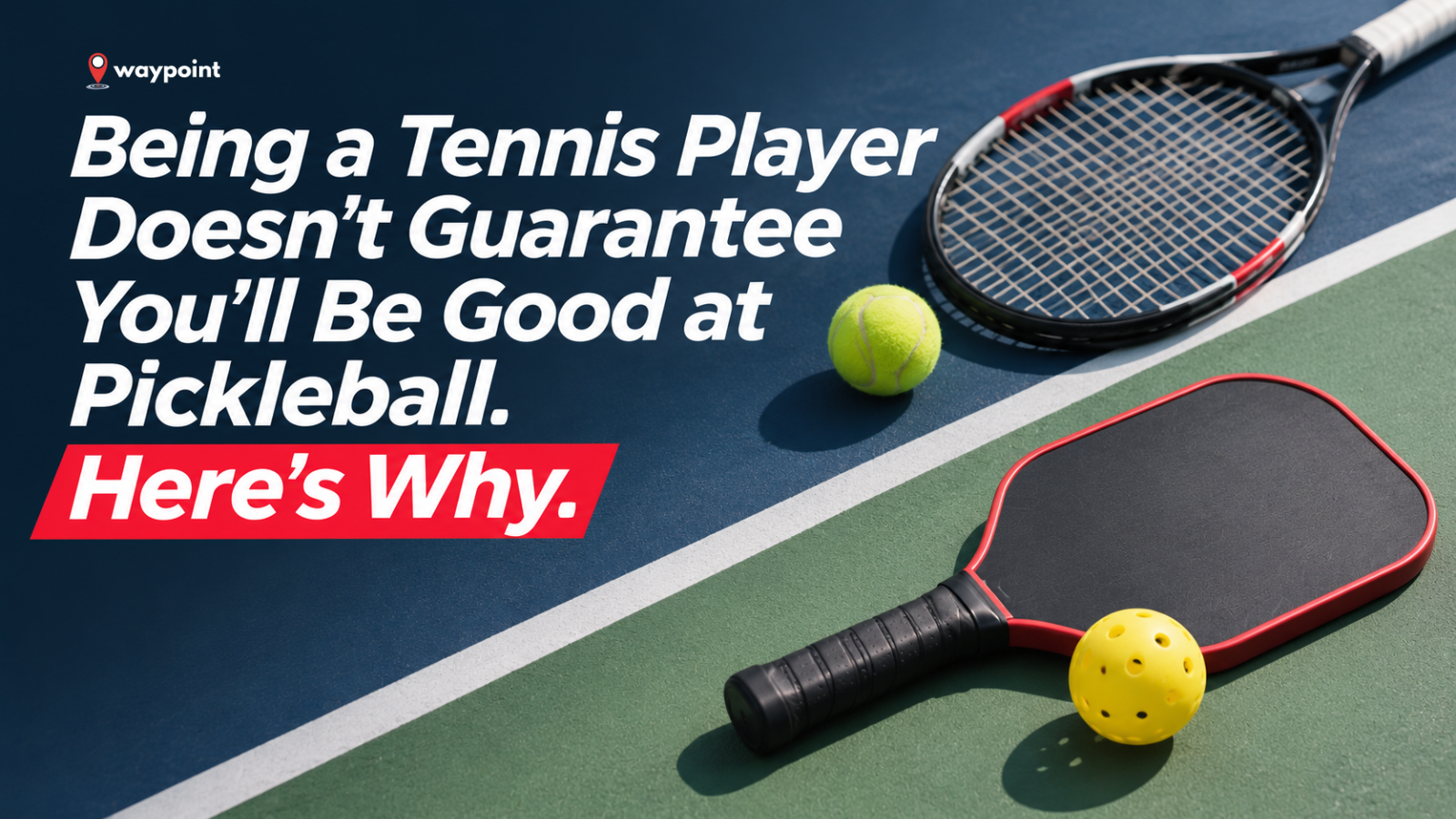

Tennis and pickleball share many similarities, but success in one doesn’t guarantee success in the other. From swing techniques to court positioning, here’s why even experienced tennis players can struggle with the transition.
Being good at tennis should make pickleball easy, right? Both sports involve hitting a ball over a net, and many of the basic skills seem similar. However, the transition isn’t always as simple as it looks.
According to Pickleball.com’s November 19 report, former Wimbledon finalist Genie Bouchard lost to 13-year-old Natalia Simson and 14-year-old Kelly Goodnow in separate PPA Tour singles matches. Despite her professional tennis background, Bouchard’s recent results highlight the challenges of competing in a different racket sport.
So why can even experienced tennis players struggle with pickleball? The answer lies in the technical differences between the two sports. While tennis experience provides valuable skills, pickleball requires its own techniques, strategies and decision-making.
1. The Smaller Court Requires Different Swing Techniques
One of the biggest differences between tennis and pickleball is the court size. According to USA Pickleball, a standard pickleball court measures 20 feet wide and 44 feet long. In comparison, a tennis singles court measures 27 feet wide and 78 feet long.
This difference changes how players prepare for shots. Tennis players often use longer backswings to generate power, spin and depth. However, pickleball players frequently exchange shots at closer distances, especially near the net. With less distance between opponents, players often have less time to prepare. Longer swings can make it harder to react quickly and maintain control during fast exchanges.
As a result, shorter and more compact swings are often more effective in pickleball. USA Pickleball’s third-shot coaching guide also recommends compact backswings for consistency and better shot preparation. This doesn’t mean tennis techniques are ineffective. Players simply need to adjust their timing, swing length and paddle control.
2. Power Isn’t Always the Best Strategy
Tennis players are often comfortable using powerful groundstrokes to pressure opponents. While power remains useful in pickleball, hitting harder isn’t always the best option. Pickleball also relies heavily on controlled shots, particularly in doubles.
For example, a dink is a soft shot that lands in the opponent’s kitchen. It helps keep the ball low and makes it harder for opponents to attack. A third-shot drop serves a different purpose. It sends the ball softly into the opponent’s kitchen, helping the serving team advance toward the net.
According to USA Pickleball’s coaching guide, the choice between a third-shot drive and drop depends on the situation. A drive can be effective against a high return, while a drop may be better when the ball stays low or players need time to move forward. This is where some tennis habits can become a disadvantage. Players who rely heavily on powerful shots may struggle with the patience and control required for softer exchanges. Learning when to attack and when to slow down becomes just as important as hitting the ball well.
3. The Kitchen Changes How Players Approach the Net
In tennis, moving toward the net creates opportunities to volley and finish points. Pickleball has an additional rule that changes this strategy. The non-volley zone, commonly called the kitchen, extends seven feet from the net on each side. Players cannot volley while standing inside this area or touching its boundary line.
According to USA Pickleball’s official rules, players also cannot let their momentum carry them into the kitchen after hitting a volley. However, they can enter the kitchen to return a ball that has bounced. This restriction changes how players attack near the net. Instead of moving as close as possible to finish a volley, players must maintain their position outside the kitchen.
It also explains why dinking plays an important role in pickleball. According to USA Pickleball’s dinking guide, controlled dinks can limit an opponent’s attacking opportunities. A well-placed dink forces opponents to return a low ball, making it harder for them to hit an aggressive shot. For tennis players accustomed to moving forward aggressively, learning these positioning rules takes practice.
4. The Serve and Two-Bounce Rule Change the Rally
Serving is another area where tennis experience doesn’t transfer directly. In tennis, a powerful overhead serve can create an immediate attacking opportunity. Players may also follow their serve toward the net. However, pickleball uses a different serving system.
Under USA Pickleball’s official rules, players can use a regulated volley serve or a drop serve. These techniques differ from the overhead serving motion commonly used in tennis.
Pickleball also follows the two-bounce rule. The serve must bounce before the receiving team returns it. The return must then bounce before the serving team hits its next shot. Only after those two bounces can either side volley.
This means the serving team cannot immediately serve and volley as players sometimes do in tennis. Instead, the serving team must prepare for the third shot from farther back. That shot often determines whether players can move forward and establish a stronger court position. For tennis players, understanding this sequence requires a different approach to constructing points.
5. Court Positioning and Decision-Making Are Different
Tennis experience can help players develop strong footwork, coordination and anticipation. However, pickleball requires different movement patterns and quick adjustments in certain situations. During doubles rallies, players often spend significant time near the kitchen line. From there, they must react to dinks, volleys and sudden attacks.
According to USA Pickleball’s footwork guide, players should focus on controlled lateral movements, balance and maintaining a ready position. Small positioning mistakes can create opportunities for opponents to attack.
Shot selection is equally important. For example, attempting a powerful shot from below net height can create an easy attacking opportunity for the opponent. A controlled reset may be the better option because it helps neutralise the attack. USA Pickleball’s guide to transition-area resets explains how controlled shots help players defend and regain a better court position.
These decisions require pickleball-specific experience. Having strong tennis fundamentals doesn’t automatically mean a player will recognise the best shot for every situation.
Does Tennis Experience Still Give Players an Advantage?
Absolutely. Tennis players often enter pickleball with strong hand-eye coordination, court awareness and an understanding of spin. These skills can provide a valuable foundation. However, experience in one sport doesn’t automatically translate into the same level of performance in another.
Professional pickleball player Collin Johns discussed this in a PPA Tour article about the overlap between racket sports. Johns explained that tennis provides one of the strongest foundations for learning pickleball. However, he also acknowledged that many skilled tennis players struggle during the initial transition.
This distinction becomes particularly important at the professional level. Players aren’t competing against recreational beginners but against athletes who train specifically for pickleball. Tennis experience can help someone learn faster, but long-term success still depends on developing pickleball-specific skills.
Two Similar Sports, but Different Challenges
Tennis and pickleball share many similarities, but they are not interchangeable. The smaller court changes how players swing and react. The kitchen and two-bounce rules create different tactical challenges, while dinks, drops and resets require additional control.
For tennis players making the transition, the goal isn’t to forget everything they’ve learned. It’s to adapt those skills to a different game. Ultimately, being good at tennis can give you a head start in pickleball, but becoming good at pickleball requires learning the sport itself.
Continue Your Journey
Whether you’re transitioning from tennis or picking up a paddle for the first time, there’s always something new to learn.
At Waypoint, we explore the players, techniques and experiences that make pickleball exciting around the world.
Our Official Links
Find our website and official social media channels here:
https://linktr.ee/waypoint.fan
Every Journey Starts With a Waypoint.
Sources & References
- Pickleball.com – Wimbledon Finalist Keeps Losing to Teenagers in Professional Pickleball
https://pickleball.com/news/wimbledon-finalist-keeps-losing-to-teenagers-in-professional-pickleball - PPA Tour – Switching Over: A Conversation on the Overlap Between Racquet Sports
https://www.ppatour.com/switching-over-a-conversation-on-the-overlap-between-racquet-sports/ - USA Pickleball – What Is Pickleball? Rules, History & How to Play
https://usapickleball.org/what-is-pickleball/ - USA Pickleball – Mastering the Third Shot in Pickleball: Drop vs. Drive
https://usapickleball.org/pickleball-skills/level-three/mastering-the-third-shot-in-pickleball/ - USA Pickleball – Official Pickleball Rules Summary
https://usapickleball.org/rules/summary/ - USA Pickleball – How to Dink and Why It’s Important for Your Success in Pickleball
https://usapickleball.org/pickleball-skills/level-two/how-to-dink-and-why-its-important-for-your-success-in-pickleball/ - USA Pickleball – Basic Kitchen Line Footwork to Move More Efficiently
https://usapickleball.org/pickleball-skills/level-four/basic-kitchen-line-footwork-to-move-more-efficiently/ - USA Pickleball – Pickleball Transition Area and Reset Tips
https://usapickleball.org/pickleball-skills/level-four/pickleball-transition-area-and-reset-tips/