

Doing more pickleball drills does not always mean you are getting more out of your practice. You can spend an hour serving, dinking, working on third shots, or repeating the same footwork pattern and still walk away wondering whether anything actually improved.
Sometimes the problem is not the drill itself. It is that we start practicing without really knowing what the drill is meant to improve, whether we are doing it correctly, or what we should change when something is not working.
That is where the CLEAR method comes in. Built into the Drill Library in Waypoint Academy, CLEAR gives you a simple way to move through a drill with more purpose, from understanding what you are working on to making adjustments and trying again.
CLEAR stands for Connect, Learn, Execute, Assess and Refine.
Each step leads naturally into the next, turning a drill from something you simply repeat into something you can actually learn from.
Why Repeating a Drill Is Not Always Enough
Repetition is an important part of improving at pickleball, but repeating something over and over only helps if you know what you are trying to improve.
Imagine doing the same serve drill for 20 minutes. You might hit dozens of balls, but are you working on consistency, placement, control, or technique? If you do not know the purpose of the drill, it becomes much harder to tell whether you are actually getting better.
The same applies when something keeps going wrong. Simply repeating the same movement may not fix it if you never stop to notice what needs changing.
CLEAR gives that practice a little more structure. Instead of only thinking about how many repetitions you completed, you start paying attention to what you are working on, how you are doing it, what happened when you tried, and what you could change next.
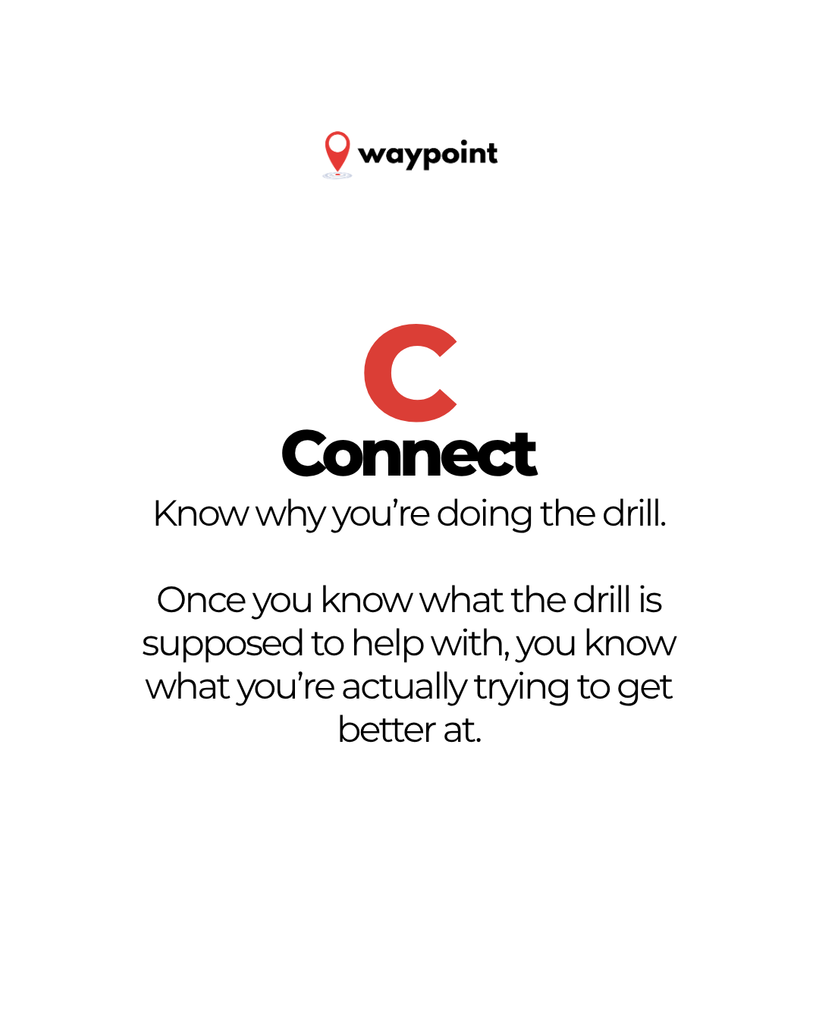
C: Connect
The first step is Connect, which is simply about knowing why you are doing the drill in the first place.
Every drill should have a purpose. One serve drill might focus on consistency, while another may be designed around placement. A dink drill could help with control, while another might be about keeping the ball low when you are under pressure.
Knowing that purpose gives you something specific to work towards. If the goal is serve placement, for example, getting the ball over the net is only part of the job. You also need to pay attention to where it lands.
Once you understand what the drill is meant to help with, it becomes much easier to focus on what actually matters.
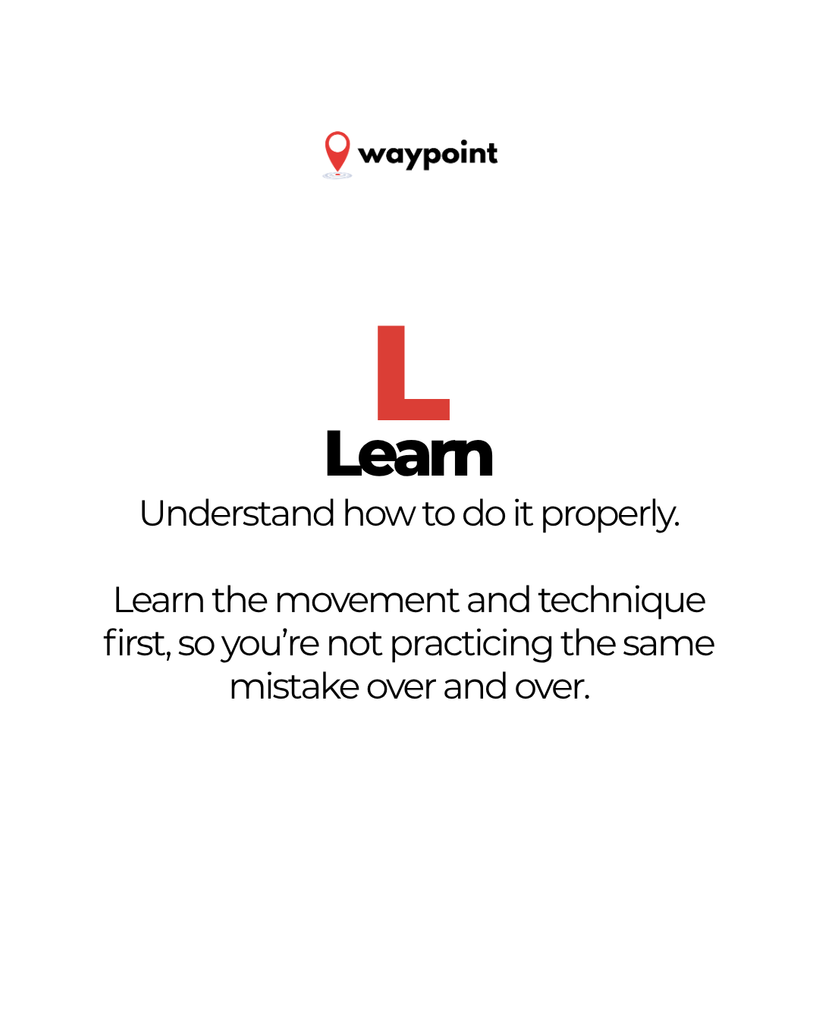
L: Learn
The next step is Learn. Before you repeat the movement again and again, take the time to understand how the drill should be done.
That could mean paying attention to your technique, positioning, movement, or the target you are trying to hit. Maybe the drill asks you to stay balanced through your serve, keep your paddle in a certain position during a dink, or move your feet before making contact.
This part matters because repetition can work both ways. If you are repeating a good movement, that can help build consistency. But if you are repeating the same mistake every time, you may just be reinforcing something you do not actually want.
Learning the movement first gives the rest of your practice more direction.
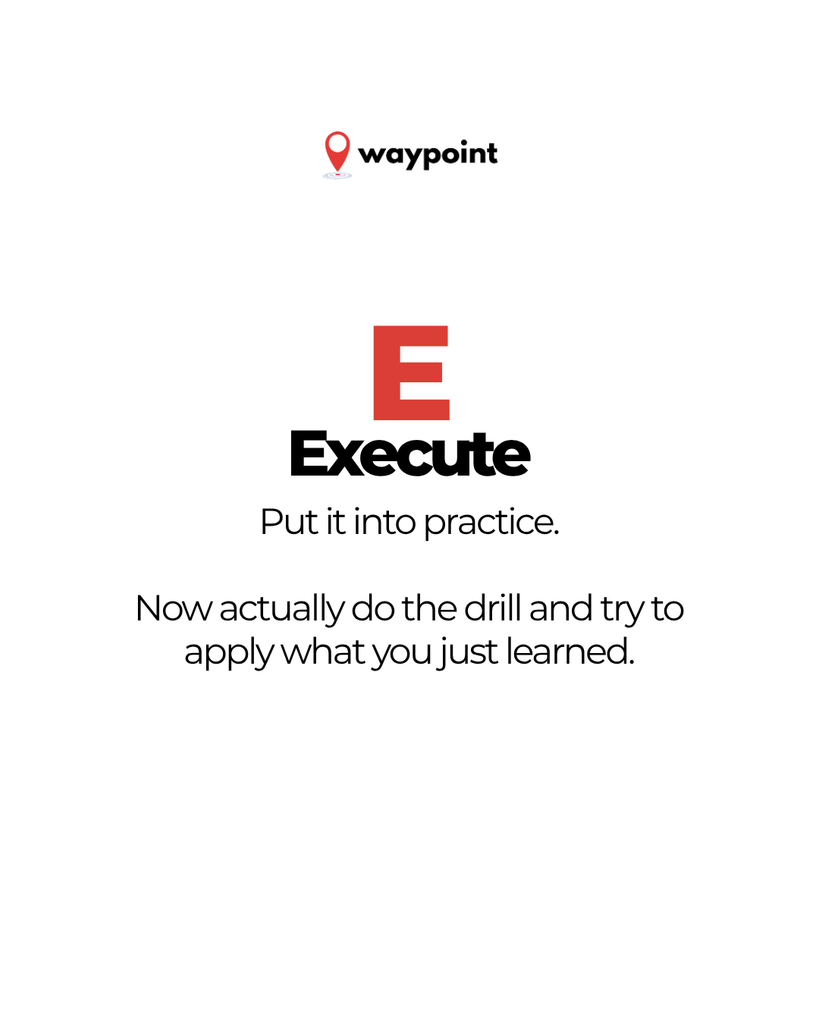
E: Execute
Once you know what you are working on and how the drill is supposed to be done, it is time to Execute.
This is where you put the drill into practice and try to apply what you just learned. You might start repeating serves, working through a footwork pattern, practising a third shot, or doing whatever exercise you have chosen.
The goal is not for every attempt to be perfect. What matters is that you are practicing with something specific in mind. Because you already understand the purpose of the drill, you can start noticing more useful details as you go.
Maybe your serve feels more controlled when you slow down. Maybe your third shot works when you are balanced but becomes inconsistent when you rush. Maybe your dink placement is improving, but your paddle keeps dropping too low.
Those observations are what take you into the next stage.
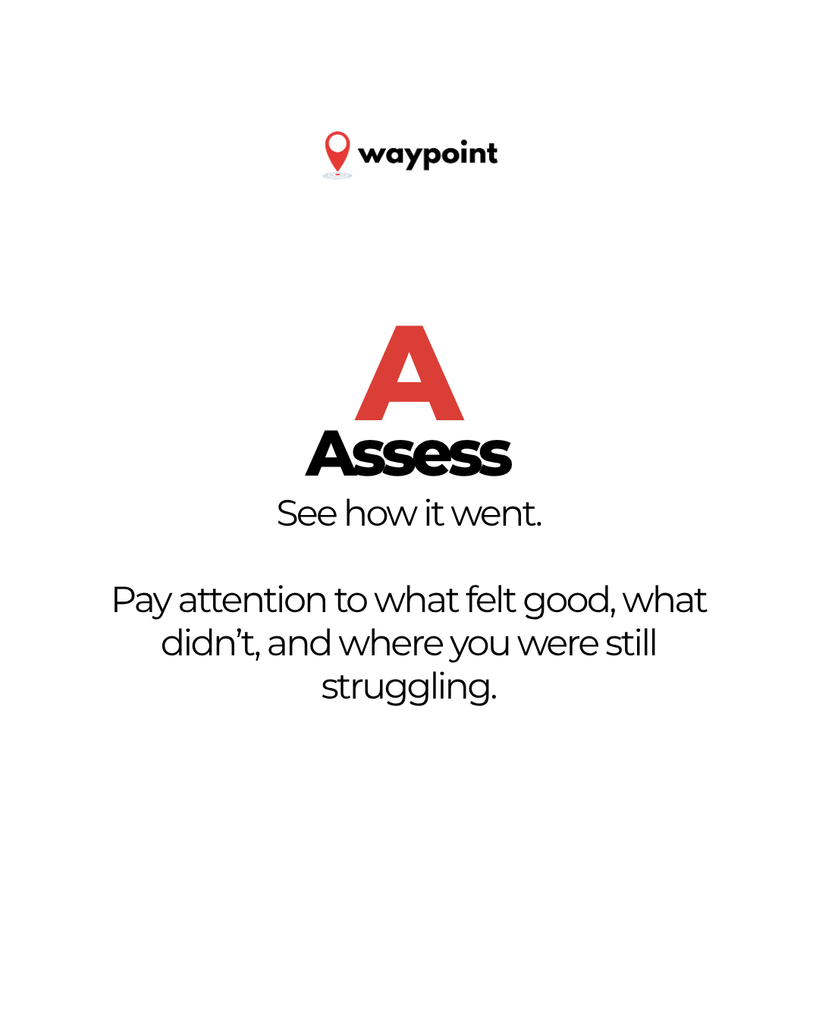
A: Assess
After you have spent some time practising, Assess how it went.
This does not need to turn into a complicated review of every single shot. It can be as simple as asking yourself what felt good, what kept going wrong, and whether you were actually achieving the goal of the drill.
You might notice that your serves are landing in consistently but are not reaching the part of the court you are aiming for. You might realise that your dinks feel controlled when you are standing still but become less consistent when you have to move.
Even noticing that something felt better than it did during your last practice can be useful.
The important part is that you pause long enough to learn something from what you just did instead of immediately moving on or repeating the exact same thing.
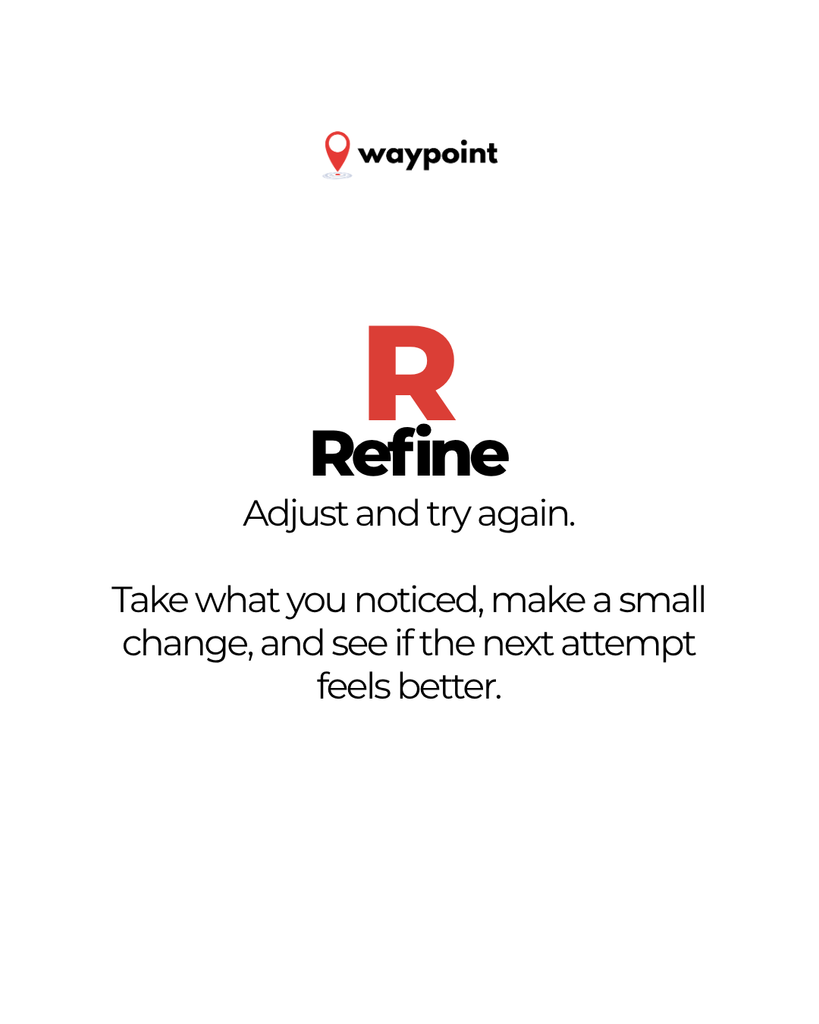
R: Refine
The final step is Refine. Take what you noticed during the Assess stage and use it to make a small adjustment before trying again.
Maybe you change your target, slow down the movement, adjust your position, or focus more closely on one part of the technique. You do not have to change everything at once. Often, one small adjustment is enough to give you something new to test on the next attempt.
Then you go back into the drill and see whether that change helps.
That is what turns CLEAR into a cycle rather than a checklist. You practice, notice what happened, make an adjustment, and try again with a little more information than you had before.
Why the CLEAR Method Works as a Cycle
CLEAR is not something you complete once and forget about. The five steps are designed to keep feeding into one another.
You Connect with the purpose of the drill, Learn how it should be done, Execute it, Assess what happened, and Refine what needs changing before trying again.
That creates a much more useful practice cycle:
Connect → Learn → Execute → Assess → Refine → Try again
Instead of doing the same drill 50 times in exactly the same way, you are using each attempt to understand your game a little better.
How Waypoint Academy Puts This Into Practice
The same thinking behind CLEAR is reflected in the guided practices inside Waypoint Academy.
Rather than opening a drill and being given a few instructions to repeat, each practice walks you through the skill step by step. You first understand why the practice matters, then learn what to pay attention to before taking it onto the court.
From there, you try the practice, see how it feels, and use the next step to adjust and repeat.
For example, a return drill may first explain why depth matters, then show you what to focus on during the shot. After practising it on court, you are given a target to work towards and something specific to change on your next attempt.
There is even a practice counter so you can keep track of successful attempts while you work towards the goal.
So instead of simply telling you: “Do this drill 20 times.” the practice gives you more context around what you are trying to improve and what to look for while you do it.
Quick Recap
The CLEAR method gives you five simple steps to follow during practice:
Connect: Know why you are doing the drill.
Learn: Understand how to do it properly.
Execute: Put it into practice.
Assess: Notice what worked and what did not.
Refine: Make an adjustment and try again.
Doing more drills is not always the answer. Sometimes the bigger difference comes from understanding what you are doing and actually paying attention to what happens while you practice.
Don’t just drill. CLEAR it.
Continue Your Journey
Want to make your pickleball practice more intentional?
Explore guided pickleball practices in Waypoint Academy and put the CLEAR approach into action on court.
Website
🌍 waypoint.fan/academy/pathways/player
Instagram
📸 @waypoint.fan
Every journey starts with a Waypoint.