
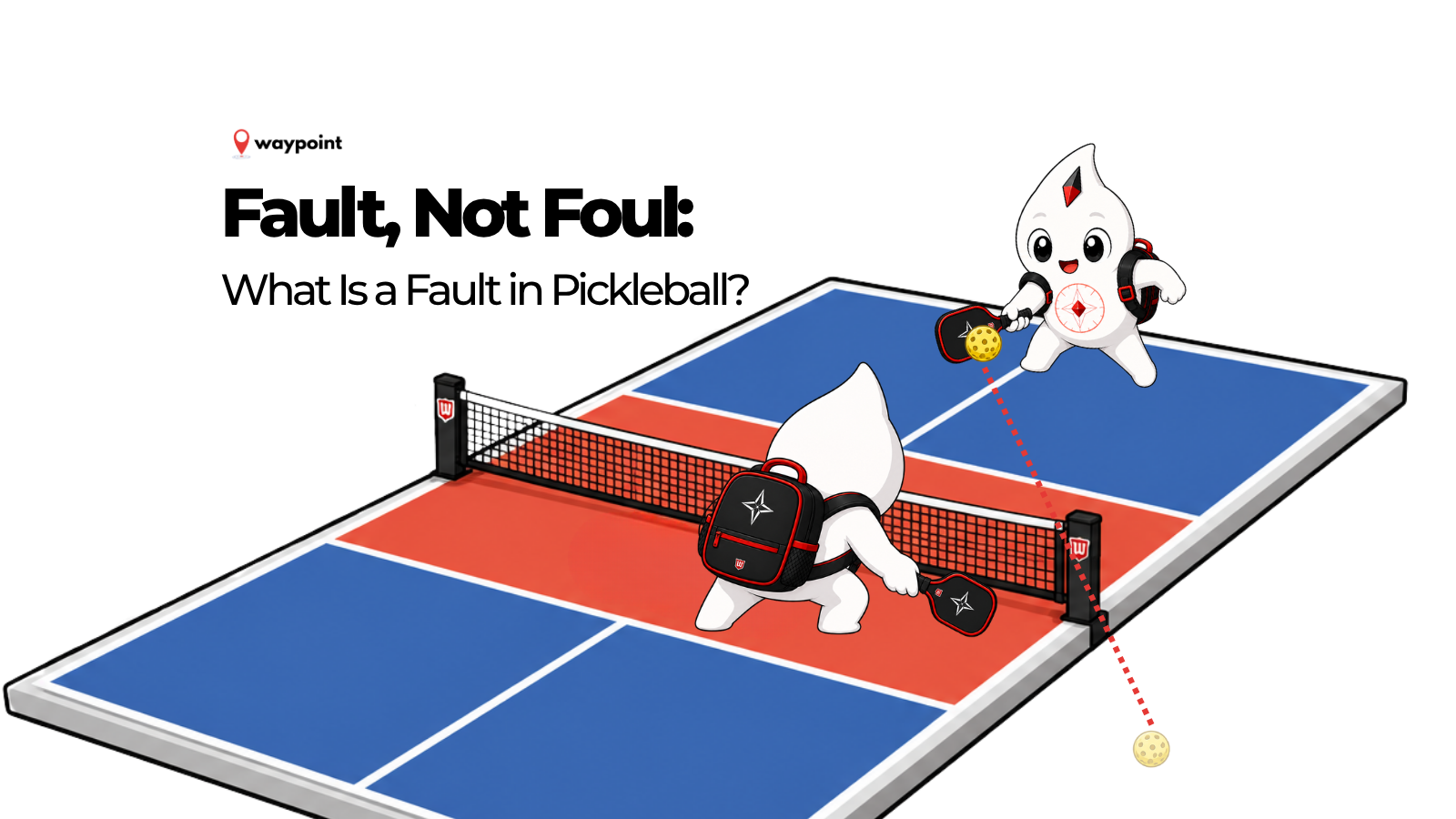

Made a mistake during a pickleball rally? In most cases, it is called a fault, not a foul.
In standard pickleball, hitting the ball out, failing to return it before the second bounce, or volleying while standing in the kitchen are all examples of faults. A technical foul is something different and relates mainly to serious behaviour during an officiated match.
Here is the difference in simple terms.
What Is a Fault in Pickleball?
A fault is a rule violation that stops play and ends the rally.
It can happen during the serve, while returning the ball, or when a player breaks one of the court rules.
For example, hitting the ball out or allowing it to bounce twice are both faults.
The official USA Pickleball rulebook defines a fault as a rules violation that results in a dead ball and the loss of the rally.
Common Faults in Pickleball
Some common examples include:
- Hitting the ball out of bounds
- In standard play, failing to return the ball before its second bounce
- Serving into the kitchen or outside the correct service court
- Hitting a serve that does not clear the net
- Volleying while standing in the kitchen or touching the kitchen line
- Ignoring the two-bounce rule at the beginning of a rally
- Touching the net while the ball is still in play
These are normal playing mistakes. A fault does not mean that someone has behaved badly. It simply means that a rule was broken during the rally.
What Happens After a Fault?
When a fault happens, the rally ends immediately.
The side that committed the fault loses the rally. Whether this leads to a point, a second server, or a side out depends on the scoring format and which team was serving.
The easiest way for a beginner to remember it is:
Fault committed = rally over.
Is It Ever Called a Foul?
Normal gameplay violations in pickleball are called faults, not fouls.
For example, you would say:
- Service fault
- Foot fault
- Non-volley-zone fault
- Double-bounce fault
You would not normally call these service fouls or kitchen fouls.
However, the word foul does appear in the term technical foul, which has a different meaning.
What Is a Technical Foul?
A technical foul is different from an ordinary gameplay fault.
It is usually a disciplinary penalty given by a referee for extreme unsportsmanlike behaviour during an officiated match. Examples include serious threats, extremely offensive language, or recklessly throwing a paddle or dead ball in a way that puts someone at risk.
Technical fouls can also be given for certain tournament-rule violations, including receiving a second technical warning during the same match.
Under the 2026 USA Pickleball rules, a technical foul deducts one point from the offending player or team. If their score is zero, one point is added to the opponent’s score instead.
Fault vs Technical Foul
The difference is simple:
A fault happens when a gameplay rule is broken.
A technical foul is a point penalty used during officiated competition, usually for serious misconduct or certain tournament-rule violations.
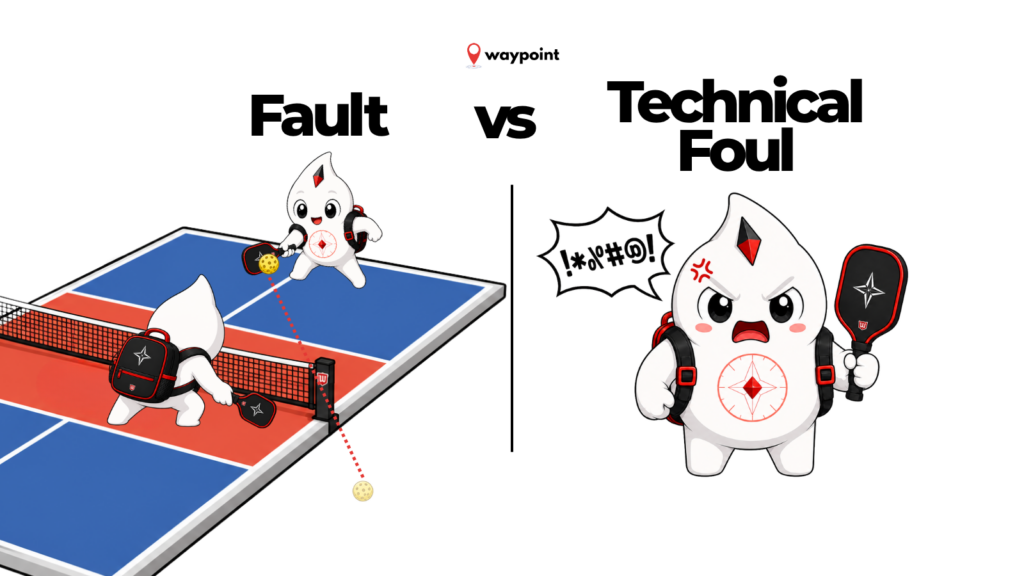
Here are a few examples:
Ball lands out? Fault.
Volley from inside the kitchen? Fault.
Ball bounces twice? Fault.
Serious threats or dangerous paddle throwing? Technical foul.
So, the next time someone makes a normal mistake during a pickleball rally, remember:
It is a fault, not a foul.
Quick Recap
In pickleball, normal rule violations are called faults.
A fault ends the rally and can include hitting the ball out, allowing it to bounce twice, serving into the wrong area, or volleying from the kitchen.
A technical foul is different. It is a disciplinary penalty used mainly for serious unsportsmanlike behaviour during officiated competition.
The easiest way to remember it is:
Gameplay mistake = fault.
Serious behaviour penalty = technical foul.
Continue Your Journey
Love pickleball?
Discover more beginner guides, player stories, travel inspiration, and the latest from the community.
Website
🌍 https://waypoint.fan
Instagram
📸 @waypoint.fan
Every journey starts with a Waypoint.