

Pickleball can feel surprisingly fast when you are new, but sometimes the problem is not your swing. It is a few small habits you might be doing without even noticing.
Keeping your paddle too low, trying to hit every ball too hard, or waiting too long to move can all make rallies harder than they need to be. The good news is that these are simple habits to work on, and fixing them can give you more time, control, and confidence on court.
Here are three common pickleball beginner mistakes, why they cause problems, and what to do instead.
1. Keeping Your Paddle Too Low
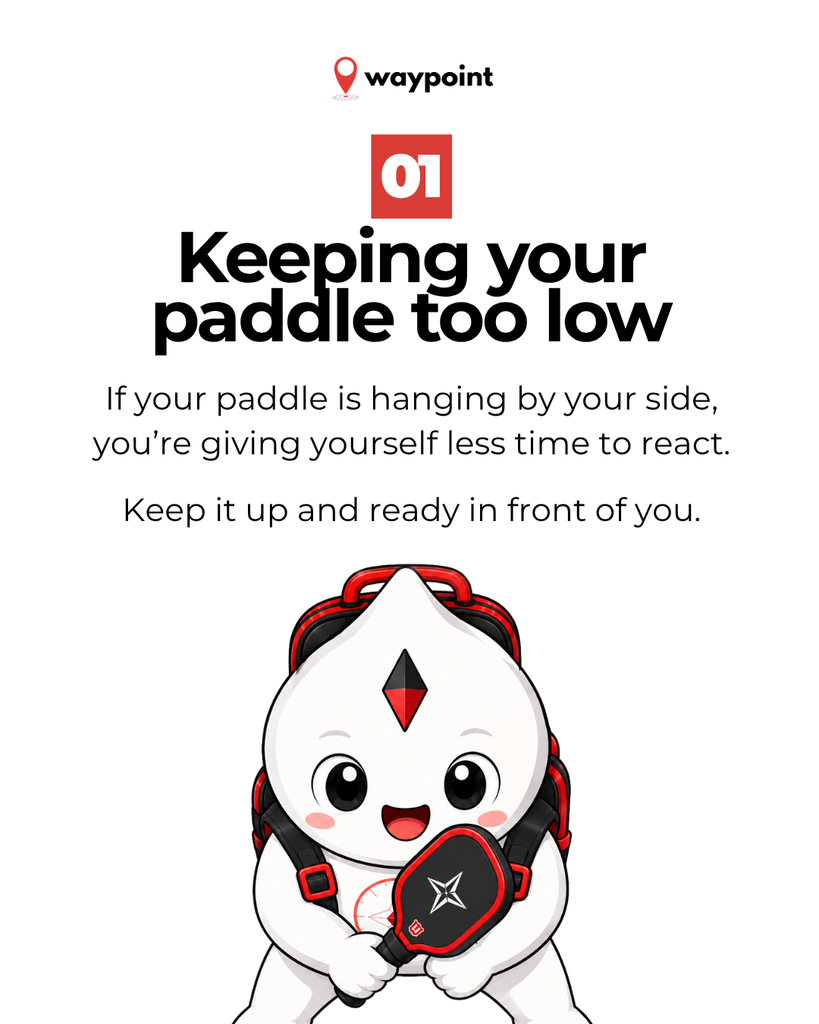
One of the easiest habits to fall into is letting your paddle drop towards your side after you hit the ball.
It might feel natural when you are waiting for the next shot, but pickleball can speed up very quickly, especially when you are near the kitchen. If your paddle is hanging by your leg when the ball comes back, you have to lift it into position before you can even start reacting to the shot.
That extra movement takes time.
Instead, try to keep your paddle up and ready in front of your body between shots. You do not need to hold it unusually high or keep your arms stiff. Stay relaxed and keep the paddle somewhere you can quickly move to either side.
The important part is what happens after you hit. Rather than letting your paddle drop, bring it back towards your ready position.
A simple habit to remember
Hit → recover → paddle ready.
Starting from a better position gives you more time to respond when the ball comes back quickly. But being ready for the ball is only part of the equation. The next common mistake is what happens when beginners try to do too much with it once it arrives.
2. Trying to Hit Every Ball Too Hard
Power is fun, and when you are new, it can be tempting to treat almost every ball like an opportunity to hit a winner.
But pickleball is not a game where the hardest shot always wins.
Sometimes a hard ball is exactly what you want. Other times, hitting harder simply makes the shot more difficult to control, especially when you start learning to dink.
A dink is a soft, controlled shot that bounces in your opponent’s kitchen. The goal is usually to keep the ball low enough that your opponent cannot comfortably attack it.
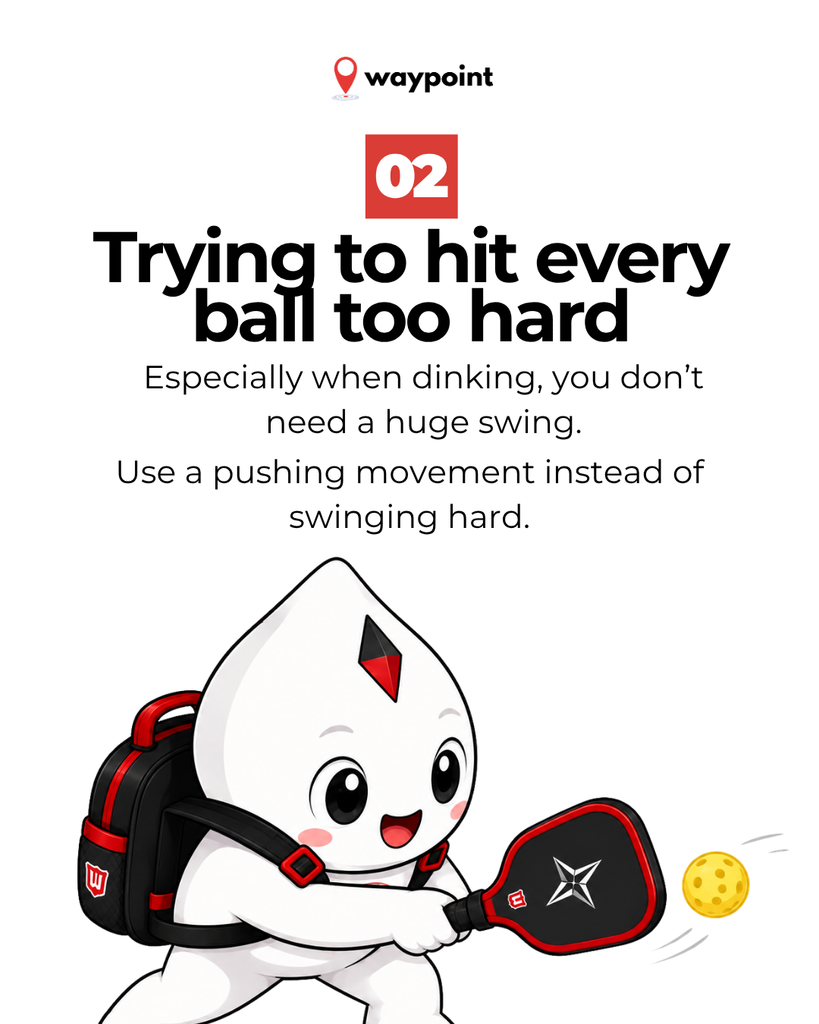
If you take a huge swing at a dink, it becomes much harder to control the height, speed, and placement of the ball. You might send it too far, pop it up, or give your opponent a ball they can attack.
Instead, think about using a small, controlled movement. You can almost imagine gently pushing or guiding the ball towards your target rather than trying to smash through it.
That does not mean you should stop hitting hard completely. Drives, overheads, and high attackable balls can all be good opportunities to add pace. The important part is learning which ball actually needs power and which one needs control.
Once you start thinking more about control, the next thing to look at is whether your body is actually in the right place to make the shot.
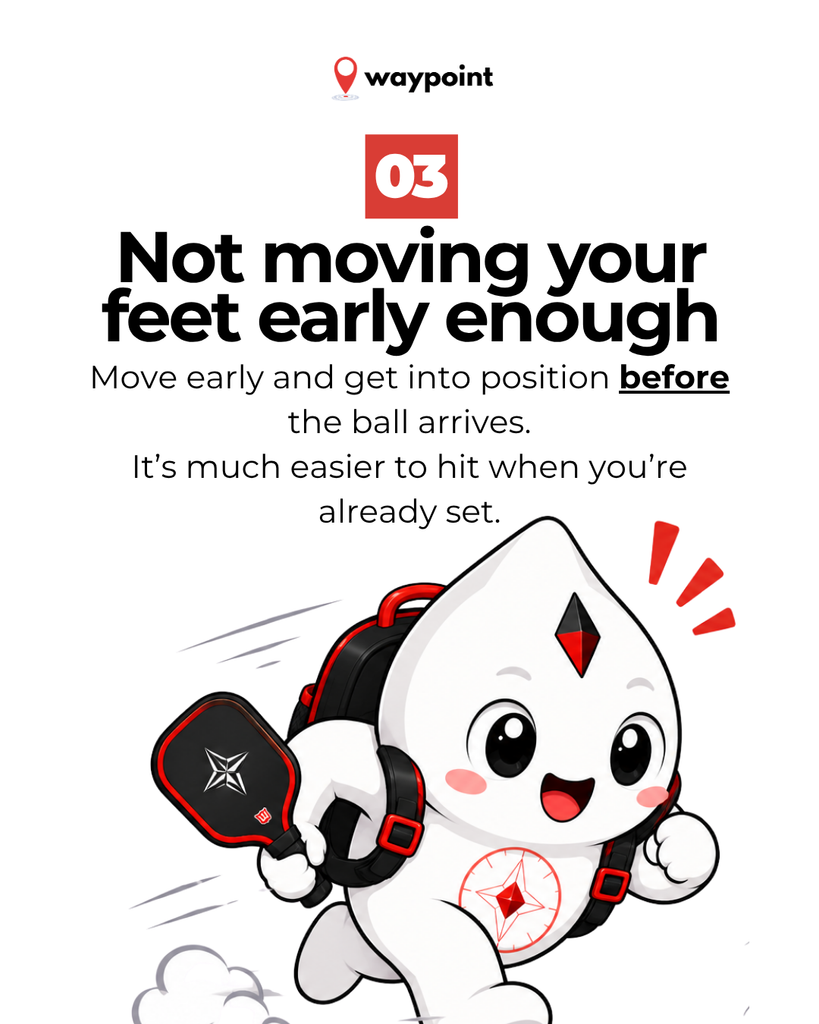
3. Not Moving Your Feet Early Enough
Sometimes you miss a ball and immediately think something was wrong with your swing, but the problem may have started before the swing even happened.
If you wait until the ball is already beside you before adjusting your position, you may end up reaching, leaning, getting jammed too close to your body, or trying to hit while off balance. All of those things make the shot harder.
Try to start moving as soon as you have a good idea of where the ball is going. You usually do not need huge movements. A few small adjustment steps can be enough to create better spacing between your body and the ball.
The goal is to get into a position where you can hit comfortably rather than trying to rescue the shot at the last second.
There is one important detail, though: moving early does not mean you should still be rushing when you hit. When you have enough time, try to get into position and become balanced before making contact.
A useful way to think about it is:
Read the ball → move into position → get balanced → hit.
Good footwork is not always about being incredibly fast. A lot of it comes from recognizing where the ball is going early enough to make a small adjustment before it reaches you.
How to Practice These Without Overthinking It
You do not have to fix all three habits in one session.
Trying to remember your paddle position, footwork, swing size, placement, score, and everything else at the same time can make playing feel even harder. It is usually easier to pick one habit and focus on it for a few games or practice sessions.
If your paddle keeps dropping, pay attention to what happens immediately after you hit. Try to bring it back in front of you every time.
If you tend to overhit, focus on taking some pace off the ball and controlling where it lands instead of trying to hit harder.
If your footwork feels rushed, watch the ball earlier and start your adjustment sooner so you have more time to get balanced before contact.
Once one habit starts feeling more natural, move on to the next. You are not trying to completely rebuild your game in one afternoon. You are just making one small part of it easier at a time.
Quick Recap
1. Keeping your paddle too low
Keep your paddle up and ready in front of you so you have less distance to move when the ball comes back.
2. Trying to hit every ball too hard
Not every shot needs power. Keep softer shots compact and controlled, and save your harder swings for balls you can actually attack.
3. Not moving your feet early enough
Read the ball early, move into position, and try to get balanced before you make contact.
Want to Practice These Skills?
Knowing what to fix is the first step. Building the habit comes from repeating it.
Inside Waypoint Academy, the Player Practice Pathway includes guided practices covering areas such as dinks, volleys, returns, footwork, serves, and more. Instead of choosing a random drill every time you want to practice, you can focus on a specific part of your game and work through it step by step.
Start with one thing you want to improve and build from there.
Continue Your Journey
Want more beginner-friendly pickleball tips, rules, and guides?
Website
🌍 waypoint.fan
Instagram
📸 @waypoint.fan
Every journey starts with a Waypoint.