
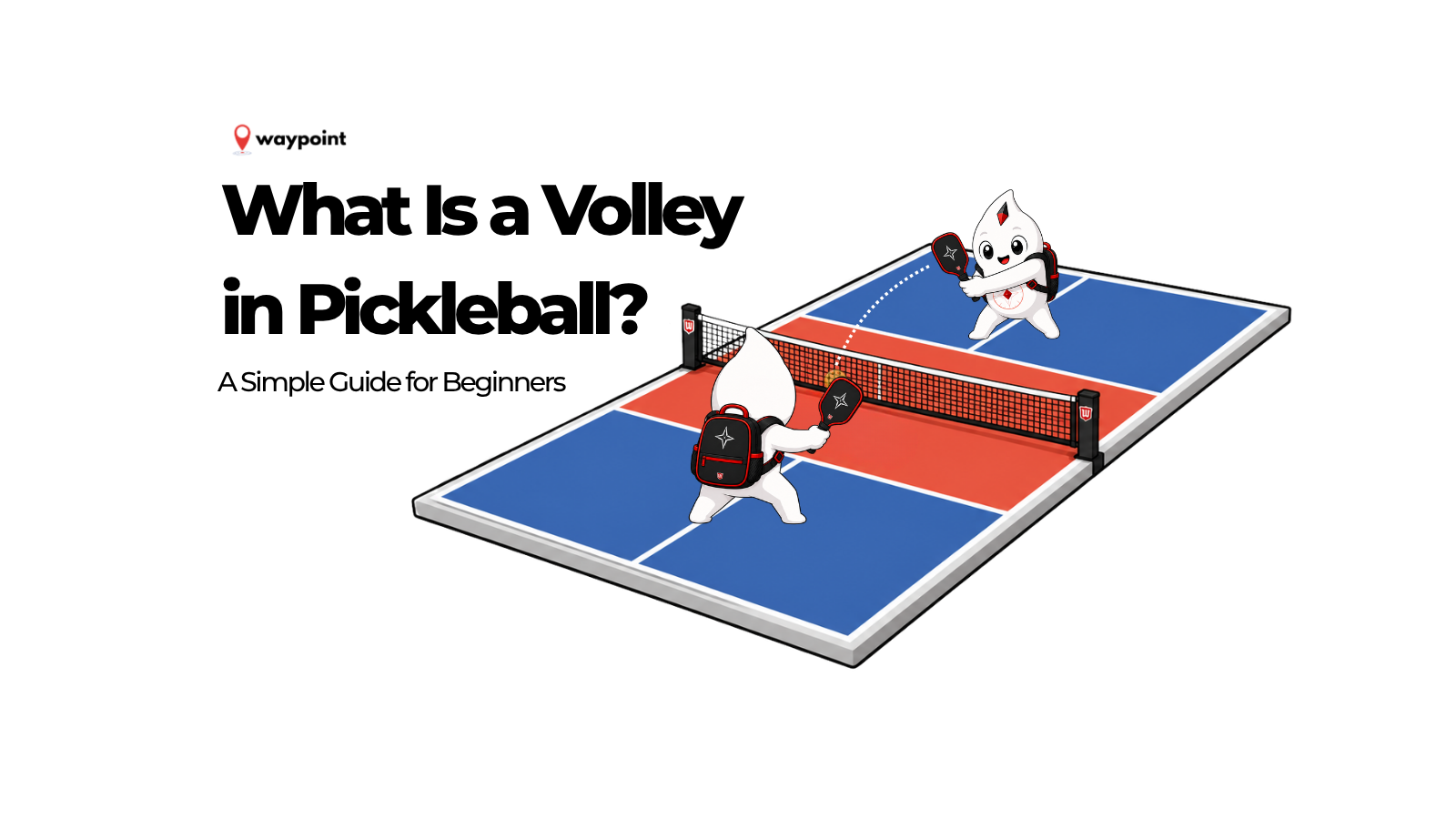

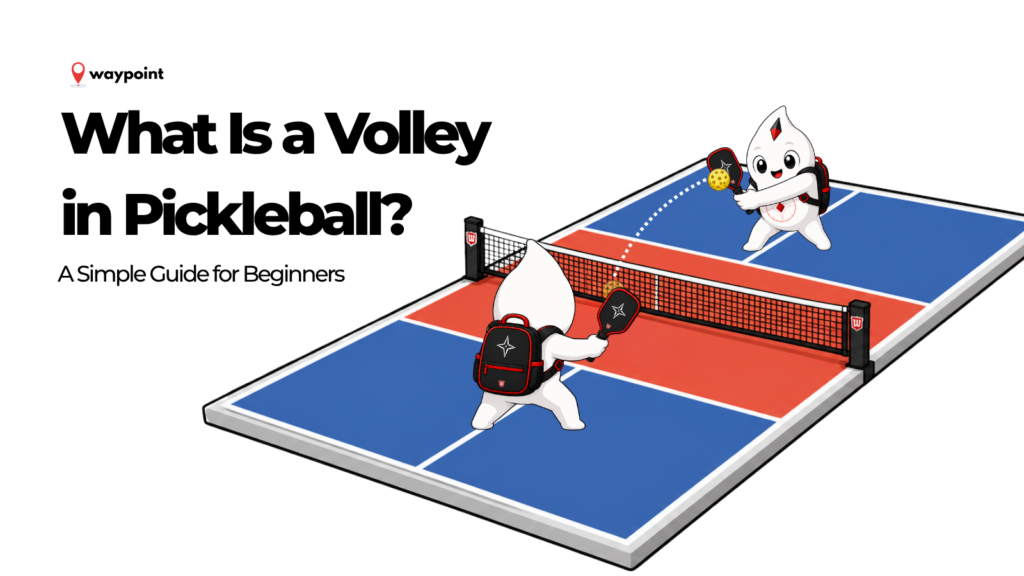
If you have watched players return the ball before it touches the ground, you have already seen a volley.
A volley lets you react quickly and put pressure on your opponent, but it can only be used after the serve and return have both bounced. You also cannot volley while standing inside the kitchen or touching the kitchen line.
Here is what a volley means, when it is allowed, and how to hit one with more control.
What Is a Volley in Pickleball?
A volley is a shot that you hit before the ball bounces on your side of the court.
It can be played with either your forehand or backhand, although backhand volleys are common because players often hold their paddles in front of their bodies while waiting near the kitchen line.
Unlike a drive or groundstroke, a volley usually uses a short movement rather than a large swing. The goal is to meet the ball in front of you and guide it back over the net with control.
Why Do Players Use Volleys?
Volleys give your opponent less time to prepare because you return the ball without waiting for it to bounce.
A well-placed volley can:
- Keep pressure on your opponent
- Block a fast shot
- Send the ball into open space
- Aim the ball towards an opponent’s feet
- Create an opportunity to finish the rally
- Prevent the ball from dropping too low
Not every volley needs to be hit hard. Sometimes a simple block is enough to redirect your opponent’s pace and keep the ball in play.
When Can You Volley?
You cannot volley immediately after the serve.
Pickleball follows the two-bounce rule:
- The serve must bounce before the receiving team returns it.
- The return of serve must bounce before the serving team hits it.
- After those two bounces, either team may volley the ball or let it bounce.
This means the receiving team cannot volley the serve, and the serving team cannot volley the return. Once each side has allowed one bounce, volleys are allowed for the rest of the rally.
Where Can You Stand When Volleying?
You can volley from anywhere outside the kitchen.
Most volleys are played near the kitchen line because this position allows you to reach the ball earlier and use sharper angles. However, you must stay behind the line while hitting the shot.
The kitchen line is considered part of the kitchen, so touching it while volleying is a fault.
How to Hit a Volley
A volley should feel more like a controlled block or push than a full swing.
Start with your knees slightly bent and your paddle in front of your body. Keep your paddle high enough that you can react quickly to shots coming towards either side.
As the ball approaches, make contact in front of your body using a short and compact movement.
Focus on these basics:
- Keep your paddle in front of you.
- Watch the ball until it reaches your paddle.
- Use little or no backswing.
- Contact the ball in front of your body.
- Keep the paddle face steady.
- Guide the ball towards your target.
- Return to your ready position.
If the ball is travelling quickly, you may not need to create much power yourself. A stable paddle can use the speed that is already on the ball and redirect it over the net. USA Pickleball’s beginner guidance describes the volley as a compact blocking motion rather than a full swing.
Where Should a Volley Go?
A volley should land somewhere that makes the next shot difficult for your opponent.
Useful targets include:
- An open part of the court
- The middle between two doubles players
- An opponent’s backhand
- The feet of an opponent moving forward
- Away from an opponent’s comfortable reach
You do not always need to aim close to the lines. A controlled volley into a difficult area is usually safer than trying to hit a perfect winner.
If the ball is low, focus on getting it safely over the net. Trying to attack a low volley too aggressively may send it into the net.
Common Beginner Mistakes
Using Too Much Backswing
A large backswing gives you less time to react and can make the shot harder to control.
Keep the paddle in front of your body and use a short movement.
Swinging at Every Volley
Some volleys can be attacked, but others only need to be blocked.
When the ball is coming towards you quickly, hold the paddle steady and use the opponent’s pace instead of adding more power.
Dropping the Paddle
Keeping the paddle too low makes it harder to react to fast shots.
Return your paddle to a comfortable ready position after every volley.
Standing Inside the Kitchen
You cannot volley while standing in the kitchen or touching the kitchen line.
Stay behind the line and make sure your balance does not carry you forward after the shot.
Trying to Hit Down on a Low Ball
A ball below the height of the net is difficult to attack safely.
Instead of forcing it downward, guide it over the net and wait for a higher ball.
Watching Your Shot
Beginners sometimes stop moving after hitting the ball to see where it goes.
Return to your ready position immediately because your opponent may send the ball back quickly.
Volley vs Groundstroke
The main difference is whether the ball bounces first.
A volley is hit before the ball bounces.
A groundstroke is hit after the ball bounces.
Volleys are often played near the kitchen line, while groundstrokes are commonly played from deeper in the court. However, either shot may be used from different positions depending on the rally.
An easy way to remember it is:
Volley: Hit out of the air.
Groundstroke: Hit after a bounce.
Can You Volley in the Kitchen?
No. You cannot volley while standing in the kitchen or touching the kitchen line.
Your momentum also cannot carry you into the kitchen after you hit the volley. This is still a fault even if the rally has already ended.
However, you are allowed to stand inside the kitchen and hit the ball after it has bounced. The restriction only applies when you hit the ball before the bounce.
An easy way to remember it is:
Ball bounced first? You can play it from the kitchen.
No bounce? Stay behind the kitchen line.
Quick Recap
A volley is a pickleball shot hit before the ball bounces.
Players use volleys to react quickly, block fast shots, apply pressure, and direct the ball into difficult areas. The shot usually requires a compact movement rather than a large swing.
You can only begin volleying after the serve and return have both bounced. You must also stay outside the kitchen and avoid touching the kitchen line while playing the shot.
A good volley is not always the hardest one. Keeping your paddle ready, meeting the ball in front of you, and choosing a safe target will give you much more control.
Continue Your Journey
Love pickleball?
Discover more beginner guides, player stories, travel inspiration, and the latest from the community.
Website
🌍 https://waypoint.fan
Instagram
📸 @waypoint.fan
Every journey starts with a Waypoint.