
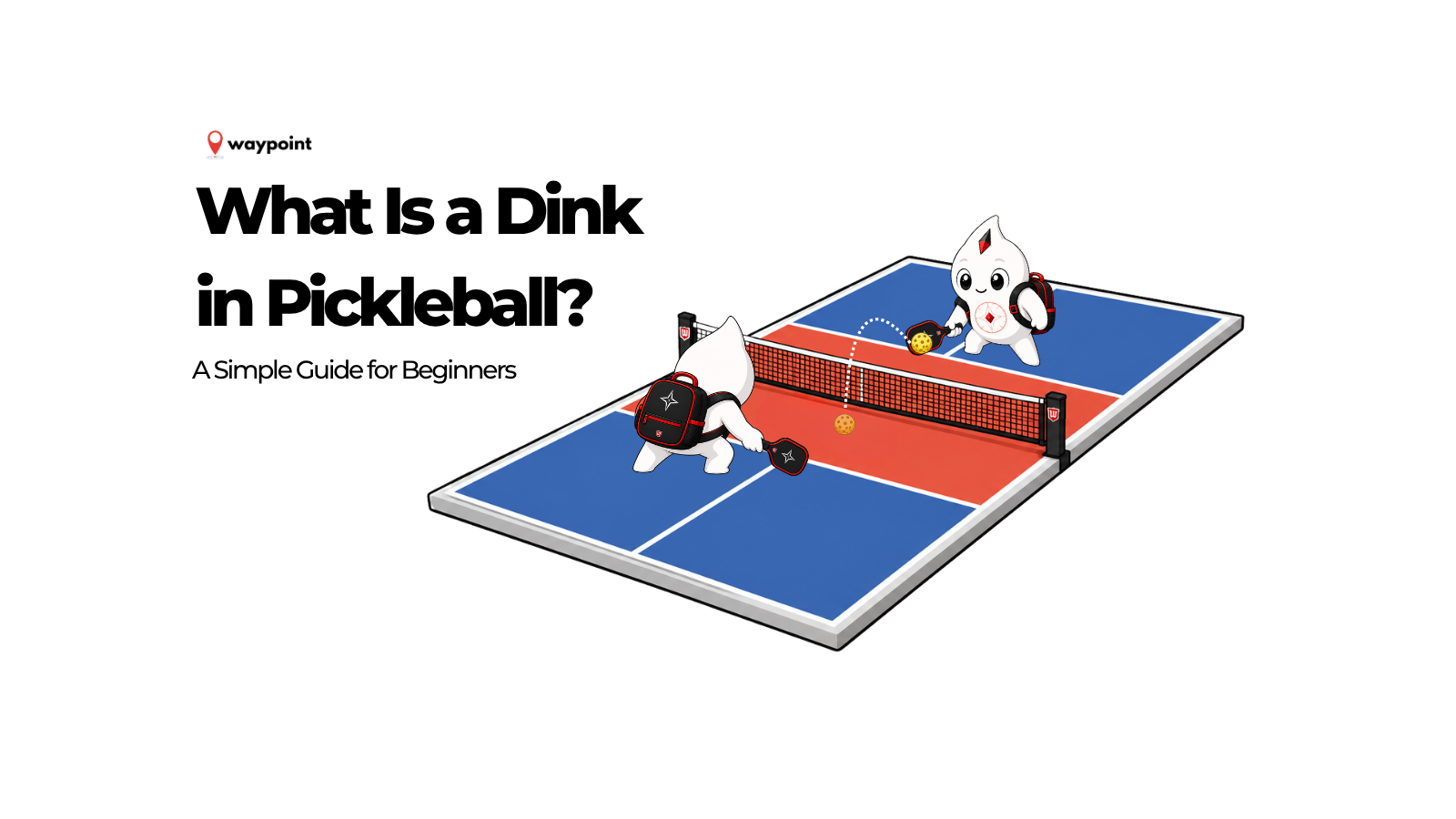

What Is a Dink in Pickleball? A Simple Guide for Beginners
If you are new to pickleball, you may have heard players talking about “dinking” at the kitchen. No, they are not talking about drinks or making a strange sound.
A dink is one of the most important shots to learn in pickleball. It may look simple, but a good dink can slow down the rally, make the ball difficult to attack, and give you more control over the point.
What Is a Dink in Pickleball?
A dink is a soft shot that is usually hit after the ball bounces near the non-volley zone, commonly called the kitchen.
The ball travels gently over the net and lands inside your opponent’s kitchen. A good dink stays low, which makes it harder for the other player to hit an aggressive return. Dinks can be played straight ahead or diagonally across the court.
Unlike a drive or smash, the goal is not to hit the ball as hard as possible. The goal is to place it somewhere uncomfortable for your opponent while giving them very little opportunity to attack.
Why Do Players Use Dinks?
Players use dinks to take pace out of the rally.
Because a dink lands low inside the kitchen, it is difficult to attack. Your opponent may step into the kitchen, but if they are standing there, they must let the ball bounce before hitting it. This often forces them to play a softer return instead of attacking with power.
A well-placed dink can also:
- Keep the ball below your opponent’s preferred hitting height
- Move an opponent away from their ideal position
- Create space elsewhere on the court
- Encourage an opponent to make a mistake
- Set up an opportunity to attack the next high ball
Dinking does not mean you are simply waiting and hoping for an error. You can change the direction, depth, and placement of each shot to make your opponent move and prevent them from becoming comfortable.
Where Should a Dink Land?
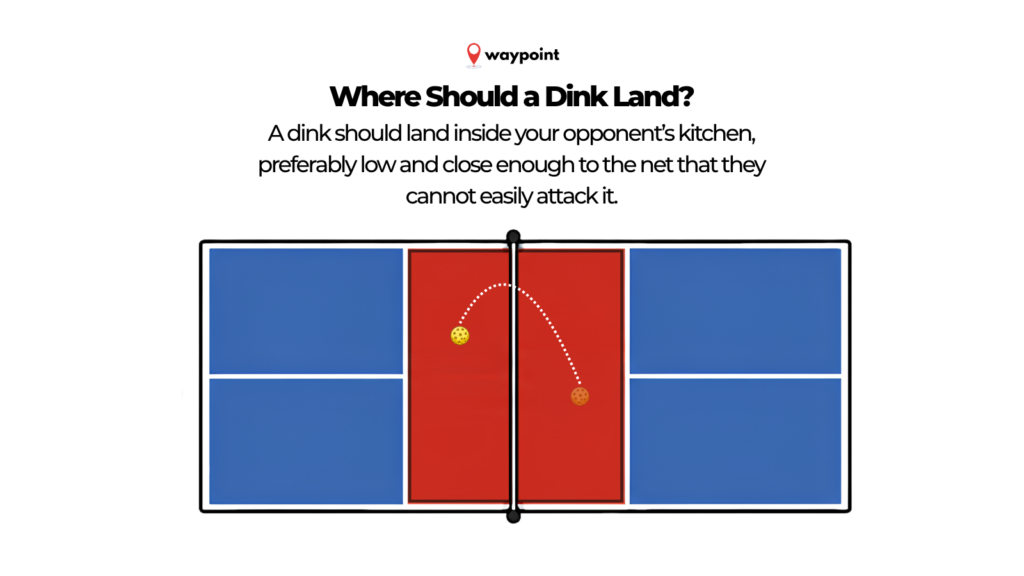
A dink should land inside your opponent’s kitchen, preferably low and close enough to the net that they cannot easily attack it.
However, trying to place every dink directly beside the net can lead to unnecessary mistakes. The first goal is to clear the net and keep the ball low. As your control improves, you can begin aiming closer to the sidelines, middle, or your opponent’s feet.
Crosscourt dinks are popular because the ball travels over the lower middle section of the net and has more court to land in. They can also pull an opponent toward the side of the court, creating space for the next shot.
How to Hit a Dink
A dink should feel more like a gentle push than a full swing.
Start near the kitchen line with your knees slightly bent and your paddle in front of your body. Let the ball bounce, then contact it in front of you with a small lifting motion.
Keep the paddle face slightly open so the ball has enough height to clear the net. Your movement should stay compact, with little or no backswing. A relaxed grip and controlled movement will help you keep the ball low and avoid hitting it too far.
Focus on these basics:
- Watch the ball until it reaches your paddle.
- Contact it in front of your body.
- Use a short and controlled motion.
- Aim for your opponent’s kitchen.
- Return your paddle to a ready position.
You do not need to add complicated spin when you are first learning. Consistency and placement are more important.
Common Beginner Mistakes
Hitting the Ball Too Hard
A dink is a soft shot. A large swing can send the ball too deep or give your opponent an easy attacking opportunity.
Hitting the Ball Too High
The ball needs enough height to clear the net, but not so much that your opponent can hit down on it. Try to create a gentle arc that begins dropping after it crosses the net.
Using Too Much Wrist
Too much wrist movement can make the shot difficult to control. Keep the wrist stable and guide the ball using a small motion from the shoulder and arm.
Standing Too Upright
Bending your knees helps you reach low balls while keeping your paddle under control. Avoid lowering only your upper body and reaching forward.
Trying to Win Immediately
A dink is often used to build the point rather than finish it. Stay patient and wait for a ball that is high enough to attack safely.
Dink vs Drop Shot
A dink and a drop shot may look similar because both are soft shots intended to land in the opponent’s kitchen.
The main difference is where they are played from.
A dink is normally hit from near the kitchen line. A drop shot is played from farther back in the court, often as the serving team moves forward after the return of serve.
An easy way to remember it is:
Dink: soft shot from near the kitchen.
Drop: soft shot from deeper in the court.
Can You Stand in the Kitchen to Hit a Dink?
Yes. You can stand in the kitchen, but you can only hit the ball there after it has bounced.
The kitchen rule only applies when you hit the ball before it bounces, which is called a volley. If you’re volleying, you cannot be standing in the kitchen or touching the kitchen line.
Once you’ve played your shot, it’s usually a good idea to move back behind the kitchen line so you’re ready for the next rally.
Quick Recap
A dink is a soft, controlled shot that lands in your opponent’s kitchen.
It is used to keep the ball low, reduce your opponent’s attacking options, and create opportunities through patience and placement. You do not need a large swing or a lot of power. A relaxed grip, compact movement, and consistent contact will help you build a more reliable dink.
The shot may look gentle, but learning how to dink well can completely change the way you play pickleball.
Continue Your Journey
Love pickleball?
Discover more beginner guides, player stories, travel inspiration, and the latest from the community.
Website
🌍 https://waypoint.fan
Instagram
📸 @waypoint.fan
Every journey starts with a Waypoint.