

If you are new to pickleball, the two-bounce rule is one of the first rules you need to know.
Despite the name, it does not mean you should let the ball bounce twice before hitting it.
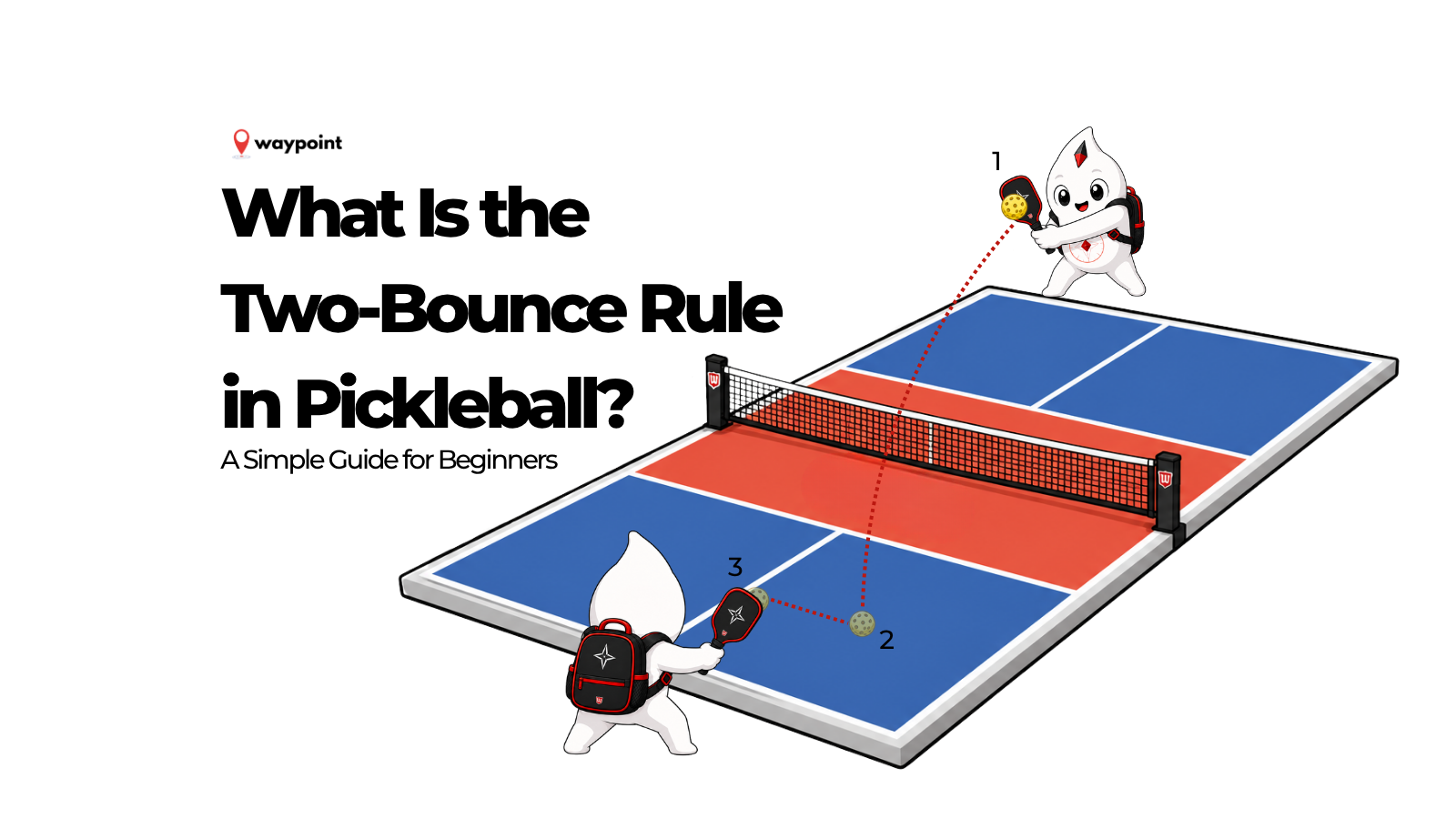
Instead, at the beginning of every rally, the serve must bounce once and the return of serve must also bounce once before either team can volley the ball.
Once those two required bounces have happened, players can either hit the ball after a bounce or volley it out of the air.
What Is the Two-Bounce Rule?
The two-bounce rule requires the ball to bounce once on each side of the court at the beginning of a rally.
First, the receiving team must let the serve bounce before returning it.
Then, the serving team must let that return bounce before hitting the next shot.
That gives us the two required bounces:
1. Serve → Bounce
2. Return → Bounce
After that, the two-bounce rule has been completed.
How Does the Two-Bounce Rule Work?
Imagine you are serving.
You hit the serve across the court. The receiving player must let your serve bounce before returning it.
They hit the return back to you. Now your team must also let that ball bounce before hitting it.
Only after those two bounces can either team start volleying.
So the beginning of the rally looks like this:
Serve → Bounce → Return → Bounce → Open Play
An easy way to remember it is:
The serve bounces. The return bounces. Then you can volley.
What Happens After the Two Bounces?
Once the ball has bounced once on each side, the two-bounce rule is complete.
From that point onward, players can choose to:
- Let the ball bounce before hitting it
- Volley the ball before it bounces
You do not have to start volleying after the two bounces. You are simply allowed to.
For example, you could continue hitting groundstrokes, drops or dinks that bounce throughout the rally.
The rule only controls the first two shots after the serve.
Why Does Pickleball Have the Two-Bounce Rule?
Without the two-bounce rule, the serving team could serve and immediately rush towards the net to attack the return.
Requiring the return to bounce gives the receiving team a better opportunity to establish position and helps reduce the advantage of serving and volleying immediately.
It also encourages longer rallies and creates more balance between the serving and receiving teams.
The rule is also why you will often see the serving team stay near the baseline after serving. They know the return has to bounce before they can play their next shot.
Does the Two-Bounce Rule Apply to Both Teams?
Yes.
In standard play, both teams have one required bounce at the beginning of the rally.
The receiving team must let the serve bounce.
The serving team must then let the return bounce.
It does not matter which player on the team hits the ball. What matters is that each side allows its required bounce before anyone volleys.
After both bounces have happened, either team can volley.
Two-Bounce Rule vs Double Bounce
These two terms sound similar, but they mean very different things.
The two-bounce rule is a required part of the beginning of every rally.
The ball bounces once on the receiving side and once on the serving side.
A double bounce, on the other hand, usually means the ball bounced twice on the same side before a player returned it. In standard play, that results in a fault.
So:
Two-bounce rule = one required bounce on each side
Double bounce = two bounces on one side
This is an easy distinction to remember once you see it in a game.
Common Beginner Mistakes
Volleying the Return of Serve
You cannot volley a serve.
The receiving player must let the serve bounce before returning it.
Volleying the Next Shot
This is probably where beginners get caught.
Even after the receiving team returns the serve, the serving team still has to let that return bounce.
Only then are volleys allowed.
Thinking the Ball Must Bounce Twice on Each Side
It does not.
The rule requires one bounce on each side, giving you two required bounces in total.
Thinking Every Shot Must Bounce After That
Once the two-bounce rule has been completed, players are free to volley or let the ball bounce.
The rule does not continue for the rest of the rally.
Confusing It With the Kitchen Rule
The two-bounce rule and kitchen rule are separate.
After the two required bounces, you may volley the ball, but you still cannot volley while touching the kitchen or its boundary line.
So even though the two-bounce rule is finished, the kitchen rules still apply.
Quick Recap
The two-bounce rule is one of the easiest pickleball rules to remember once you break it down.
At the beginning of every rally:
1. The serve must bounce.
2. The return must bounce.
After that, either team can volley or continue letting the ball bounce.
The easiest way to remember it is:
Serve → Bounce → Return → Bounce → Play freely
And remember, the two-bounce rule is not the same as a double bounce. One bounce on each side is required at the beginning of the rally. Two bounces on the same side before a return is normally a fault.
Continue Your Journey
Love pickleball?
Discover more beginner guides, player stories, travel inspiration, and the latest from the community.
Website
🌍 https://waypoint.fan
Instagram
📸 @waypoint.fan
Every journey starts with a Waypoint.